

Why Bodyweight Training Works
A common misconception is that home workouts are second-best - a compromise you make when a gym membership isn't available. In reality, bodyweight exercise is a well-established training modality used by athletes, military personnel, and rehabilitation specialists alike. Research consistently shows that resistance training using your own body can improve muscular strength, cardiovascular endurance, flexibility, and mental well-being.
The advantages are practical, too. No commute, no membership fees, no waiting for equipment. If you're weighing your options more broadly, our comparison of gym vs. home training explores the real trade-offs of each environment. For most people, the best workout is simply the one they'll actually do - and home training removes a significant number of barriers.
Before diving into structuring your routine, it's worth reviewing our pre-workout readiness checklist to assess your starting point and reduce injury risk. If you're returning to exercise after a significant break, the realistic re-entry framework is also worth reading first.
What you will need
How to Structure Your Routine: Step by Step
The steps below will guide you through building a home workout routine from scratch - covering movement selection, scheduling, progression, and recovery. Follow them in order, especially if you're new to structured exercise.
Choose Your Weekly Training Frequency
Decide how many days per week you can realistically commit to exercise. For beginners, three sessions per week with rest days in between - such as Monday, Wednesday, and Friday - provides adequate stimulus and recovery time. Intermediate exercisers may train four to five days. Consistency over several weeks matters far more than any single workout's intensity.
Select Movements Across Five Fundamental Patterns
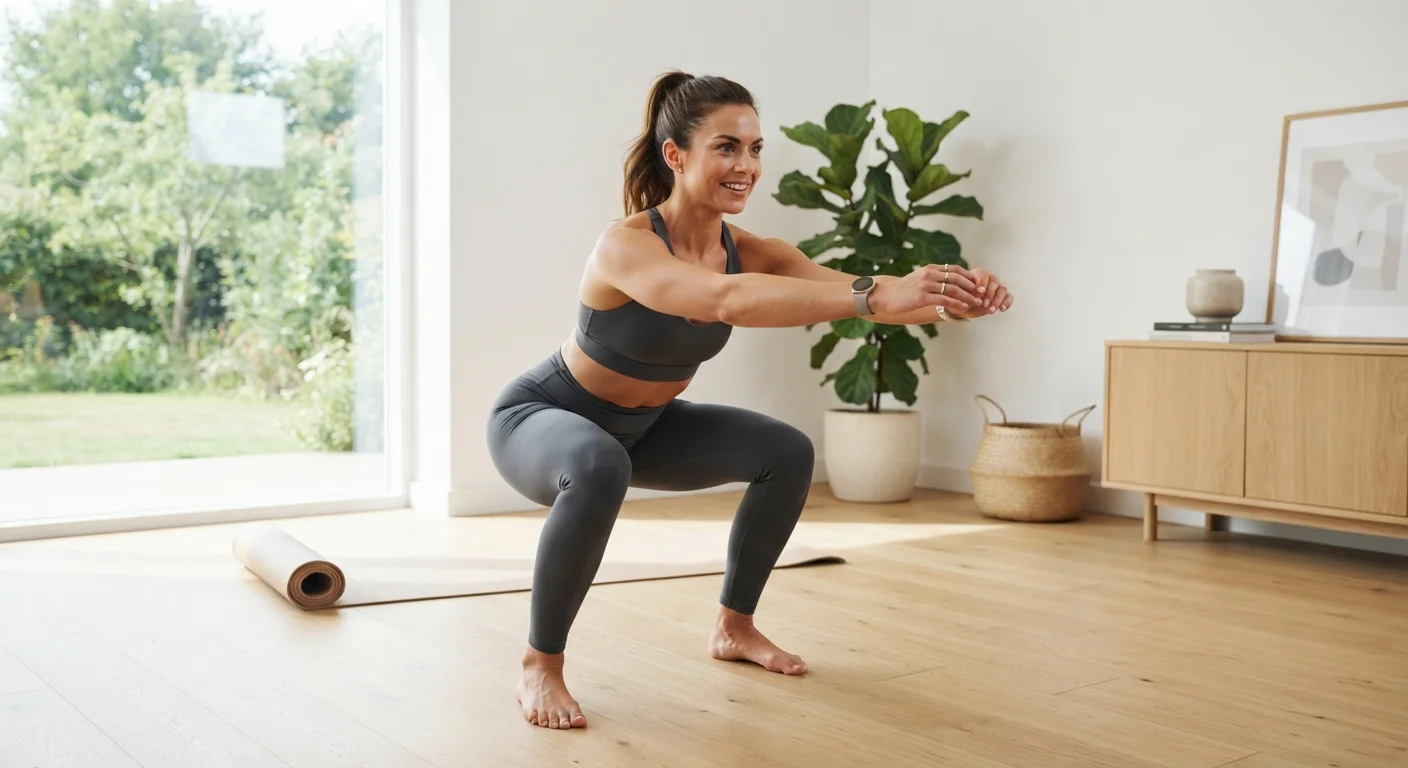
A balanced routine covers five foundational movement patterns: push (e.g., push-ups), pull (e.g., bodyweight rows using a low table or bar), hinge (e.g., single-leg deadlift with no weight), squat (e.g., bodyweight squat or split squat), and core (e.g., plank, dead bug). Choose one to two exercises per pattern each session to ensure you're developing the body evenly and reducing injury risk.
Structure Each Session With a Warm-Up and Cool-Down
Begin every session with five minutes of light movement - leg swings, arm circles, hip rotations, and slow marching in place. This increases blood flow and prepares joints for load. End with five minutes of static stretching, holding each position for 20-30 seconds. Skipping these bookends is one of the most common causes of overuse injury among home exercisers.
Set Sets, Reps, and Rest Intervals
For general fitness, a common starting structure is 2-3 sets of 8-15 repetitions per exercise, with 45-90 seconds of rest between sets. For cardiovascular-focused sessions, you can use timed intervals - for example, 30 seconds of work followed by 15 seconds of rest. Write down your structure before each session so you're not making decisions mid-workout.
Apply Progressive Overload Without Weights
Progressive overload - gradually increasing the challenge over time - is the core principle behind any effective training program. Without equipment, progression comes from exercise variation rather than added weight. Push-ups progress from incline → standard → decline → archer push-ups. Squats progress from bodyweight → split squat → Bulgarian split squat → single-leg squat. Each step up in difficulty should feel challenging but achievable with good form.
Track Your Workouts and Reassess Monthly
Log each session: exercises performed, sets, reps, and how difficult the session felt on a simple 1-10 scale. At the end of each month, review your log. Are exercises feeling easier? Progress to harder variations. Are you frequently rating sessions a 9 or 10? Consider reducing volume or intensity slightly. This regular reassessment keeps you improving and prevents both plateaus and overtraining.
Short Sessions Are Genuinely Effective
Research suggests that even 20-minute bodyweight sessions, performed consistently three times per week, can produce measurable improvements in strength and cardiovascular fitness. Resist the urge to make your first few workouts too long or too hard - sustainable habits are built on sessions you can repeat, not ones you dread.
Staying Consistent Over Time
Building the routine is only half the challenge. Sustaining it through work demands, travel, illness, and motivation dips is where most people struggle. Setting a fixed workout time - treating it like an appointment - is one of the most evidence-supported strategies for long-term adherence. Short sessions completed regularly outperform ambitious plans abandoned after two weeks.
It's also worth acknowledging that exercise and mental wellness are deeply connected. Consistent movement is associated with reduced symptoms of anxiety and depression, according to research published in major psychiatric journals. For a broader look at wellbeing habits, see our guide on building a personal mental wellness routine. When life genuinely disrupts your schedule, our article on keeping exercise consistent when life gets in the way offers practical, evidence-informed strategies for getting back on track.
Pain Is Not the Same as Effort
Muscle fatigue and a challenging burn during exercise are normal. Sharp, joint-specific, or persistent pain is not. Stop any exercise immediately if you experience joint pain, dizziness, chest tightness, or shortness of breath disproportionate to your effort level. These symptoms warrant consultation with a healthcare professional before continuing training.
This article is for general informational and educational purposes only and does not constitute medical advice. Consult a qualified healthcare professional before beginning any new exercise program, particularly if you have existing health conditions, injuries, or concerns.
The content on this site is for informational purposes only and is not a substitute for professional advice. Always consult a qualified professional for guidance specific to your situation.