

Why Sleep Hygiene Is Worth Taking Seriously
Sleep is not a passive activity - it's an active biological process during which the brain consolidates memory, clears metabolic waste, and regulates mood and immune function. When that process is repeatedly disrupted or cut short, the effects accumulate in ways that reach well beyond feeling tired the next day.
The term sleep hygiene refers to the set of behavioral and environmental habits that support consistent, restorative sleep. It's not about rigid rules or expensive products - it's about working with the biology your body already has, rather than against it. The practices below are drawn from sleep research and broadly recommended by organizations including the American Academy of Sleep Medicine.
This Is General Information, Not Medical Advice
Sleep hygiene practices are broadly evidence-supported for healthy adults, but they are not a substitute for professional care. If you experience chronic insomnia, sleep apnea, restless legs, or other persistent sleep disorders, consult a licensed healthcare provider. Some sleep difficulties are medical in nature and require clinical evaluation.
Core Sleep Hygiene Practices
These habits are most effective when layered together over time. Think of them as a system rather than isolated fixes - each one reinforces the others.
Set a consistent wake time - even on weekends - as your anchor habit.
Your circadian rhythm, the internal clock governing sleep and wakefulness, is highly sensitive to the timing of waking. Irregular wake times confuse this system, making it harder to fall asleep and feel rested. Consistency trains your brain to anticipate sleep, reducing time spent lying awake.
Get bright light exposure within an hour of waking each morning.
Morning light exposure signals to the brain that the day has started, suppressing melatonin and anchoring your circadian rhythm to the correct time. Research consistently shows this practice improves both daytime alertness and nighttime sleep onset. Even overcast outdoor light is significantly more effective than indoor lighting.
Dim indoor lighting and limit bright screens in the 60-90 minutes before bed.
Artificial light at night, particularly the short-wavelength (blue) light from phones and tablets, delays melatonin release and shifts your internal clock later. Dimming your environment signals that night has arrived, allowing your body's sleep-promoting processes to begin on schedule.
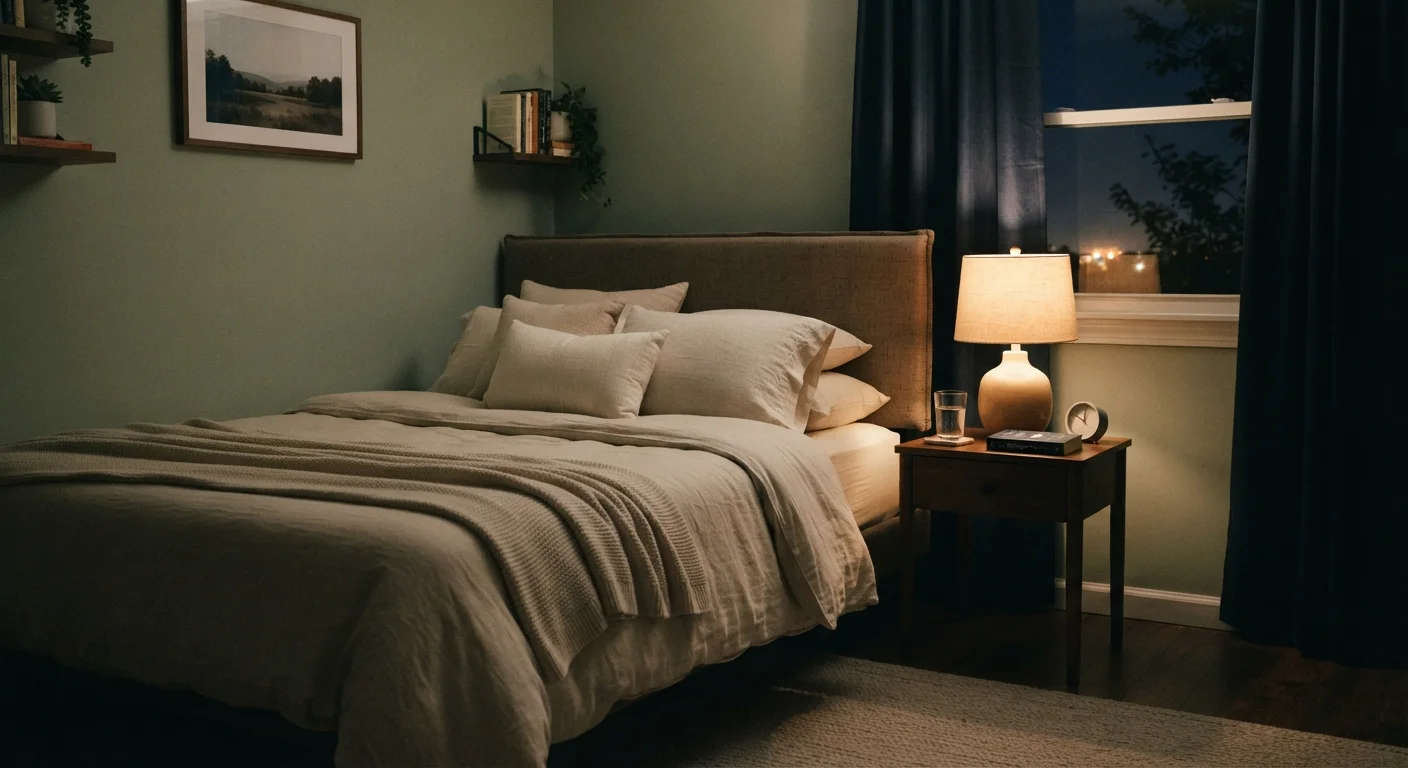
Keep your bedroom cool, dark, and used primarily for sleep.
Core body temperature naturally drops as part of sleep onset, so a cooler room supports this process. Darkness reinforces melatonin production, while reserving the bedroom for sleep (rather than work or media) strengthens the mental association between the space and rest.
Build a brief, repeatable wind-down routine to cue your nervous system.
A predictable pre-sleep sequence - whether that's light reading, gentle stretching, or a warm shower - acts as a behavioral cue that sleep is approaching. This matters especially for people whose stress levels stay elevated in the evening, as it creates a deliberate transition out of alertness.
Quick Wins You Can Try Tonight
You don't need to overhaul your entire evening at once. Starting with one or two manageable changes is often more sustainable - and mirrors the same kind of incremental habit-building that works in other areas of life, like the approach described in our savings habits that tend to stick over time.
The Sleep-Mental Health Connection
Sleep and mental wellness are deeply intertwined. Chronic sleep deprivation is associated with increased emotional reactivity, reduced stress tolerance, and greater risk of mood-related difficulties. Conversely, anxiety and stress are among the most common reasons people lie awake at night.
Sleep and Mental Wellness Are Closely Linked
Poor sleep and mental health challenges such as anxiety and low mood tend to reinforce each other. Strengthening your sleep habits is one concrete step toward overall well-being. For a broader framework, see our guide to building a personal mental wellness routine.
This bidirectional relationship means that improving sleep habits is genuinely a mental wellness practice - not just a physical one. Small gains in sleep quality often produce noticeable improvements in daytime mood and cognitive clarity, which in turn make it easier to maintain healthy routines.
“The brain does not simply fall asleep - it needs to be invited. Consistent timing, darkness, and a cooling body are the three strongest biological invitations we know of.”
— Matthew Walker, Professor of Neuroscience and Psychology, University of California, Berkeley; author on sleep science
This article is for informational purposes only and is not a substitute for medical advice. If you have persistent sleep difficulties, please consult a qualified healthcare provider.
The content on this site is for informational purposes only and is not a substitute for professional advice. Always consult a qualified professional for guidance specific to your situation.