

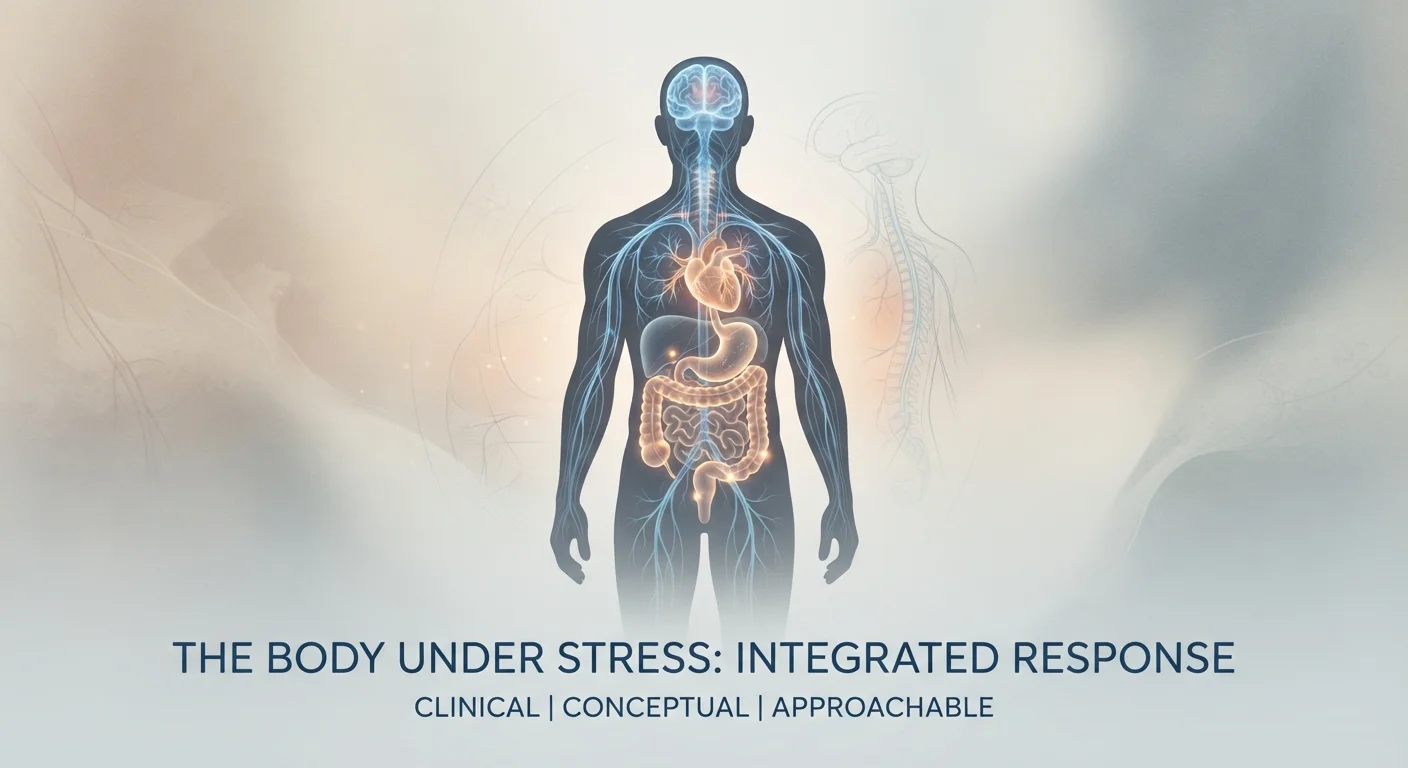
The Body's Alarm System
Stress is not a weakness or a mood - it is a biological process. When your brain perceives a threat (a looming deadline, a difficult conversation, financial pressure), it signals the adrenal glands to flood the body with cortisol and adrenaline. Your heart rate rises, muscles tense, breathing quickens, and digestion slows. These responses evolved to help our ancestors outrun predators. They are remarkably effective - for a few minutes.
The problem is that the modern brain often cannot distinguish between a charging animal and a mounting inbox. For many people, the alarm never fully resets. That sustained activation is what distinguishes everyday stress from chronic stress, and it is chronic stress where measurable physical harm begins.
“The body keeps the score. Stress is not an abstract psychological state - it is a cascade of biological events that leaves measurable traces in tissue, hormones, and neural pathways.”
— Bessel van der Kolk, Psychiatrist and author specializing in trauma and stress physiology
What Chronic Stress Does to Each System
Researchers have documented stress-related changes across virtually every major body system. Here is what the evidence shows:
- Cardiovascular system: Repeated surges of adrenaline increase heart rate and constrict blood vessels, contributing to elevated blood pressure over time. Long-term chronic stress is associated with an increased risk of heart disease, though other lifestyle factors are also involved.
- Immune system: Cortisol has anti-inflammatory properties in short bursts, which is useful. But chronically elevated cortisol suppresses immune cell activity, making the body less effective at fighting off viruses and slower to heal.
- Digestive system: The gut and brain are connected via the vagus nerve, so stress reliably disrupts digestion. This can show up as nausea, cramping, diarrhea, constipation, or worsening symptoms in people with conditions like irritable bowel syndrome (IBS).
- Nervous system: Prolonged activation of the sympathetic nervous system - the "gas pedal" of arousal - makes it harder for the parasympathetic system (the "brake") to engage. This manifests as difficulty relaxing, hypervigilance, or a persistent sense of being on edge.
77%
Adults reporting physical symptoms of stress
According to American Psychological Association surveys, a substantial majority of U.S. adults regularly experience physical symptoms they attribute to stress, including fatigue, headache, and upset stomach.
2-3×
Increased cardiovascular risk with chronic work stress
Research published in peer-reviewed cardiology literature suggests individuals with chronic high-demand, low-control work stress face meaningfully elevated risk of cardiovascular events compared to those with lower occupational stress.
~40%
Adults reporting stress-related sleep difficulties
The American Psychological Association has consistently found that roughly four in ten adults report that stress causes them to lie awake at night at least occasionally.
Sleep, Hormones, and the Feedback Loop
One of stress's most disruptive downstream effects is on sleep. Cortisol naturally peaks in the morning and tapers through the day. Chronic stress disrupts this rhythm, keeping cortisol elevated into the evening - precisely when the body needs it lowest to transition into sleep. The result is difficulty falling asleep, frequent waking, or non-restorative sleep.
Lost sleep then feeds back into the stress system. Sleep deprivation elevates cortisol, increases emotional reactivity, and reduces the prefrontal cortex's ability to regulate threat responses. In short, poor sleep makes stress harder to handle, and stress makes sleep harder to get. Interrupting this cycle is often one of the first targets in stress management.
Hormonal effects extend beyond cortisol. Chronic stress can suppress reproductive hormones, contribute to thyroid dysregulation in susceptible individuals, and affect appetite-regulating hormones like leptin and ghrelin - explaining why some people lose their appetite under stress while others experience significant cravings. If you notice your stress spilling into persistent anxiety, our article on understanding anxiety covers the overlap between these two experiences.
Simple Ways to Support Your Body's Recovery
Activating the parasympathetic nervous system - the body's "rest and digest" mode - doesn't require elaborate interventions. Slow, diaphragmatic breathing (inhaling for 4 counts, exhaling for 6-8) can measurably lower heart rate within minutes. Regular moderate physical activity, consistent sleep timing, and social connection are among the most evidence-supported buffers against chronic stress. These are supportive habits, not cures - if symptoms persist, speak with a healthcare professional.
Recognizing When Stress Needs More Than Self-Care
Most people can manage moderate, temporary stress with adequate rest, social support, physical activity, and time. But when stress becomes persistent, severe, or begins causing physical symptoms you cannot explain, it deserves professional attention - not because something is "wrong" with you, but because the body is signaling it needs support beyond what lifestyle changes alone can provide.
Physical warning signs worth discussing with a clinician include persistent headaches, gastrointestinal distress, chest tightness, frequent illness, or significant changes in sleep or appetite that last more than a few weeks. Mental and behavioral signs - difficulty concentrating, emotional numbness, increased use of alcohol, or withdrawal from activities - also merit attention.
For a more detailed look at when everyday stress crosses into territory that warrants professional support, see signs your stress has shifted into something that needs attention.
This article is for general informational and educational purposes only and is not a substitute for professional medical advice, diagnosis, or treatment. Always consult a qualified healthcare provider about symptoms, health concerns, or before making changes to your care.
Frequently Asked Questions
Yes, chronic stress can impair immune function, making you more susceptible to infections and slower to recover. It also contributes to conditions like high blood pressure, digestive disorders, and disrupted sleep over time. This is why stress is considered a risk factor in many physical health conditions, not just a mental state.
The two primary stress hormones are cortisol and adrenaline (epinephrine). Adrenaline triggers the immediate fight-or-flight response - faster heart rate, heightened alertness. Cortisol sustains that response and regulates functions like blood sugar and inflammation, but elevated levels over long periods can become harmful.
Elevated cortisol in the evening interferes with the natural drop in arousal needed to fall and stay asleep. Stress also tends to increase mental rumination at bedtime, further delaying sleep onset. Poor sleep, in turn, makes the stress response harder to regulate - creating a cycle that can be difficult to break without intervention.
Yes. Short-term, manageable stress - sometimes called "eustress" - can sharpen focus, boost motivation, and improve performance. The distinction lies in duration and intensity: brief, recoverable stress is part of normal life, while prolonged or overwhelming stress is where health consequences emerge.
Seek professional guidance if stress feels unmanageable, is significantly affecting your work, relationships, or physical health, or persists for several weeks without relief. Physical symptoms like chest pain, severe headaches, or digestive problems that worsen under stress also warrant medical evaluation.
The content on this site is for informational purposes only and is not a substitute for professional advice. Always consult a qualified professional for guidance specific to your situation.