

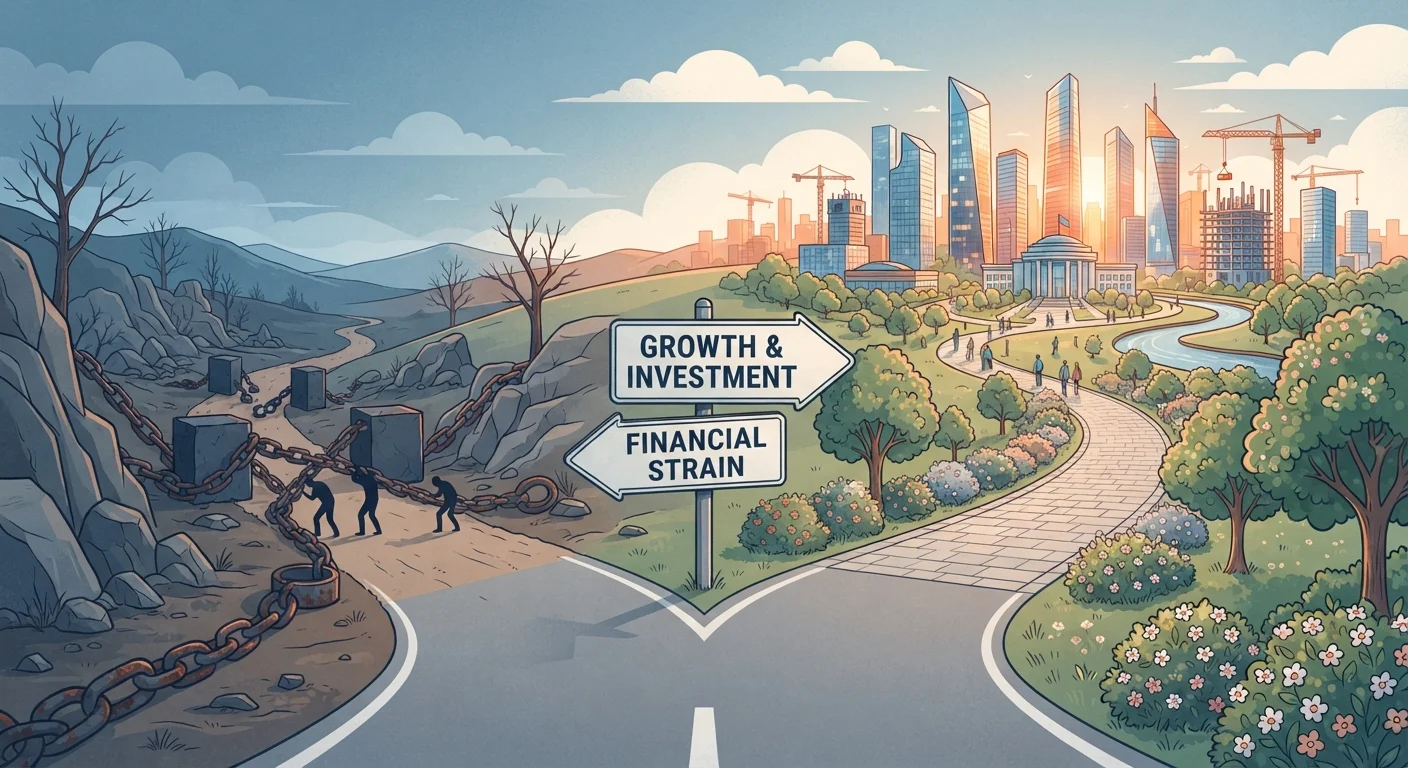
Option A
Good Debt
Borrowing with a productive purpose.
Best for: Financing assets or opportunities that are likely to grow in value or generate income over time.
Option B
Bad Debt
Borrowing that costs more than it returns.
Best for: Understanding what patterns of borrowing tend to erode financial health rather than build it.
What Makes Debt 'Good' or 'Bad'?
The terms good debt and bad debt are shorthand used by financial educators to help borrowers think about whether a loan is likely to work for them or against them over time. They are not formal legal or accounting categories - they are practical thinking tools.
Two questions sit at the core of the distinction:
- What is the loan financing? Does it fund something that tends to hold or grow in value, or does it pay for something that loses value or is consumed immediately?
- What does the debt cost? Is the interest rate low enough that the potential benefit of the borrowed asset reasonably exceeds the cost of borrowing?
When both answers are favorable, the debt is generally considered productive. When neither is - for example, a high-rate loan used to finance a depreciating purchase - it fits the profile of costly, or "bad," debt. For a broader look at how all debt types are structured, see types of consumer debt at a glance.
| Criterion | Good Debt | Bad Debt |
|---|---|---|
| Typical purpose | Asset-building or income-generating | Consumption or depreciating purchase |
| Interest rate | Generally lower (e.g. mortgage, federal student loan) | Generally higher (e.g. credit cards, payday loans) |
| Long-term value | Asset may appreciate or increase earning power | Purchase typically loses value or is consumed |
| Common examples | Mortgage, federal student loan, business loan | High-rate credit card balance, payday loan |
| Risk of becoming problematic | Low to moderate (depends on amount and terms) | Higher, especially when balances compound |
| Repayment priority | Maintain on schedule; often lower urgency to prepay | Pay down aggressively to limit interest drag |
Common Examples of Each Type
Mortgages are the most cited example of good debt. Real estate has historically appreciated over long periods, and mortgage interest rates are typically among the lowest available to consumers. The loan enables ownership of an asset that may outpace its cost over decades.
Federal student loans often fall into the good-debt category when they fund education that leads to meaningfully higher earning potential. The caveat - and it matters - is that the outcome depends heavily on field of study, institution, and the total amount borrowed relative to expected income.
Business loans used to generate revenue or expand a productive enterprise can also qualify, provided the return on the investment exceeds the cost of the loan.
On the other side, high-interest credit card balances carried month to month are the most common example of bad debt. Credit card annual percentage rates (APRs) - the yearly cost of carrying a balance, expressed as a percentage - frequently run well above those of other consumer loans, and the purchases they fund are usually consumed rather than retained as assets.
Payday loans and certain high-rate personal loans often fall into the same category: expensive financing for immediate needs with no long-term asset to show for it. To see how certain behaviors quietly extend these costs, read about patterns that make debt worse over time.
20%+
Typical credit card APR range
According to Federal Reserve consumer credit data, average credit card interest rates charged on accounts with balances have frequently exceeded 20% annually in recent years.
~$244K
Median US mortgage balance
Federal Reserve data indicates that mortgage debt remains the largest single category of US household debt, reflecting its role as a primary vehicle for asset-backed borrowing.
3x
Earning premium linked to bachelor's degree
Bureau of Labor Statistics data has consistently shown that workers with a bachelor's degree earn significantly more over a lifetime than those with only a high school diploma, supporting the educational-investment rationale for student borrowing.
Why 'Good' Debt Can Still Go Wrong
The good-debt label is a starting framework, not a safety guarantee. A mortgage taken on a property priced far above a borrower's realistic ability to repay can become financially destabilizing - regardless of the asset's long-term potential. Similarly, student loan debt that far exceeds the earning capacity of the credential it funded can create a years-long repayment burden.
The amount of debt and the terms matter just as much as its category. A loan with favorable intent but unaffordable monthly payments is still a financial strain. This is why personal finance educators frequently distinguish between the type of debt and the management of it - and why the good/bad framework works best as a first filter, not a final decision.
Several widely repeated beliefs about debt - including the idea that all debt is equally harmful - don't hold up under scrutiny. Our article on common myths about carrying debt explores where conventional wisdom goes off track.
This article is for general informational and educational purposes only and does not constitute personalized financial or legal advice. Consult a qualified financial professional before making borrowing decisions based on your individual circumstances.
The Framework Has Limits
Good-debt and bad-debt labels are educational tools, not financial verdicts. A borrower's income, existing obligations, job stability, and total debt load all affect whether any specific loan is manageable. What is sustainable for one household may be burdensome for another. Use this framework as a starting point for thinking, then consult a licensed financial adviser for decisions specific to your situation. For a complete foundation on how debt works, see our guide to everything everyday borrowers need to know about debt.
The content on this site is for informational purposes only and is not a substitute for professional advice. Always consult a qualified professional for guidance specific to your situation.