

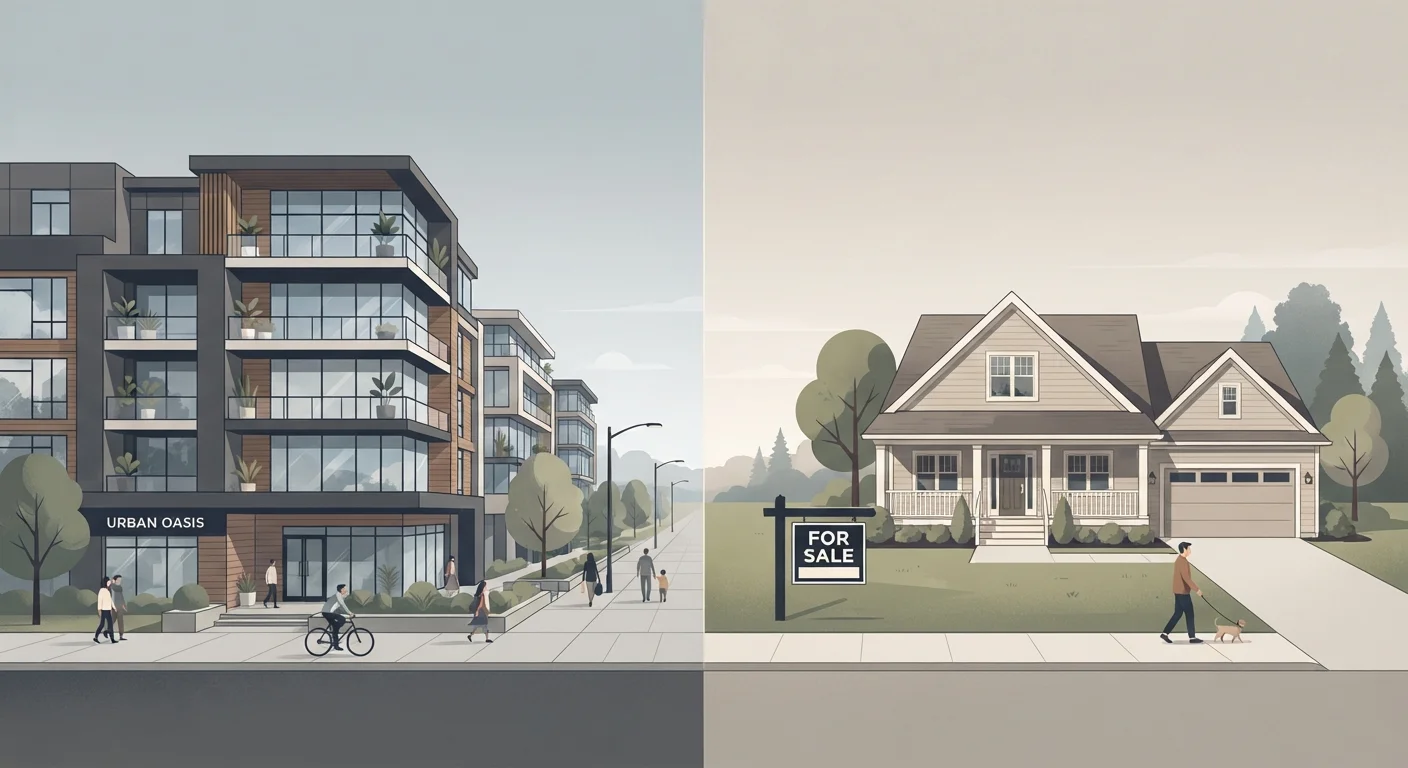
Option A
Renting
The flexible, lower-commitment path to housing.
Best for: People prioritising mobility, lower upfront costs, or living in markets where buying is financially out of reach.
Option B
Buying
The equity-building, long-term stability option.
Best for: People with stable income and roots who want to build wealth and control their living environment over many years.
The Core Trade-Off: Flexibility vs. Equity
The debate between renting and buying a home is often framed as a question of financial wisdom - with the popular but misleading notion that renting is "throwing money away." In reality, both paths involve real costs and real benefits, and neither is universally superior.
Renting delivers flexibility. Tenants can relocate with relatively little friction, avoid maintenance headaches, and often spend less in the short run. Renting basics - from leases to tenant rights - are worth mastering before signing any agreement. Buying, on the other hand, builds equity (ownership value) in an asset over time, offers stability, and allows homeowners to customize their space without a landlord's approval.
The critical question isn't which path is better in the abstract - it's which aligns with your current finances, how long you plan to stay, and what the local housing market looks like where you want to live.
| Criterion | Renting | Buying |
|---|---|---|
| Upfront costs | Deposit + first/last month | Down payment + closing costs |
| Monthly payment predictability | Varies with lease renewal | Fixed (with fixed-rate mortgage) |
| Equity building | None | Yes, over time |
| Flexibility to relocate | High (lease-dependent) | Low (selling takes time and cost) |
| Maintenance responsibility | Landlord handles most repairs | Owner responsible for all |
| Customisation freedom | Limited by landlord rules | Full control |
| Tax considerations | No direct housing deductions | Potential mortgage interest deduction |
| Market risk exposure | Low | High (property values fluctuate) |
The Real Costs on Each Side
Monthly rent is not the only cost renters face. Application fees, security deposits, pet fees, renters insurance, and parking charges can add hundreds of dollars to your move-in total. Hidden renting costs that don't appear in a listing price are worth budgeting for carefully.
On the buying side, upfront costs typically include a down payment (often 3-20% of the purchase price), closing costs (generally 2-5% of the loan amount), home inspection fees, and moving expenses. Ongoing costs extend well beyond the mortgage payment: property taxes, homeowners insurance, HOA fees where applicable, and maintenance - which financial planners commonly estimate at roughly 1% of a home's value annually.
~4-7 years
Typical rent-vs.-buy break-even horizon
Financial analysts generally estimate it takes four to seven years of ownership before buying becomes cheaper than renting the equivalent home, though this varies significantly by market.
2-5%
Typical closing costs as share of loan
The Consumer Financial Protection Bureau notes buyers should anticipate closing costs in the range of 2-5% of the loan amount, separate from the down payment.
~1%
Annual maintenance cost rule of thumb
Many financial planners suggest budgeting roughly 1% of a home's purchase price each year for routine maintenance and repairs.
For buyers considering the long-term picture, mortgage refinancing is one tool that can reduce monthly costs if interest rates fall - but it carries its own costs and isn't always advantageous.
How Long You Stay Changes Everything
One of the most reliable guides in the rent-vs.-buy decision is how long you expect to remain in the same area. Analysts and financial planners frequently reference a "break-even horizon" - the point at which the cumulative cost of buying drops below the cumulative cost of renting the equivalent home. This figure varies significantly by market, but it commonly falls between four and seven years in many US metros.
If you sell a home before reaching that break-even point, transaction costs - real estate agent commissions, transfer taxes, and closing fees - can easily erase any equity you built. Renters who relocate frequently avoid these exit costs entirely.
The financial and lifestyle trade-offs of renting vs. buying deserve careful consideration before committing to either path. Equally worth examining are common misconceptions: rental myths can lead renters to make costly assumptions about leases, landlord obligations, and tenant protections.
Local Markets Vary Widely
The rent-vs.-buy calculus looks very different in San Francisco than in Des Moines. In high-cost coastal metros, renting an equivalent property can be significantly cheaper on a monthly basis than owning it. In more affordable Midwest and Southern markets, the math often favors buying sooner. Always compare local rental rates against estimated ownership costs - including taxes and insurance - before drawing conclusions.
This article is for general informational purposes only and does not constitute financial, legal, or real estate advice. Consult a licensed real estate professional or financial adviser for guidance specific to your situation.
The content on this site is for informational purposes only and is not a substitute for professional advice. Always consult a qualified professional for guidance specific to your situation.