

Summary
28 items · 45-90 minutes per unit visit
Why a Checklist Matters Before You Sign
Signing a lease is a binding legal commitment - typically for 12 months or longer. Once you're in, your options for backing out without financial penalty are limited. Yet many renters visit an apartment once, fall for fresh paint and good lighting, and sign within days without asking the questions that matter most.
A structured checklist protects you in two ways. First, it forces a room-by-room physical inspection that catches problems a casual walkthrough misses - slow drains, soft floors, missing window locks, or HVAC units that run but don't cool effectively. Second, it ensures you scrutinize the lease and fee structure before committing, not after. As noted in our guide to hidden renting costs, move-in expenses can run hundreds of dollars beyond what's listed - parking, pet deposits, utility hookup charges, and application fees all add up quickly.
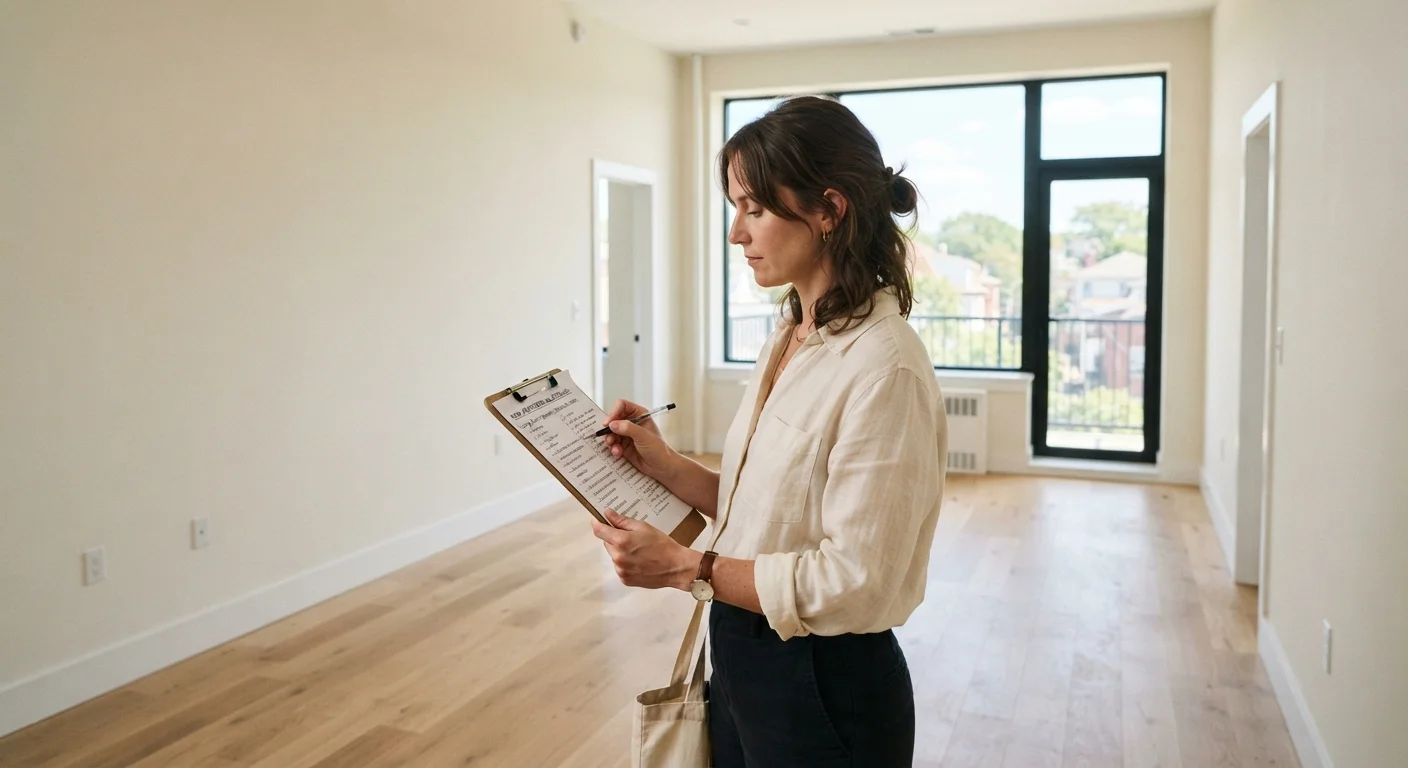
Use this checklist on every unit you seriously consider. Bring a phone for photos and take notes in real time.
Smartphone camera
Document existing damage, unit conditions, and any disclosures provided during the walkthrough.
Notepad or checklist app
Record observations, landlord answers, and follow-up questions room by room.
Flashlight or phone torch
Inspect dark corners, under sinks, and inside closets or cabinets for damage or pests.
Measuring tape
Verify room dimensions match the listing and confirm your furniture will fit before committing.
Outlet tester (plug-in)
Quickly verify that outlets are wired correctly and grounded - a key safety check.
The Full Apartment Hunting Checklist
Work through each group below during your visit. Prioritize must items - skipping them leaves you exposed to disputes, safety issues, or unexpected costs. Should items are strongly recommended, and nice-to-have items can tip the balance between comparable units.
Physical Condition - Interior
Appliances and Systems
Building and Common Areas
Lease Terms and Fees
Landlord and Property Research
Verbal Promises Are Not Enforceable
If a landlord tells you something will be fixed, replaced, or included - get it in writing before you sign the lease. A handshake or a text message is rarely sufficient protection if a dispute arises later. Addenda to a lease agreement, signed by both parties, carry legal weight; casual assurances do not. Never sign a lease assuming promised repairs will happen post-move-in.
Before and After You Move In
Completing this checklist during your search is only part of the process. Before signing, review your credit standing - landlords routinely pull credit reports as part of their evaluation. Our credit report checkup guide walks through what to look for and how to address errors ahead of time. For a broader view of what landlords assess, see how rental applications work.
On move-in day, photograph every room before bringing in your belongings. Capture pre-existing scuffs, stains, hardware damage, and appliance conditions. Share dated photos with your landlord in writing. This documentation is your primary defense if deposit disputes arise at move-out - a process covered in detail in moving out without losing your deposit.
If renting isn't the right long-term fit, our buying a home hub covers the key steps and concepts for purchasing your first or next property.
This article is for general informational purposes only and does not constitute legal or financial advice. Lease terms, tenant rights, and landlord obligations vary by state and municipality. Consult a licensed attorney or tenant advocacy organization for guidance specific to your situation.
The content on this site is for informational purposes only and is not a substitute for professional advice. Always consult a qualified professional for guidance specific to your situation.