

Why "Unlimited" Rarely Means What It Sounds Like
The word "unlimited" has become one of the most overloaded terms in the wireless industry. Carriers use it accurately in a narrow legal sense - there's no hard cutoff that stops your data entirely - but most plans include a soft data cap, sometimes called a premium data threshold. Once you cross it, your speeds drop significantly.
This isn't hidden, exactly, but it's rarely front and center. The fine print in a plan's terms and conditions will specify the threshold, the post-threshold speed, and any exceptions. Getting comfortable reading that language is the single most useful skill for evaluating a phone plan - much like understanding exclusion clauses when reading your auto insurance policy.
Plan Tiers Use Different Priority Levels
Carriers typically offer multiple plan tiers at different price points. Higher-tier plans generally include a larger premium data allotment, a higher deprioritization threshold, and more hotspot data. The differences between tiers are where you'll find the most meaningful variation in real-world performance - especially in densely populated areas during peak hours.
Plans are generally structured in tiers, with lower-cost tiers having lower soft caps and higher deprioritization sensitivity. The marketing page typically highlights the tier's best features; the plan details document contains the actual numbers.
Throttling vs. Deprioritization: Two Different Speed Reductions
These terms are often used interchangeably, but they describe distinct mechanisms - and understanding the difference helps you know what to expect from your plan.
Throttling
Throttling is a predetermined speed reduction that activates once your usage crosses the plan's soft cap. It's consistent and predictable: once triggered, your speeds stay reduced until your billing cycle resets, regardless of how congested the network is. Common post-throttle speeds range from 1.5 Mbps to 3 Mbps - enough for basic browsing and standard-definition video, but not much else.
Deprioritization
Deprioritization is dynamic. It happens during periods of network congestion, when a cell tower is handling high traffic. Customers on lower-priority plan tiers get their speeds temporarily reduced so that higher-priority users get a better experience. When congestion eases, your speed returns to normal - even if you haven't used much data that month.
1.5 Mbps
Typical throttled speed on many unlimited plans
At 1.5 Mbps, standard-definition video streams are possible but HD video and large downloads will be noticeably impaired.
600 Kbps
Common hotspot speed after high-speed allotment is used
600 Kbps is below the threshold needed for reliable video calls or most streaming services, making it insufficient for productive remote work.
480p
Default video cap on some base-tier unlimited plans
Standard-definition 480p may be the default streaming quality on entry-level unlimited plans, regardless of remaining data or network conditions.
Both mechanisms can appear in the same plan. A user who has crossed the soft cap and is in a congested area may experience both simultaneously.
What Carriers Often Don't Highlight
Beyond the headline data cap, several other limits tend to get less attention in the marketing materials:
- Hotspot caps: Mobile hotspot data - which lets your phone share its connection with a laptop or tablet - almost always has a separate, lower high-speed limit. After that, hotspot speeds often drop to 600 Kbps or slower, which is barely functional for most tasks.
- Video streaming resolution limits: Many plans cap video resolution at 480p or 720p by default, even when you have full-speed data remaining. Some plans charge extra to remove this cap.
- International data: Roaming rules differ significantly from domestic terms. Before traveling, it's worth reviewing how your plan handles international connectivity - or whether a local SIM makes more sense, as covered in our guide on international roaming vs. local SIM cards.
- Network type distinctions: Some plans offer full-speed access only on certain network types. Understanding the difference between 5G and LTE matters here - see 5G vs. LTE explained for practical context.
Monitor Usage Before You Hit the Cap
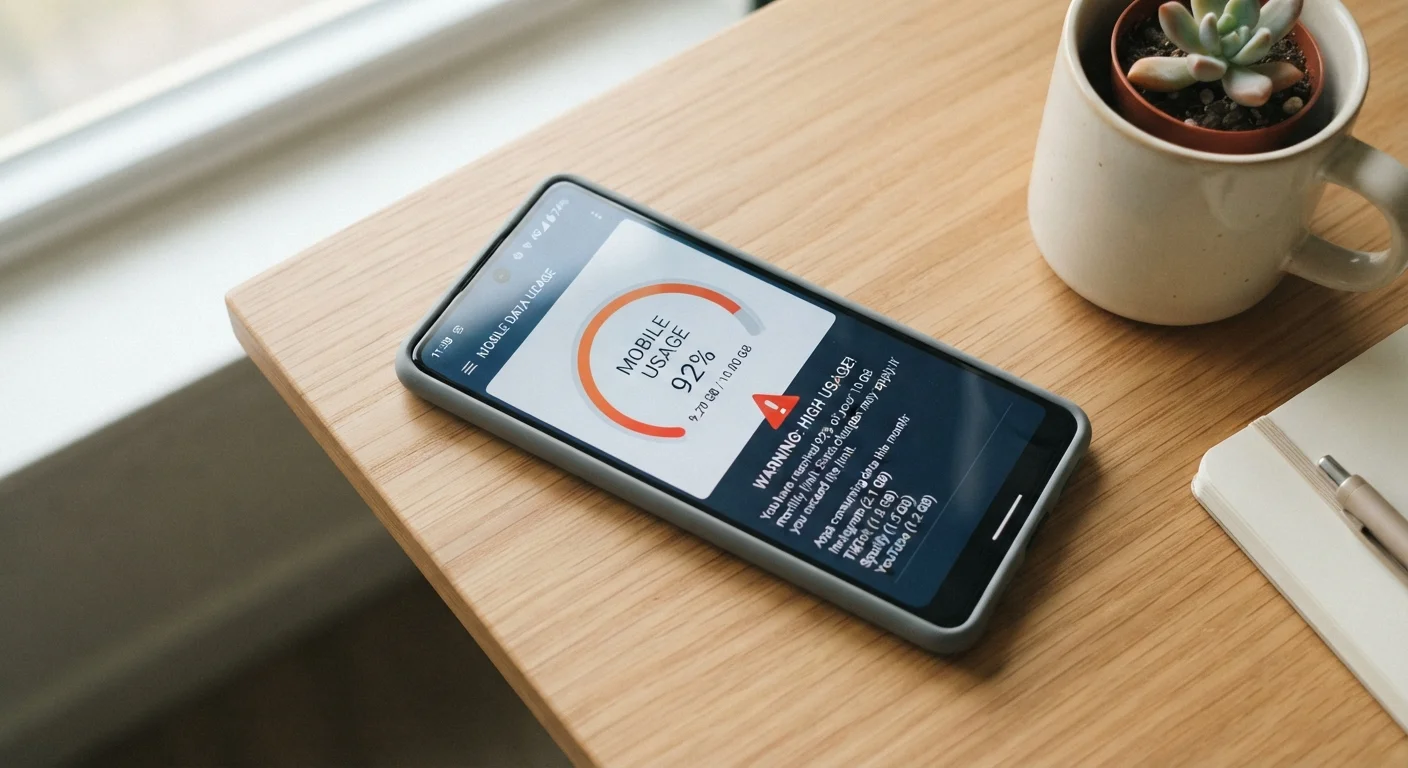
Most carriers offer a free app that shows your real-time data usage. Check it mid-cycle so you can shift data-heavy tasks - like streaming or downloads - to Wi-Fi before you hit the throttling threshold. Your phone's built-in settings also track cellular data usage by app, which helps identify which apps are consuming the most data in the background.
How to Read a Plan Before You Sign
The marketing page for a phone plan is designed to sell, not inform. The plan's legal terms or "plan details" document - usually a PDF linked in small text - contains the numbers that matter. When reviewing a plan, look for:
- Premium data threshold: The exact GB amount before throttling activates.
- Post-threshold speed: What speed you're throttled to, expressed in Mbps or Kbps.
- Hotspot high-speed allotment: Separate from on-device data.
- Deprioritization threshold: Some plans list this separately from the throttling cap.
- Video streaming caps: Resolution limits and whether they can be removed.
If you're also evaluating whether to use a carrier-locked or unlocked device, that choice can affect which carriers you can switch to later - a topic covered in our explainer on locked vs. unlocked phones. And if you've encountered surprising terms in other types of contracts, our piece on common smartphone myths addresses several misconceptions that affect how consumers shop for devices and plans alike.
Frequently Asked Questions
Throttling means your carrier deliberately reduces your data speeds after you've used a set amount of data in a billing cycle. You still have internet access, but pages load more slowly and video may buffer. Speeds typically return to normal at the start of your next billing cycle.
In most cases, no. Carriers use the term "unlimited" to mean there's no hard cutoff, but nearly all plans include a threshold at which your speeds are throttled. The specific threshold varies by plan tier and carrier, and is disclosed in the terms and conditions.
Deprioritization temporarily slows your speeds during periods of network congestion - even if you haven't reached your data cap. Unlike throttling, it resolves on its own when network traffic lightens. Premium plan tiers typically carry higher priority thresholds before deprioritization kicks in.
Monitor your data usage through your carrier's app or your phone's built-in settings. Connecting to Wi-Fi whenever possible preserves your mobile data allowance. You can also reduce background data usage by adjusting app settings so apps don't download or sync over cellular by default.
Yes, and hotspot data is usually subject to a stricter cap than on-device data. Many plans allow unlimited on-device data at reduced speeds after a soft cap, but hotspot usage is throttled to very slow speeds - sometimes 600 Kbps - after a much smaller high-speed allotment.
Look for the high-speed data threshold (where throttling begins), the hotspot data allotment, and any deprioritization thresholds. Also check whether video streaming is capped at a lower resolution by default, as some plans limit video quality even before you hit any data cap.
The content on this site is for informational purposes only and is not a substitute for professional advice. Always consult a qualified professional for guidance specific to your situation.