

Our Verdict
No single currency exchange method is universally best - the right choice depends on your destination, trip length, and spending habits. For most US travelers, a no-foreign-transaction-fee credit card combined with occasional ATM withdrawals covers the majority of situations at a reasonable cost.
| Best for | Recommended |
|---|---|
| Convenience-first travelers passing through airports | Airport Kiosk (last resort only) |
| Those who need local cash in hand regularly | ATM Abroad |
| Everyday purchases, hotels, and restaurants | No-Foreign-Fee Credit Card |
| Travelers visiting destinations with less reliable ATM access | Bank Exchange Before Departure |
Why Your Exchange Method Matters More Than You Think
When you travel internationally, every dollar you convert is subject to fees, markups, and exchange rate spreads - and the method you choose determines how much of your budget actually goes toward experiences versus transaction costs. For a two-week trip, a poor exchange strategy can quietly drain hundreds of dollars.
Americans have four main options for accessing foreign currency: exchanging cash at a bank before departure, withdrawing from ATMs abroad, using currency exchange kiosks (especially at airports), or paying directly with a credit card that waives foreign transaction fees. Each carries real tradeoffs worth understanding before you pack your bags. Just as booking timing affects your flight and hotel costs, your exchange strategy affects your overall travel budget in ways that aren't always obvious upfront.
Breaking Down Each Option
Bank Exchange Before Departure: Many US banks and credit unions can order foreign currency for customers, often at rates close to the interbank (mid-market) rate with modest fees. Major currencies like euros, British pounds, and Japanese yen are usually available; more obscure currencies may require advance notice of several days. This method gives you cash in hand before you land - useful if you're heading somewhere with limited ATM access or arriving late at night.
ATMs Abroad: Using a foreign ATM connected to major networks (Visa/Plus, Mastercard/Cirrus) typically yields competitive exchange rates because the conversion happens at the network level. The main costs to watch are your US bank's foreign ATM fee (often $3-$5 per withdrawal) and the foreign ATM operator's own surcharge. Withdrawing larger amounts less frequently reduces per-transaction costs - though don't carry more cash than you're comfortable losing.
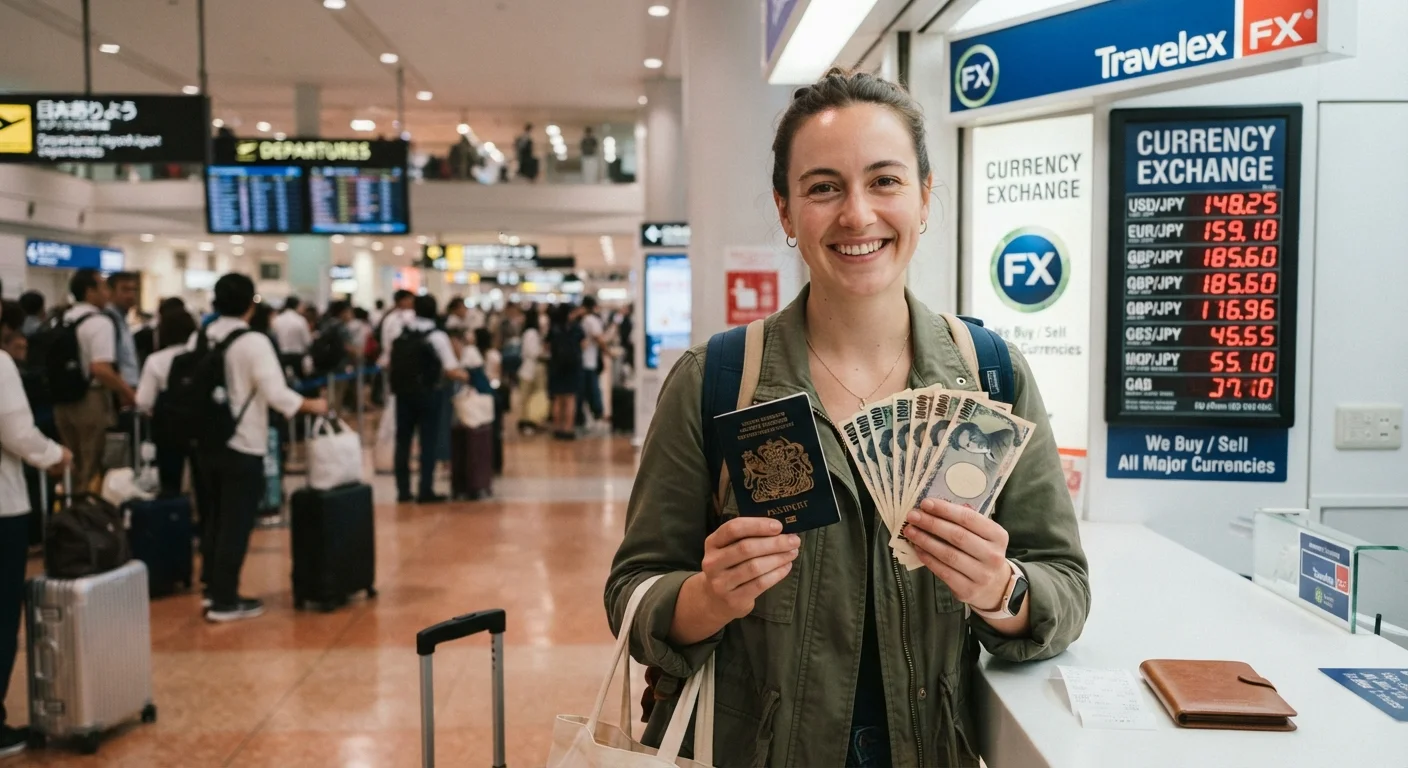
Airport Kiosks and Exchange Bureaus: These are everywhere in international terminals precisely because they're convenient - but convenience comes at a steep price. Kiosks make money through wide spreads between the buy and sell rate, plus flat fees. Unless you're in a genuine pinch, airport exchanges are worth avoiding.
| Bank Exchange | ATM Abroad | Airport Kiosk | Credit Card (No FX Fee) | |
|---|---|---|---|---|
| Exchange Rate Quality | Good to moderate | Good | Poor | Excellent |
| Fees | Low to moderate | ATM surcharge may apply | High markup + fees | None to minimal |
| Convenience | Requires advance planning | Widely available globally | Very high - on-site | Accepted most places |
| Cash in Hand | Yes | Yes | Yes | No - card only |
| Best For | Pre-trip preparation | Regular cash needs | True emergencies | Hotels, restaurants, shops |
| Risk of Hidden Costs | Low | Moderate | High | Low (if card chosen carefully) |
No-Foreign-Transaction-Fee Credit Cards: For purchases at hotels, restaurants, and shops, a credit card that waives foreign transaction fees is hard to beat. These cards convert at the network exchange rate - typically very close to the mid-market rate - with no added percentage. They also offer purchase protections and fraud liability limits that cash does not. The limitation: not everywhere accepts cards, particularly smaller markets, rural areas, or street vendors.
Beware of 'Dynamic Currency Conversion'
Abroad, merchants and ATMs may offer to charge you in US dollars instead of local currency - this is called dynamic currency conversion (DCC). It sounds convenient, but the exchange rate applied is usually far less favorable than what your bank or card would use. Always choose to pay in the local currency when given the option.
Building a Practical Strategy for Your Trip
For most international trips, a layered approach works well. Use a no-foreign-fee credit card as your primary payment tool for larger, card-accepting purchases. Supplement with periodic ATM withdrawals for local cash - small markets, taxis, tips, and entry fees often require it. If your US bank reimburses ATM fees or you open a travel-focused checking account before departure, your cash costs drop further.
Notify Your Bank Before You Fly
Before departing, let your bank and card issuers know your travel dates and destinations. This simple step reduces the chance your card gets flagged for suspicious activity mid-trip. Many banks allow you to set travel notices through their mobile apps in just a few taps.
Order a modest amount of local currency from your bank before leaving if your destination has spotty ATM coverage, or if you'll arrive outside banking hours. Avoid converting large sums at airport kiosks; if you must use one, exchange only a small emergency amount.
Staying connected to manage your accounts and monitor for fraud abroad is equally important - comparing roaming plans and local SIM cards can help you choose a mobile solution that keeps you in control without surprise charges.
Up to 15%
Markup at airport currency kiosks
Consumer finance research has found airport exchange booths commonly charge spreads of 10-15% above the mid-market rate, making them among the costliest options.
1-3%
Typical foreign transaction fee on standard credit cards
Many standard US credit cards charge a foreign transaction fee in this range; cards marketed for travel often waive it entirely.
This article is for general informational purposes only and does not constitute financial advice. Exchange rates, fees, and card terms vary by institution and change frequently - verify current details directly with your bank or card issuer before traveling.
The content on this site is for informational purposes only and is not a substitute for professional advice. Always consult a qualified professional for guidance specific to your situation.