

Summary
32 items · 45-90 minutes
Why a Packing Checklist Makes All the Difference
International travel introduces a layer of complexity that domestic trips simply don't have - foreign entry requirements, longer flights, unfamiliar pharmacies, and the very real possibility that your checked bag arrives a day later than you do. A structured packing checklist transforms a stressful scramble into a confident departure.
Before you dive into what goes in your bag, make sure the pre-travel logistics are squared away. Our pre-trip planning checklist covers passports, reservations, and home security steps you'll want to handle days - not hours - before leaving. For a broader look at the planning process, the Trip Planning hub is a great starting point.
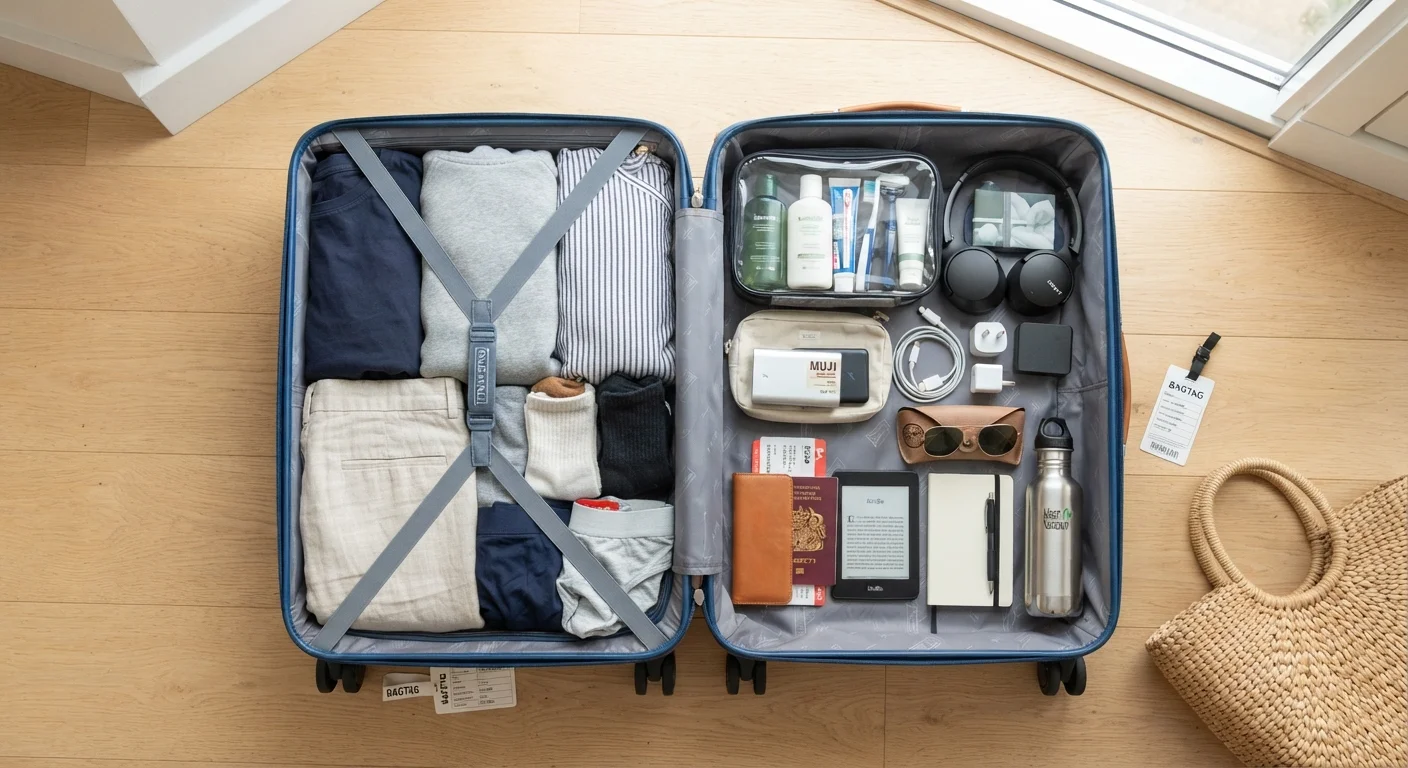
Below you'll find every category of essential, broken into logical groups so you can work through the list methodically. Use it the night before departure and again the morning you leave.
Travel Documents
Health & Medications
Electronics & Power
Clothing & Personal Items
Carry-On Essentials
Money & Security
Tools That Make the Process Easier
You don't need much to run through this checklist, but the right tools help you move faster and catch more gaps.
Packing App or Digital Checklist
Lets you track checked items, customize your list by destination, and reuse it across future trips without starting from scratch.
Luggage Scale
Confirms your checked bag meets airline weight limits before you get to the airport, avoiding surprise overweight fees.
Universal Power Adapter
Allows you to charge devices in countries with different outlet types and voltages without damaging your electronics.
TSA-Approved Toiletry Bag
A clear, quart-sized bag keeps your liquids organized and readily accessible during security screening.
Compression Packing Cubes
Organize clothing by category and compress volume so more fits in less space - especially useful for longer trips.
Portable Battery Pack
Keeps your phone and devices charged during long-haul flights and transit days without reliable outlet access.
A Few Critical Points Before You Zip Up
Even veteran travelers get tripped up by details that seem small until they aren't. Customs and border entry is one area worth studying before you fly - the experience differs meaningfully depending on how you arrive. Our overview of international customs entry by air vs. sea explains what Americans can generally expect at foreign airports.
Health preparation is another area that often gets underestimated. Certain destinations require documentation of specific vaccinations, and some clinics need weeks of lead time to complete a full immunization series. See our guide on health prep before an international trip for a full breakdown. Always verify entry and health requirements with official government and embassy sources before you travel, as rules can change.
Passport Validity Is Non-Negotiable
Many countries require your passport to be valid for at least six months beyond your planned return date. Airlines can deny boarding if this condition isn't met - and they typically check before you reach the gate. Verify your expiration date as soon as you book your trip, and allow several weeks for renewal if needed. Expedited passport services are available but involve additional time and cost.
Don't Pack Medications in Checked Luggage Alone
Checked bags can be delayed, lost, or misdirected, and international pharmacies may not carry your exact medication or formulation. Always keep a full supply of any essential prescription medication in your carry-on. If you're traveling with controlled substances, research your destination country's regulations in advance, as rules vary significantly and penalties for violations can be severe.
This article is for general informational purposes only. Entry requirements, health regulations, and customs rules vary by destination and change frequently - always verify current requirements with the relevant embassy, official government sources, and your healthcare provider before traveling.
The content on this site is for informational purposes only and is not a substitute for professional advice. Always consult a qualified professional for guidance specific to your situation.