

Why the Great Lakes Region Deserves a Closer Look
Most travellers scanning a U.S. map reach first for the coasts - the Atlantic, the Pacific, the Gulf. But tucked between them lies one of the continent's most compelling travel corridors: the Great Lakes region. Five massive inland seas, four National Lakeshores, and eight states combine to create an experience that blends outdoor adventure, urban culture, and genuine regional character.
| Number of Great Lakes | 5 (Superior, Michigan, Huron, Erie, Ontario) (U.S. Geological Survey) |
| Total U.S. shoreline miles | Approx. 4,500 miles across 5 states (NOAA) |
| States in the region | Minnesota, Wisconsin, Illinois, Indiana, Michigan, Ohio, Pennsylvania, New York |
| National Lakeshores | 4 (Apostle Islands, Sleeping Bear Dunes, Pictured Rocks, Indiana Dunes) (National Park Service) |
| Annual visitors to Indiana Dunes NP | Approximately 3 million (National Park Service, recent annual report) |
| Largest city on the lakes | Chicago, Illinois |
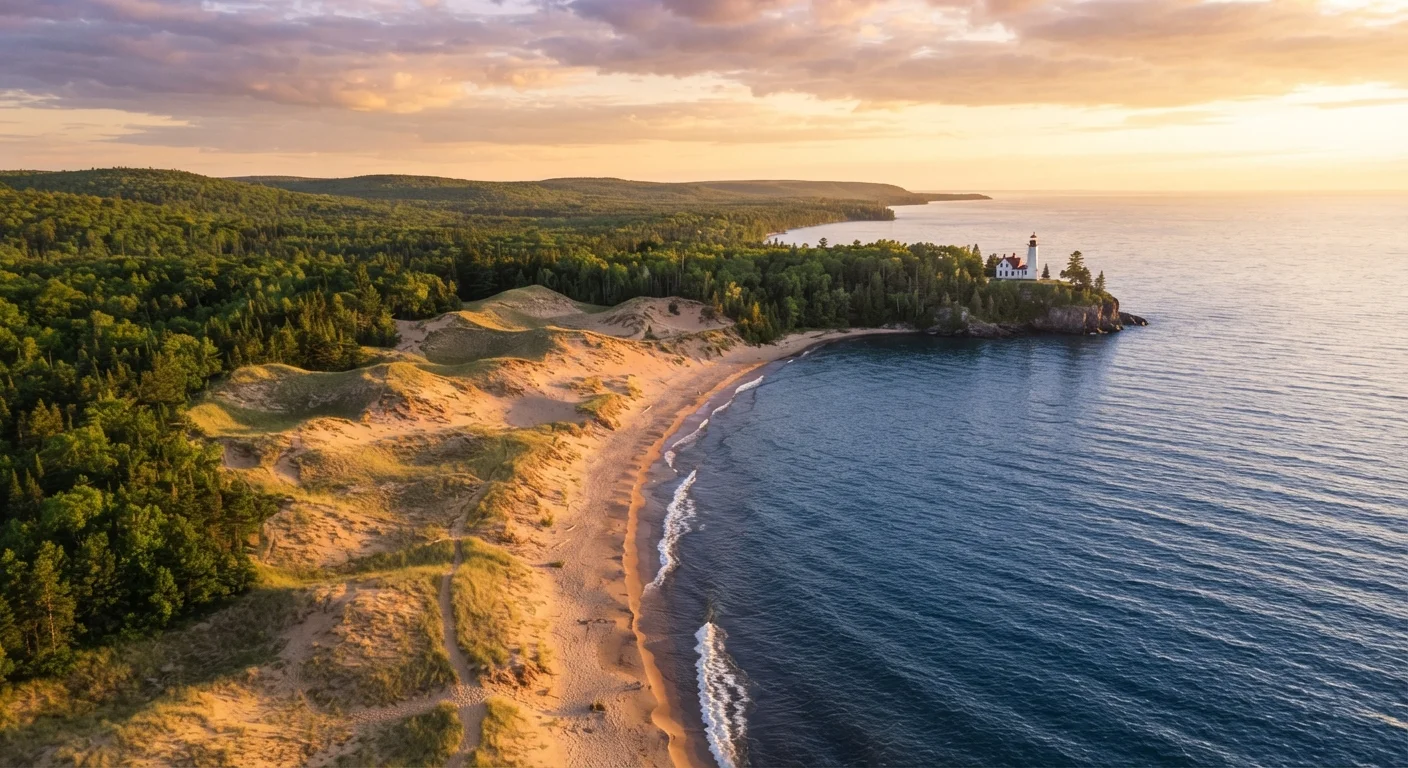
The lakes themselves set the scene. Lake Superior, the largest, feels almost oceanic - think cold deep water, dramatic cliffs at Pictured Rocks National Lakeshore in Michigan, and the remote Apostle Islands of Wisconsin, where sea caves carved into red sandstone reward kayakers willing to paddle out. Lake Michigan offers Chicago's legendary lakefront and the rolling dunes of Sleeping Bear - voted one of the most beautiful places in the U.S. in a national poll.
What makes this region tick as a travel destination isn't any single marquee attraction. It's the variety: towering sand dunes, lighthouse-dotted peninsulas, revitalized post-industrial cities, and agricultural landscapes producing everything from Door County cherries to Ohio's wine country grapes. Whether you have a long weekend or two weeks, the Great Lakes rewards both deep dives and quick detours.
Cities, Small Towns, and Hidden Gems
Chicago anchors the region's urban appeal with world-class architecture, museums, and its four-mile lakefront trail, but the Great Lakes cities beyond it deserve their own spotlight. Cleveland has emerged as a genuine food and arts destination, with the West Side Market and a thriving music scene. Detroit's comeback story is real - the city's Eastern Market, Motown Museum, and revitalized neighborhoods draw curious visitors in growing numbers. Milwaukee sits on a beautiful harbor and hosts one of the country's premier summer festivals.
Verify Entry and Safety Conditions Before Visiting
Some Great Lakes areas border Canada, and cross-border travel requires valid documentation such as a passport. Seasonal conditions - ice in winter, high waves in fall - can affect safety at lakeshores. Always check current National Park Service and local government advisories before your trip.
Smaller places reward slower travel just as generously. Traverse City, Michigan, has built a reputation for cherries, wineries, and proximity to Sleeping Bear Dunes National Lakeshore. Duluth, Minnesota, at the western tip of Lake Superior, offers a walkable harbor, the iconic Aerial Lift Bridge, and trailheads into the North Shore's boreal forests. For readers drawn to off-the-beaten-path stops, lesser-known American towns near the Great Lakes - like Bayfield, Wisconsin, or Port Clinton, Ohio - deliver history and local flavor without the crowds.
Road tripping the region also reveals the diversity of its landscapes. Lake Erie's southern shore passes through Ohio's wine country before climbing into the rocky reaches of Presque Isle State Park in Pennsylvania. Michigan's Upper Peninsula alone could fill a week's itinerary: waterfalls, pasties (a local meat pastry left by Cornish miners), and night skies with minimal light pollution.
21%
Of world's surface fresh water held in the Great Lakes
According to the U.S. Geological Survey, the five lakes collectively form the largest surface freshwater system on Earth.
4
National Lakeshores along the U.S. Great Lakes coast
The National Park Service manages four distinct lakeshore units offering hiking, paddling, and beach access across the region.
~3M
Annual visitors to Indiana Dunes National Park
Indiana Dunes consistently ranks among the most-visited National Park units in the Midwest, per NPS data.
Seasonality matters here. Summers bring beach weather and festivals; fall turns forests into a spectacle of color. Winter visitors willing to brave the cold find snowshoeing, cross-country skiing, and dramatically empty lakeshores. Spring wildflower blooms along the lakeshores signal a quieter, often overlooked shoulder season worth considering.
The Great Lakes region isn't a single destination - it's a framework for many trips, each uncovering a different facet of an underappreciated American treasure.
The content on this site is for informational purposes only and is not a substitute for professional advice. Always consult a qualified professional for guidance specific to your situation.