

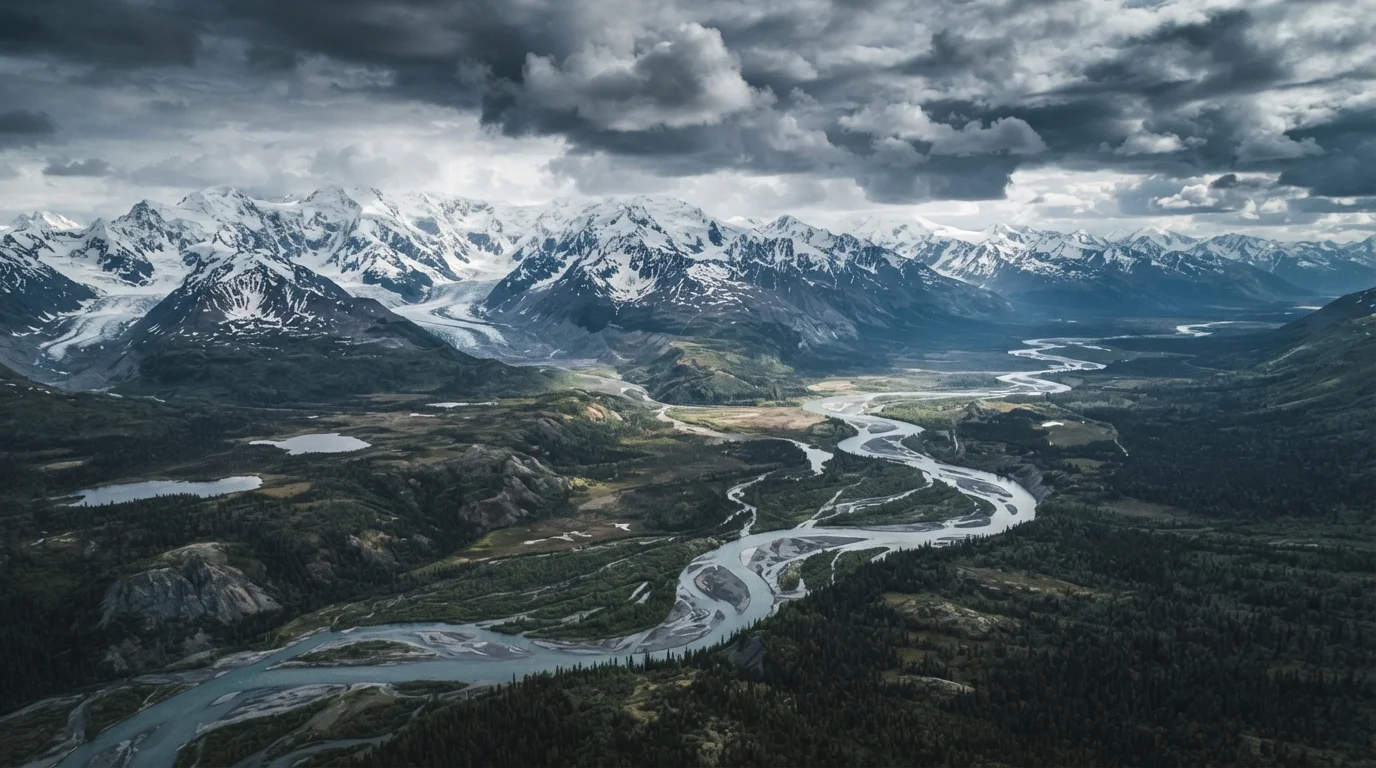
Understanding Alaska's Scale
Alaska is not just big - it is categorically different in scale from any other US state. At roughly 663,000 square miles, it would dwarf the lower 48's largest states stacked together. Anchorage to Juneau is about 570 miles as the crow flies, yet there is no road connecting them. Fairbanks sits roughly 360 miles north of Anchorage by road - a journey that still takes six or more hours by car.
This scale has a direct planning implication: you cannot casually visit multiple regions in a single week the way you might island-hop in Hawaii or drive between national parks in Utah. Selecting a geographic focus before booking anything else is the single most important early decision you will make. See our guide to structuring any trip for a framework that applies especially well here.
663,268
Square miles in Alaska
Alaska is more than twice the size of Texas, making it the largest state by a vast margin.
3M+
Annual visitors to Denali NP
Denali National Park draws over three million visitors in peak years, according to National Park Service data.
~$400
Average daily travel spend in Alaska
Alaska consistently ranks among the highest-cost US domestic destinations, with daily costs well above the national average.
Choosing the Right Season
Alaska's tourism window is real and narrow. The core summer season - roughly June through August - delivers long daylight hours (including near-24-hour light near the solstice), accessible roads, open lodges, and peak wildlife activity. This is also peak price and peak crowds, particularly on cruise routes and at Denali.
Shoulder season (May and September) offers meaningful advantages: lower accommodation costs, fewer visitors, dramatic fall color in September, and wildflower blooms in May. However, some roads and facilities may not yet be open or may be closing down.
Winter travel is a specialist pursuit - bitterly cold, many services closed - but rewarding for aurora chasers and those seeking dog sledding or ice fishing. Whatever season you choose, verify entry requirements, park schedules, and local conditions with official state and National Park Service sources before finalising plans.
Don't Underestimate Shoulder Season Closures
Many lodges, tour operators, and even some highway services operate only between late May and mid-September. Arriving outside this window without confirming availability in advance can leave you with limited food, fuel, and accommodation options in very remote areas. Always verify operating dates directly with each provider and local visitor centers.
Getting There and Getting Around
Most visitors fly into Anchorage (Ted Stevens Anchorage International Airport), which serves as the state's main hub. Fairbanks and Juneau also receive direct flights from Seattle and other West Coast cities. The Alaska Marine Highway System - a state-run ferry network - connects Southeast Alaska communities and offers a scenic, slower alternative to flying.
Once inside Alaska, transportation options fragment sharply by region. The Parks Highway connects Anchorage to Denali and Fairbanks by road. The Seward Highway south of Anchorage is considered one of America's most scenic drives. Beyond these corridors, bush planes (small charter aircraft) are the practical reality for reaching remote parks like Katmai, Lake Clark, and Wrangell-St. Elias.
Book your Denali park bus seat the moment reservations open - typically in December for the following summer. Waiting until spring almost always means unavailability at preferred dates.
Denali's road is closed to private vehicles beyond mile 15; park buses are the only way deeper into the park, making early booking a practical necessity, not just a preference.
When chartering a bush plane to a remote park, always build in an extra day on either end of your schedule - Alaskan weather grounds flights frequently, and missing a connection has real cost consequences.
Pilots routinely delay or cancel flights for safety in marginal weather; travellers who leave no buffer often face expensive last-minute rebooking or extended waits.
For road-trip logistics versus air-based planning, our overview of what road trips and flights each demand from the planner is a useful companion read.
Must-Visit Regions and Parks
Denali National Park anchors most itineraries for good reason: at 20,310 feet, Denali (formerly Mt. McKinley) is North America's tallest peak, and the park's single road offers unmatched wildlife viewing - grizzlies, wolves, moose, and Dall sheep are regularly spotted. Access into the park beyond the first 15 miles requires a reservation on park-operated buses.
Kenai Fjords National Park, accessible from Seward (about 2.5 hours from Anchorage), delivers glacier and marine wildlife experiences - orcas, humpbacks, sea otters, and calving glaciers - that are accessible even on a short trip. Glacier Bay National Park near Juneau is reachable only by air or boat and rewards those willing to make the extra effort.
For regional hidden gems: the Kenai Peninsula offers outstanding fishing and hiking without Denali's crowds. Homer, on Kachemak Bay, is a beloved artist community with world-class halibut fishing. McCarthy and Kennecott in Wrangell-St. Elias - the largest US national park - deliver extraordinary copper-era ghost-town history alongside glacier trekking.
Logistics, Costs, and Planning Essentials
Alaska travel consistently runs expensive. Flights, accommodation, fuel, ferry fares, and guided activities all carry a premium relative to continental US destinations. Building a realistic budget early - and padding it - is not optional. Our realistic travel budget guide walks through the expense categories most travellers underestimate, many of which apply directly to Alaska trips.
Key logistics to address early: campsite and lodge reservations for peak summer should be made months in advance - some Denali facilities book out within hours of opening. If you plan to fly into remote parks, vet air taxi operators through the relevant park's official resources. Bear safety equipment (bear spray, canisters) is expected and often required in backcountry areas.
If you are coming to Alaska for the first time, pairing this destination with solid foundational planning makes a real difference - the first-timer's trip planning walkthrough is a good place to start before diving into Alaska-specific bookings.
Pack Layers for Every Season
Alaskan weather can swing dramatically within a single day - from sunny and mild to wet and near-freezing - even in July. A waterproof outer layer, insulating mid-layer, and moisture-wicking base are non-negotiable regardless of when you visit. Packing light means you will be underprepared; err on the side of versatility.
This article provides general travel information. Entry requirements, park access rules, and transportation schedules change - always verify current conditions with official sources such as the Alaska Tourism Industry Association, the National Park Service, and the Alaska Marine Highway System before travelling.
The content on this site is for informational purposes only and is not a substitute for professional advice. Always consult a qualified professional for guidance specific to your situation.