

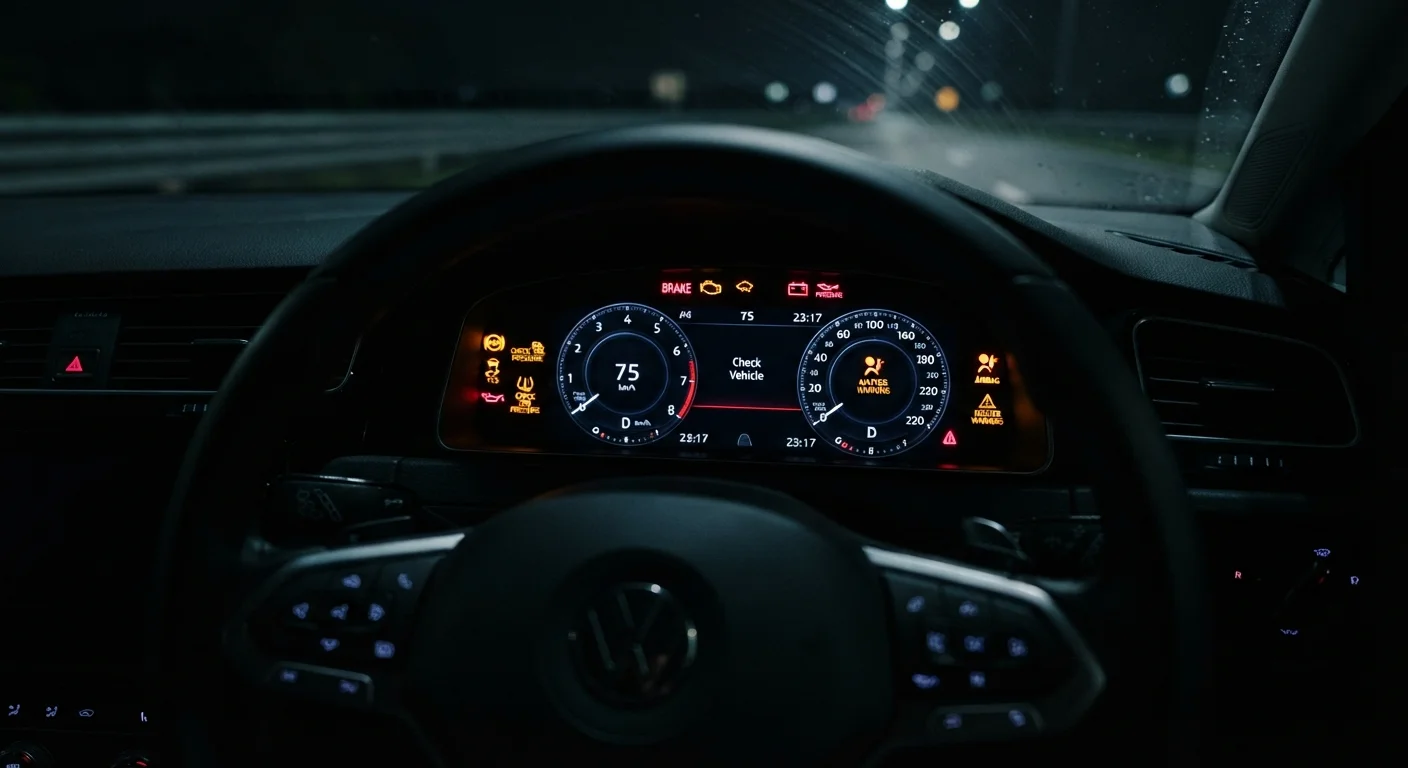
Why Dashboard Warning Lights Exist
Modern vehicles are equipped with an onboard diagnostics system (OBD) that continuously monitors dozens of sensors throughout the car. When something falls outside a normal range, the system triggers a warning light on your instrument cluster. These lights aren't suggestions - they're alerts that something requires your attention, ranging from routine maintenance to stop-immediately emergencies.
Understanding what each symbol means helps you make smarter decisions: whether to pull over immediately, schedule a shop visit within the week, or simply note it for your next routine service. Ignoring warning lights, even ones that seem minor, can accelerate wear and turn a small repair into a large one. See our common car maintenance myths article for more on misunderstood vehicle care habits.
| Total warning lights (typical modern vehicle) | 50-100+ possible indicators |
| Red lights | Require immediate action |
| Amber/yellow lights | Schedule service within days |
| First reference for any light | Your vehicle's owner's manual |
| OBD-II scanner availability | Available at most auto-parts stores, often free to use in-store |
Red Lights: Stop or Act Immediately
Red warning lights signal conditions that can cause immediate damage to your vehicle or put you at safety risk. If any of these illuminate while driving, reduce speed, avoid hard acceleration, and pull over safely as soon as possible.
OBD (Onboard Diagnostics)
A standardized system built into vehicles that monitors engine, transmission, and other key components. When a sensor detects an out-of-range value, the OBD system stores a fault code and triggers a warning light.
DTC (Diagnostic Trouble Code)
A coded error message stored by the OBD system when a fault is detected. Mechanics read these codes with a scanner to identify the source of a warning light.
TPMS (Tire Pressure Monitoring System)
A sensor-based system that alerts the driver when tire pressure in one or more tires drops significantly below the recommended level, typically by 25% or more.
Instrument Cluster
The panel directly in front of the driver that houses the speedometer, fuel gauge, and all warning light indicators.
Charging System
The combination of the alternator, battery, and related wiring that keeps a vehicle's electrical system powered while the engine is running.
- Oil Pressure Warning (oil can icon): Low oil pressure means engine components aren't being lubricated. Continuing to drive can cause severe engine damage within minutes. Pull over, turn off the engine, and check the oil level before proceeding.
- Engine Temperature Warning (thermometer in liquid): Your engine is overheating. Turn off the air conditioning, pull over safely, and let the engine cool - do not open the radiator cap while the engine is hot.
- Battery / Charging System (battery icon): The charging system isn't maintaining proper voltage. Your car may continue running briefly on battery reserve, but electronics will fail. Head to a mechanic promptly.
- Brake System Warning (exclamation mark in circle): Could indicate low brake fluid, a brake system fault, or that the parking brake is engaged. If the parking brake is released and the light persists, have it inspected before driving further. For deeper context, see our guide on what brake noises are telling you.
Amber Lights: Schedule Service Soon
Amber or yellow warning lights generally indicate a condition that needs attention but is unlikely to cause immediate damage. You can usually finish your trip safely, but you should schedule a service appointment within a few days.
- Check Engine Light (engine outline icon): One of the most common - and most misunderstood - lights. It can indicate anything from a loose gas cap to a misfiring cylinder. A mechanic or auto-parts store can read the stored diagnostic trouble code (DTC) with an OBD-II scanner to pinpoint the issue.
- TPMS (tire with exclamation mark): The Tire Pressure Monitoring System has detected that one or more tires are significantly under-inflated. Check and adjust tire pressure when it's safe to do so. Under-inflated tires affect handling, fuel economy, and tire longevity.
- Traction Control / Stability Control (car with skid lines): When flashing, it means the system is actively working to maintain grip - normal in slippery conditions. If it stays on solid, the system may be disabled or faulty.
- Maintenance Required (wrench or oil can): A reminder that a scheduled service interval - often an oil change - is approaching or overdue. Not an emergency, but worth addressing soon.
Before any long drive, a quick vehicle check can help you catch issues before they escalate - the pre-trip vehicle check guide walks you through the basics.
When in Doubt, Don't Ignore It
Consult your owner's manual first - it contains the exact meaning of every light specific to your vehicle's make and model, since some icons vary by manufacturer. If a light appears and you're unsure of its severity, treat it as important until a qualified mechanic tells you otherwise. Driving with an undiagnosed warning light can void certain warranties and, more importantly, puts you and other drivers at risk.
A few practical habits make a real difference: keep your owner's manual in the glove box, note which light appeared and under what conditions (cold start, highway speed, after heavy braking), and communicate those details clearly to your mechanic - it speeds up diagnosis significantly.
This article is for general informational purposes only. Always consult a qualified mechanic for diagnosis and repair of your specific vehicle.
The content on this site is for informational purposes only and is not a substitute for professional advice. Always consult a qualified professional for guidance specific to your situation.