

Not All Brake Noise Means the Same Thing
Your brakes communicate through sound — and the specific noise you hear carries a different message. Understanding those messages lets you make a calm, informed decision rather than guessing whether to pull over immediately or keep driving.
There are three main sounds to know: a squeal, a grind, and a pulse or shudder felt through the pedal. Each points to a different underlying issue, and each carries a different level of urgency.
Same Sound, Different Causes
Brake noise is not always pad-related. Debris caught between the pad and rotor, loose brake hardware, or even a stone lodged in the caliper can all produce unexpected squeals or rattles. A brief, one-time screech followed by silence is often debris passing through. Consistent, repeatable noise is what deserves attention.
What a Squeal Is Saying
Occasional squeal on a cold or damp morning: As rotors sit overnight, a thin layer of surface rust forms. The first few brake applications scrub it off, often with a brief squeal or light grinding sound. This is normal and resolves within moments of driving.
Persistent squeal on most stops: This is the wear indicator doing exactly what it was designed to do. When the friction material on a brake pad wears down to a set threshold — typically around 2–3 mm — a small metal tab built into the pad contacts the rotor and produces a consistent, high-pitched squeal. Think of it as a built-in alarm. Once you hear it regularly, schedule an inspection soon.
High-pitched squeal during light braking only: Some brake pad compounds, particularly semi-metallic pads, are prone to vibrating at certain frequencies under light pedal pressure. This can produce noise even when pads have plenty of life left. A mechanic can confirm whether the noise is compound-related or a wear issue.
Listen During Light Braking, Not Just Hard Stops
Wear indicator tabs are designed to make contact under normal braking pressure, not only during emergency stops. Pay attention to the sound your brakes make during everyday, gentle deceleration — that is when the squeal is most likely to appear. Testing your brakes in a quiet parking lot can help you hear clearly without road noise interference.
When Grinding and Pulsing Replace the Squeal
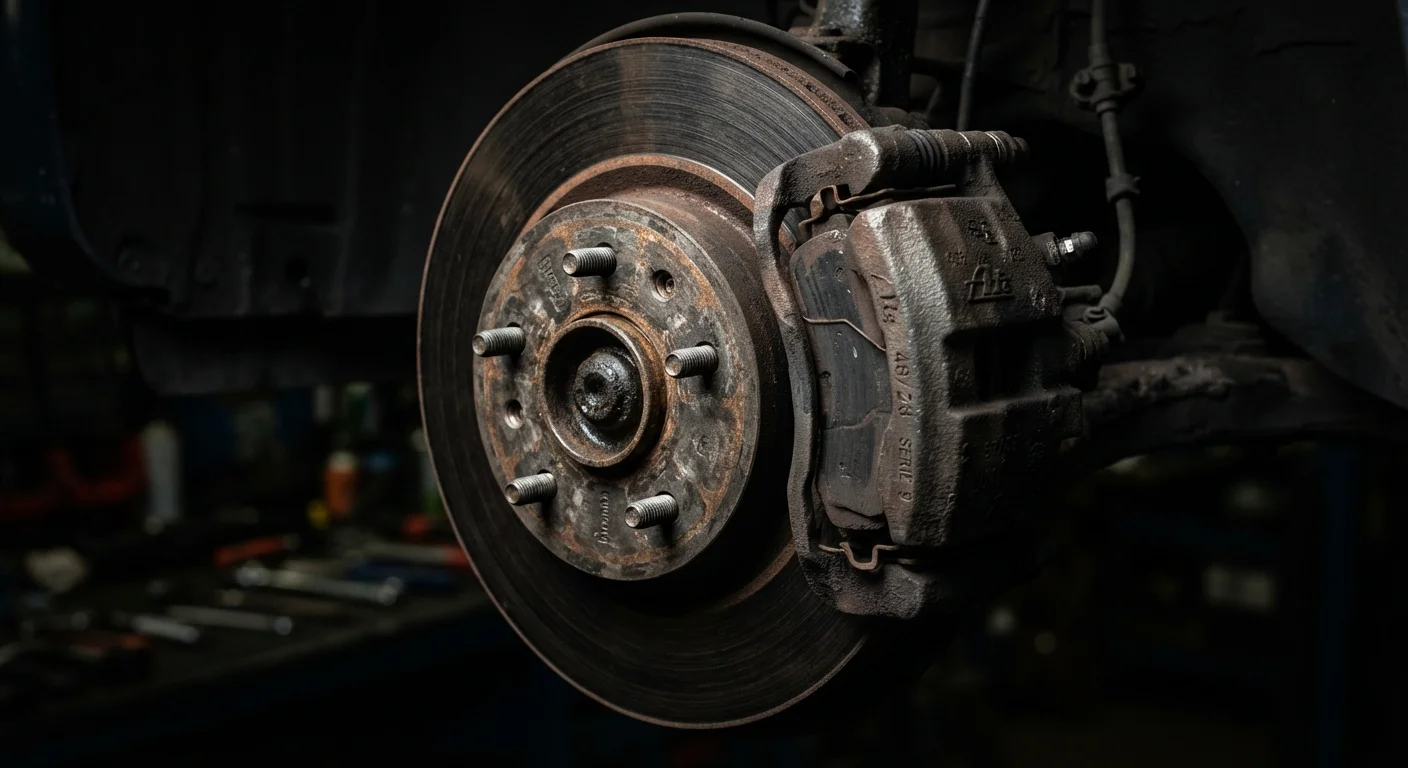
A grinding or growling noise during braking is a step beyond the squeal warning. It typically means the pad material is fully depleted and metal is contacting metal — specifically the steel backing plate of the pad pressing directly against the rotor. This can score the rotor surface rapidly, converting what would have been a straightforward pad swap into a rotor replacement as well. Have this inspected promptly by a qualified mechanic.
A pulsing or vibrating pedal — where the brake pedal pushes back rhythmically against your foot as you stop — usually points to warped rotors. Rotors can warp from repeated heavy braking that generates intense heat, or from uneven cooling. The rotor's uneven surface then causes the pads to alternately grip and release as the rotor spins, producing that characteristic pulse. This is a mechanical issue that requires rotor resurfacing or replacement.
~2–3 mm
Pad thickness at which wear indicators activate
Most brake pads include a metal wear tab that contacts the rotor and produces a squeal when friction material reaches this threshold.
Up to 2x
Cost increase when worn pads damage rotors
Allowing pads to wear past the indicator stage and into metal-on-metal contact often means replacing rotors in addition to pads, roughly doubling the repair cost.
12,000–15,000 miles
Typical brake pad inspection interval
Many mechanics recommend having brake pad thickness checked at least once a year or during routine tire rotations, which typically occur at this interval.
What To Do When You Hear It
The right response depends on what you hear. Use this as a general guide:
- Morning squeal that disappears quickly: Monitor it. If it consistently clears within a few stops, it is likely surface rust and is not a concern.
- Squeal on most normal stops: Schedule a brake inspection within the next week or two. Do not put it off for months.
- Grinding noise: Have the vehicle inspected as soon as practically possible. Continued driving risks damaging the rotor and reducing braking effectiveness.
- Pedal pulsation or vibration: Schedule an inspection — warped rotors will not improve on their own and can affect stopping distance.
It is also worth keeping an eye on your brake fluid level, since dropping fluid can signal pad wear or a leak. Our guide on fluid checks you should never skip covers what to look for. And if you are weighing whether to inspect pads yourself or go straight to a shop, DIY vs. professional maintenance can help you decide. Always consult a qualified mechanic when you are uncertain — brakes are a primary safety system.
Also pay attention to your dashboard. Some vehicles display a dedicated brake warning light when pad sensors trigger. See what your dashboard warning lights mean if any lights accompany the noise.
Frequently Asked Questions
It depends on the sound and how long it lasts. A brief squeal on the first stop of a wet morning is generally harmless. A squeal that persists on every stop means your pads likely need replacement — continuing to drive accelerates wear and can damage your rotors. A grinding noise means you should have the brakes inspected as soon as possible.
There is no safe universal answer because wear rates vary by driving habits, vehicle weight, and pad material. Treat a persistent squeal as a prompt to schedule an inspection within days, not weeks. Waiting too long risks rotor damage, which turns a pad replacement into a much more expensive repair.
Overnight moisture and light surface rust on rotors are the most common culprits. This type of squeal typically disappears after the first few stops as the pads wipe the rotor clean. If the noise goes away quickly and does not return throughout the day, it is usually not a concern.
Grinding almost always means the brake pad material has worn completely away, leaving metal components contacting the rotor directly. This can score or gouge the rotor surface, turning a straightforward pad swap into a more involved repair. Have the vehicle inspected by a mechanic promptly.
Low brake fluid does not directly cause noise, but it can indicate worn pads (the fluid level drops as pads wear and calipers extend further) or a leak in the system. Either situation deserves attention. See our guide on <a href="/autos-driving/car-maintenance/fluid-checks-you-should-never-skip-between-oil-changes">brake fluid checks</a> for more detail.
The content on this site is for informational purposes only and is not a substitute for professional advice. Always consult a qualified professional for guidance specific to your situation.