

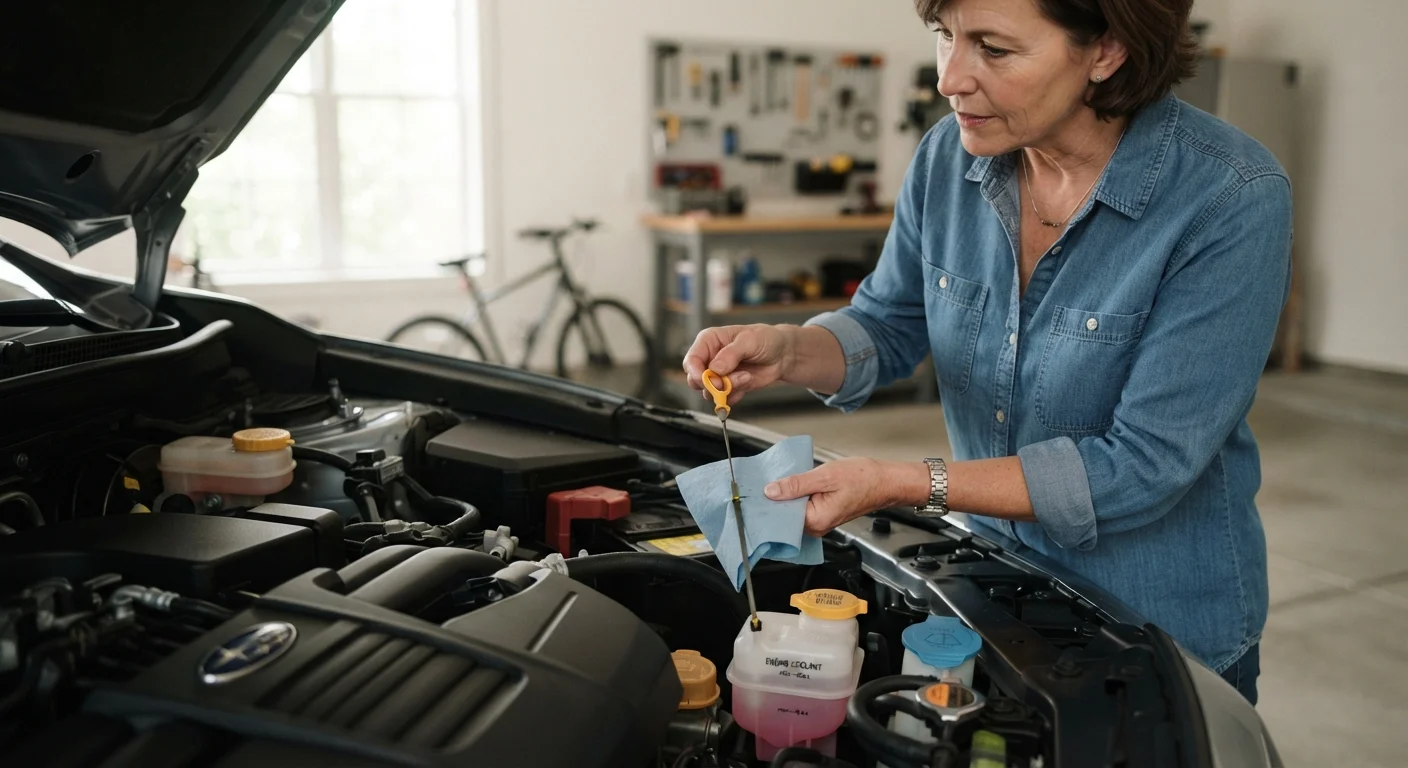
Why Fluids Need Attention Between Oil Changes
An oil change every few thousand miles is a well-established habit for most drivers - but your engine oil is only one of several fluids keeping your vehicle safe and functional. Others can degrade, leak, or drop to dangerous levels long before your next scheduled service. Catching these issues early is straightforward, costs nothing but a few minutes, and can prevent failures that are both expensive and dangerous.
The fluids covered below are the ones most commonly overlooked between service visits. For each one, knowing what to check and what to look for makes the difference between a quick top-off and a tow truck. If you want a broader picture of what routine maintenance actually involves, the owner's manual maintenance guide is a practical starting point.
Engine Coolant
Coolant - also called antifreeze - regulates your engine's temperature, preventing both overheating in summer and freezing in winter. Over time, coolant degrades chemically and loses its ability to protect metal components from corrosion.
Check the coolant level in the translucent overflow reservoir when the engine is cold - never open a hot radiator cap, as pressurized coolant can cause serious burns. The reservoir has MIN and MAX markings; the level should fall between them. Also note the color: fresh coolant is typically bright green, orange, or pink depending on type. Murky, brown, or oily-looking coolant is a sign it needs to be flushed and replaced by a mechanic.
Check monthly or before long highway drives. Refer to your owner's manual for the correct coolant type - mixing incompatible types can cause damage.
Never open a hot radiator cap - pressurized coolant can cause serious burns.
Brake Fluid
Brake fluid transmits the force from your foot on the pedal to the brakes themselves. It's hygroscopic, meaning it absorbs moisture from the air over time, which lowers its boiling point and reduces braking effectiveness - particularly under heavy use.
The brake fluid reservoir is typically a small translucent container near the back of the engine bay. Check that the level sits between the MIN and MAX lines. Color matters here too: fresh brake fluid is nearly clear to light yellow. Dark brown or black fluid has absorbed too much moisture and should be replaced. Most manufacturers recommend a full flush every two to three years regardless of appearance, but check your manual.
If the level drops noticeably between checks, that may indicate a leak in the brake system - have it inspected promptly. For related warning signs, what brake noises are telling you explains the signals worth paying attention to.
Dark brown brake fluid has absorbed too much moisture and should be replaced.
Transmission Fluid
Transmission fluid lubricates the gears and internal components that transfer engine power to the wheels. In automatic transmissions, it also serves as a hydraulic fluid that controls gear shifts. Low or degraded fluid causes rough shifting, slipping gears, and - if ignored long enough - transmission failure, one of the most expensive repairs a vehicle can need.
Many vehicles with automatic transmissions have a dipstick for checking fluid level and condition, similar to the engine oil dipstick. With the engine warm and running (for most vehicles - check your manual), pull the dipstick, wipe it, reinsert it fully, then pull it again to read the level. Healthy transmission fluid is red or pink and slightly translucent. Dark, burnt-smelling fluid needs attention.
Some newer vehicles have sealed transmissions with no dipstick; these require a mechanic for inspection. Check your owner's manual to confirm what applies to your car.
Transmission failure is one of the most expensive repairs a car can need - don't ignore warning signs.
Power Steering Fluid
Power steering fluid makes turning the wheel easier, especially at low speeds. A low level often announces itself with a whining or groaning noise when you turn, or with noticeably heavier steering feel.
The power steering reservoir - labeled clearly on the cap - has level markings visible through the side or accessible via a dipstick on the cap. Check it when the engine is at operating temperature for the most accurate reading. Fluid should be clear to light amber; dark or foamy fluid indicates contamination or aeration and warrants a mechanic's attention.
Note that many newer vehicles use electric power steering and have no hydraulic fluid to check. Again, your owner's manual will clarify which system your car uses.
A whining noise when turning is often the first sign of low power steering fluid.
Windshield Washer Fluid
Washer fluid is the one fluid on this list that won't damage your engine if it runs low - but running out at the wrong moment creates a genuine safety hazard. Driving with an obscured windshield, whether from road spray, insects, or winter grime, significantly reduces visibility.
The washer fluid reservoir is the largest and easiest to access in most engine bays, marked with a windshield or water symbol. Top it off with premixed washer fluid rated for your climate - in cold regions, use a blend with freeze protection. Plain water can crack the reservoir or freeze in lines and should be avoided.
This is the quickest check of the five and worth doing any time you're already under the hood. For a complete walk-around routine, a pre-trip vehicle check covers lights, tires, and more alongside fluids.
Running out of washer fluid at the wrong moment is a straightforward but real visibility hazard.
Make It a Habit
You don't need mechanical expertise to keep these fluids in check - just consistency. A quick under-hood inspection once a month, or before any long trip, is enough to catch most developing problems early. A pre-trip vehicle safety checklist makes it easy to build this into your routine without adding much time.
Keep a Simple Log
Jot down the date and fluid levels each time you check - even a note in your phone works. This makes it easy to spot a gradual drop that might otherwise go unnoticed visit to visit. A pattern of consistent loss in any fluid is worth discussing with a mechanic before it becomes an urgent repair.
If you notice a fluid that keeps dropping without an obvious cause - a reservoir that's consistently lower each time you check - that's a signal worth investigating with a qualified mechanic. Fluid loss doesn't always announce itself loudly. Addressing it early almost always costs less than waiting. For more on the real-world consequences of skipping maintenance, see maintenance habits that shorten engine life.
The content on this site is for informational purposes only and is not a substitute for professional advice. Always consult a qualified professional for guidance specific to your situation.