

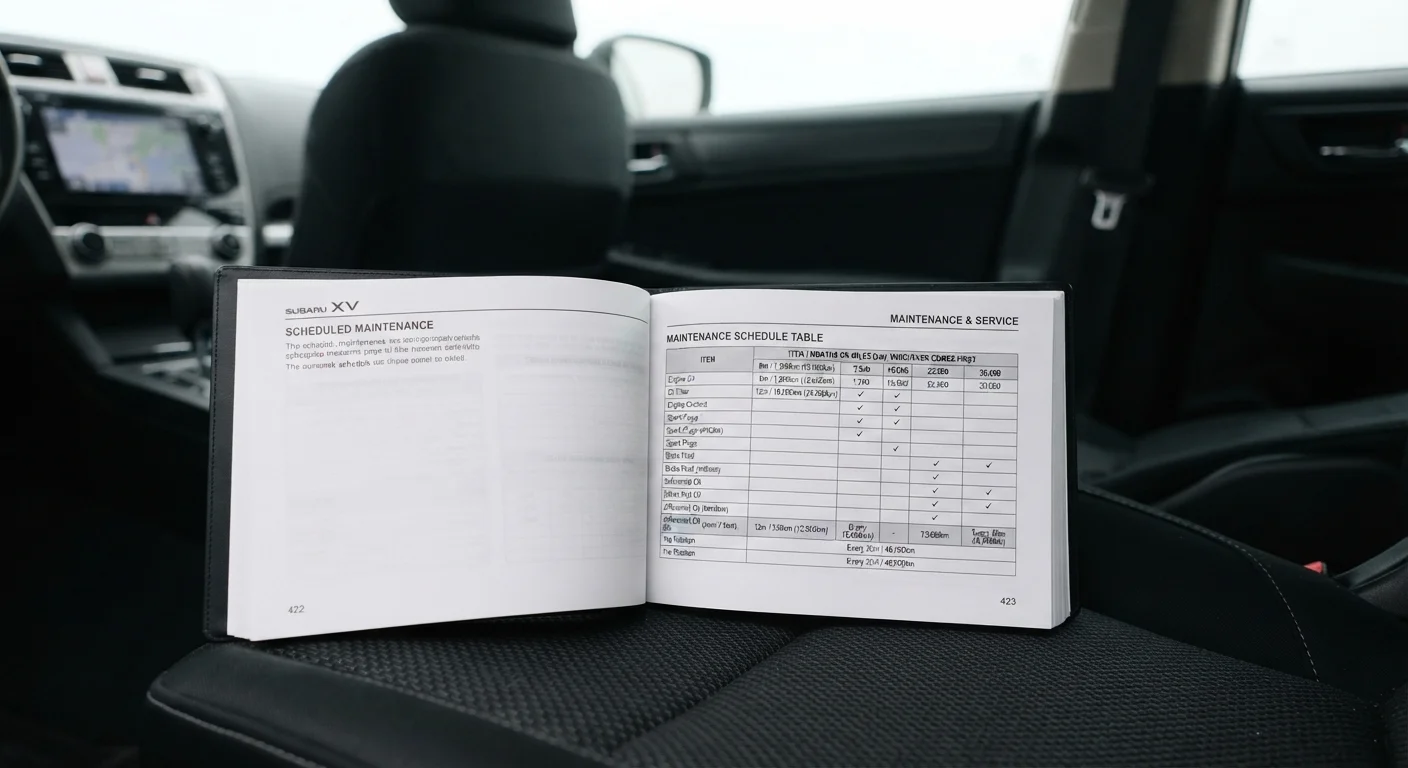
Why the Owner's Manual Is Your Best Starting Point
Most drivers see the owner's manual as a reference for dashboard warning lights - something to dig out of the glove box only when something goes wrong. In reality, the maintenance schedule buried inside that manual is one of the most practical tools available to any car owner.
Unlike generic service interval charts, your manual reflects the actual engineering behind your specific vehicle - the oil viscosity the engine was designed to run on, the transmission fluid capacity, the brake fluid type, and dozens of other specifications tailored to your make, model, and engine. A shop or an app can offer general guidance, but the manufacturer's schedule accounts for factors those sources simply don't have access to.
If you no longer have a physical copy, most automakers publish digital versions on their official websites, and many public libraries carry automotive references as well. It's worth locating yours before your next service is due.
No Manual? Check the Manufacturer's Website
Most automakers offer free digital versions of owner's manuals on their official websites, searchable by year, make, and model. Some also provide dedicated owner portals where maintenance reminders and service history can be tracked. This is a reliable substitute if your physical manual is missing.
Understanding Normal vs. Severe Service Schedules
Most owner's manuals include two maintenance tracks: a normal schedule and a severe schedule. The difference matters more than many drivers realize.
The severe schedule applies when your driving conditions place extra stress on the vehicle. Common examples include frequent short trips under five miles, stop-and-go urban driving, towing or hauling heavy loads, driving in extreme heat or cold, or operating in dusty or hilly terrain. Under these conditions, fluids break down faster and components wear more quickly.
If you do the majority of your driving in a city, commute in heavy traffic, or make frequent short trips, you likely fall into the severe category - even if nothing about your daily routine feels particularly demanding. Checking the qualifying criteria in your manual takes only a few minutes and can significantly affect how often you should be scheduling oil changes, filter replacements, and other services. See what happens when intervals are pushed too far for a fuller picture of the risks.
City Driving Often Qualifies as 'Severe'
Many drivers assume 'severe' means towing a trailer through the desert, but the qualifying criteria in most manuals include everyday urban commuting. Short trips that don't allow the engine to fully warm up are particularly hard on oil and engine internals. Check your manual's specific criteria - don't assume you fall into the normal category without verifying.
How to Read and Use Your Maintenance Schedule
Once you've located your manual and identified which schedule applies to you, follow these steps to put it into practice.
Locate the maintenance schedule in your manual
Open your owner's manual and look for a section titled "Maintenance Schedule," "Scheduled Maintenance," or "Maintenance Requirements." It is usually located in the latter half of the manual. If your vehicle has a digital manual, use the search function with the term "maintenance intervals."
Determine which schedule applies to your driving
Read the criteria for normal and severe service carefully. Mark which category matches your typical driving conditions. If your commute involves significant stop-and-go traffic, short daily trips, or temperature extremes, apply the severe schedule going forward.
Identify every service item and its interval
Go through the schedule line by line. For each item - oil and filter, tire rotation, air filter, spark plugs, transmission fluid, belts, and others - note the mileage or time interval specified, whichever comes first. Some items are every 5,000 miles; others may be every 30,000 miles or every two years.
Calculate where you currently stand
Compare your current mileage and the date of your last known service against each interval. Identify any services that are overdue and prioritize them first. For items with no clear service history, consult a qualified mechanic - they can inspect and advise on current condition.
Record each completed service and schedule the next
After every completed service, write down the date, mileage, and work performed. Then calculate the mileage or date at which the next service will be due and note that as well. This ongoing record keeps you ahead of the schedule rather than reactive to it. For new drivers building these habits from scratch, this plain-language primer is a practical companion.
After you've worked through these steps, consider building this into a repeating routine. Our guide on setting up a maintenance schedule you'll actually follow walks through how to turn a manual's intervals into calendar reminders and checklists that fit real life.
What the Schedule Won't Cover - and How to Fill the Gaps
Your maintenance schedule addresses mileage- and time-based service intervals, but it doesn't account for everything. Seasonal driving conditions - winter battery strain, summer cooling system stress, spring brake inspections after road-salt exposure - fall outside its scope. For that context, the seasonal car care guide is a useful companion resource.
The manual also won't flag fluid levels that drop between scheduled services due to minor leaks or normal consumption. Checking fluids periodically between oil changes - coolant, brake fluid, and power steering fluid in particular - adds a practical safety layer. Our article on fluid checks you should never skip explains which ones matter most and how to read them correctly.
Finally, the schedule is only as useful as the record you keep. Tracking what was done, when, and at what mileage helps you avoid duplicate work and proves service history if you ever sell the vehicle. Keeping a maintenance log doesn't require special software - a notebook in the glove box works fine.
The content on this site is for informational purposes only and is not a substitute for professional advice. Always consult a qualified professional for guidance specific to your situation.