

Summary
22 items · 15-30 minutes
Why a Pre-Trip Check Matters
Most vehicle breakdowns are not sudden and random - they're the result of a developing issue that went unnoticed. A quick inspection before a long drive gives you the best chance of catching those issues at home, where help is easy to find, rather than on a remote highway where it isn't.
This checklist is designed for everyday drivers of all experience levels. You don't need mechanical expertise to work through it. The quick walk-around checklist is a good companion for shorter daily drives, but the checks here go deeper - covering fluids, brakes, emergency gear, and more for trips involving extended highway time.
If you're heading into genuinely remote territory - think Southwest desert highways or the Great Basin - the stakes are higher. See our guide on safety considerations for remote US roads for additional preparation specific to those conditions.
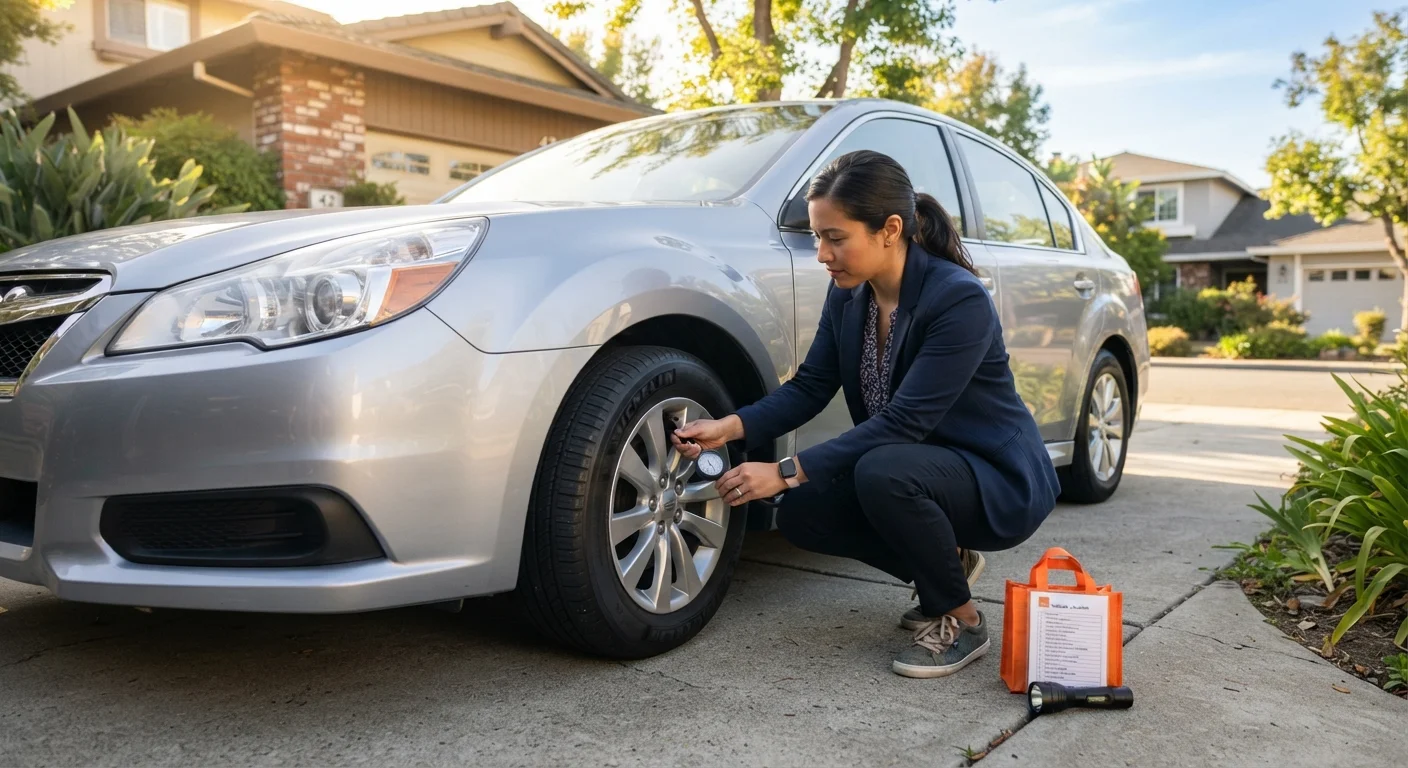
Tire Pressure Gauge
Accurately measures PSI in each tire so you can inflate or deflate to the manufacturer's recommended level.
Owner's Manual
Lists correct fluid types, tire pressure specs, and belt inspection intervals specific to your vehicle.
Flashlight or Headlamp
Illuminates the engine bay, undercarriage, and tires when checking in low-light conditions.
Tread Depth Gauge
Provides a precise measurement of remaining tire tread to determine whether tires are safe for a long trip.
How to Work Through This Checklist
Plan to spend 15-30 minutes on this inspection. Complete it the evening before departure or early on the morning of your trip - not while you're rushing to load the car. A calm, unhurried inspection is more thorough than one done under time pressure.
Work through each group in order: start outside with tires, move to the engine bay for fluids and belts, then check lights, interior electronics, and finally your emergency kit and documents. For a deeper look at which fluids deserve the most attention and how often to check them, see our article on fluid checks between oil changes.
If you're a newer driver or preparing for your first major solo trip, also review the preparation guide for new solo drivers alongside this checklist. And for help making sure your documents are in order before any drive, the new driver documents checklist covers registration, insurance, and roadside essentials.
When to Call a Mechanic Instead
This checklist helps you catch obvious issues before departure, but it is not a substitute for professional inspection. If you notice unusual noises, persistent warning lights, fluid leaks under the vehicle, or anything that does not feel or look normal, have a qualified mechanic evaluate the vehicle before you travel. Attempting to diagnose complex mechanical problems without the right tools or training can create additional risk.
The Pre-Trip Checklist
Work through each group below systematically. Mark items off as you go - either mentally or with a printed copy. If any item reveals a concern you're uncertain about, note it and consult a qualified mechanic before departing rather than hoping the issue resolves itself on the road.
Tires
Fluids
Lights and Visibility
Brakes and Belts
Dashboard and Electronics
Emergency Preparedness
Never Ignore a Brake Warning Light
A brake system warning light that stays on after engine startup can indicate low fluid, worn pads, or a more serious hydraulic issue. Do not dismiss it as a minor glitch. Have the system inspected by a qualified mechanic before starting any long drive - braking problems can escalate quickly at highway speeds.
Hot Radiators Can Cause Serious Burns
When checking coolant, never open the radiator cap while the engine is warm or recently driven. Pressurized hot coolant can spray and cause severe burns. Always wait until the engine is fully cool and check the external overflow reservoir instead.
Once your vehicle checks out, your next step is to think about driving conditions. Weather can shift quickly on long routes - our guide on driving in rain, snow, and fog covers how to adjust your habits when conditions change fast.
The content on this site is for informational purposes only and is not a substitute for professional advice. Always consult a qualified professional for guidance specific to your situation.