

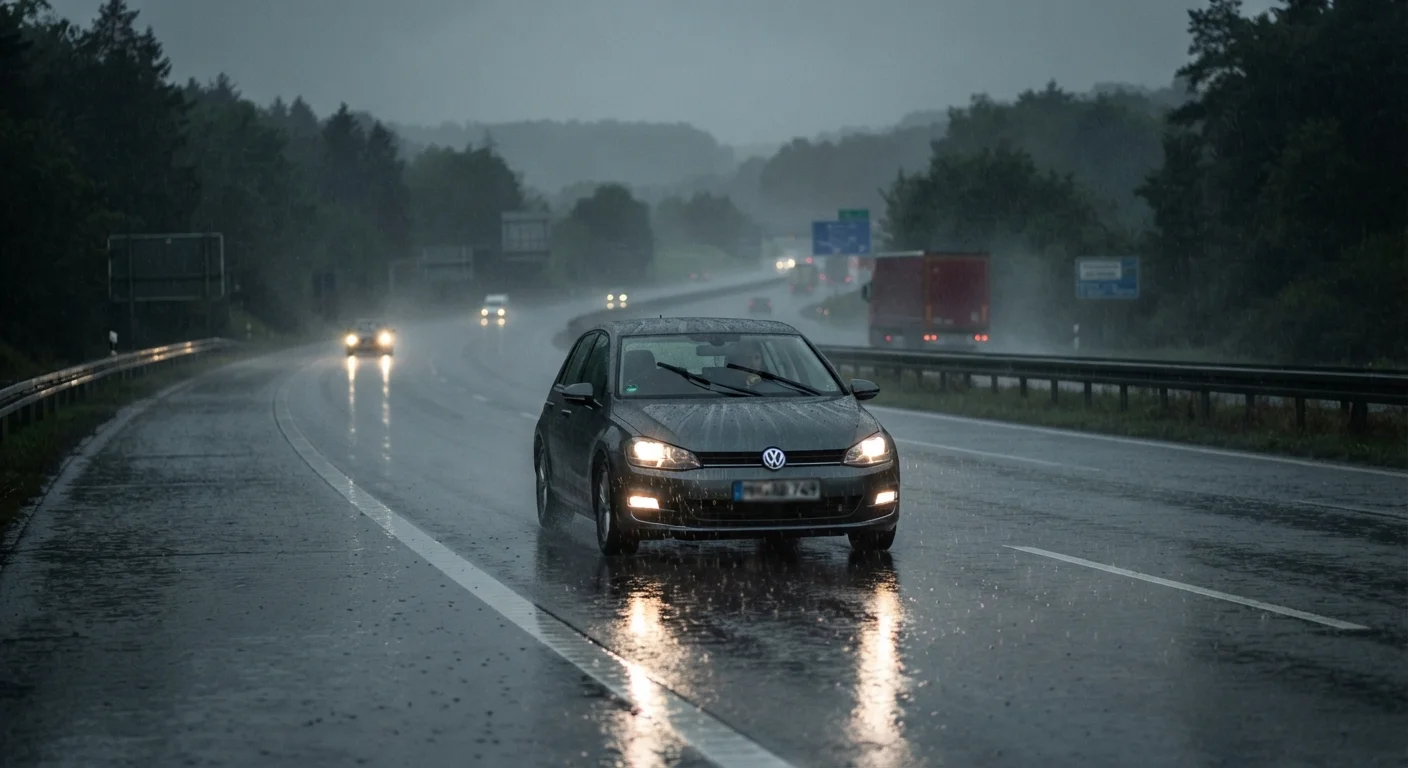
Why Weather Conditions Demand a Different Approach
According to the Federal Highway Administration, weather-related crashes account for roughly 21 percent of all vehicle crashes in the United States annually, resulting in tens of thousands of injuries each year. Rain is the most common culprit, but snow, ice, and fog each introduce their own hazards - and conditions can shift within minutes.
The core problem is that drivers often underestimate how dramatically wet or frozen pavement changes vehicle dynamics. Braking distances on wet roads can be nearly double those on dry pavement. On ice, stopping distance can increase by up to ten times. Understanding this gap between normal and adverse-condition performance is the first step toward safer driving.
This guide covers the key adjustments - to speed, spacing, visibility, and technique - that safety experts consistently recommend when road conditions deteriorate. For a solid foundation before any drive, see our pre-trip vehicle safety checklist to make sure your vehicle is road-ready before weather hits.
~21%
US crashes linked to weather conditions
According to the Federal Highway Administration, weather is a contributing factor in about 1.2 million crashes each year in the United States.
Up to 10x
Increase in stopping distance on ice vs. dry pavement
Traffic safety researchers estimate that stopping distances on ice can be up to ten times longer than on dry roads at the same speed.
Best Practices for Driving in Rain, Snow, and Fog
Adapting to poor weather isn't a single habit - it's a collection of deliberate adjustments. The following practices apply across rain, snow, and fog, with condition-specific notes where they differ.
Reduce your speed significantly below the posted limit in wet or wintry conditions.
Speed limits reflect ideal dry-road conditions. Wet pavement, snow, and ice all reduce tire traction and extend stopping distances considerably. Driving at a speed appropriate for actual conditions - not the posted maximum - gives you time and space to respond to hazards.
Increase your following distance to at least 4-6 seconds in rain, and up to 10 seconds on ice.
The standard 2-3 second following distance assumes dry pavement and normal stopping distances. In adverse weather, your vehicle needs far more room to stop safely, and the car ahead may stop or slide unpredictably.
Turn on your headlights whenever visibility is reduced - not just when it's fully dark.
Headlights in rain, snow, and fog help other drivers see you as much as they help you see the road. Many states legally require headlight use when using windshield wipers or when visibility falls below a certain threshold. Daytime running lights are not always sufficient.
Watch for black ice on bridges, overpasses, and shaded stretches of road.
Black ice is nearly invisible because it forms a thin, transparent layer that looks like wet pavement. Bridges and overpasses are exposed to cold air from both above and below, causing them to freeze before the surrounding road surface - often catching drivers off guard.
If your vehicle begins to skid, steer gently in the direction you want to go and avoid sudden braking.
Hard braking during a skid can lock the wheels, remove steering control, and worsen the slide. Gentle counter-steering while gradually releasing the accelerator gives traction a chance to recover. Vehicles with ABS (anti-lock braking system) allow firm, steady brake pressure - but smooth inputs are still safer.
Use fog lights correctly - only in actual fog, and switch off when visibility improves.
Fog lights are angled downward to illuminate the road beneath fog without bouncing light back into your eyes or blinding other drivers. Using them in clear conditions, or leaving high beams on in fog, can reduce your own visibility and impair oncoming drivers.
Quick Actions You Can Take Before and During Bad Weather
Many weather-related crashes happen not because drivers lack knowledge, but because they don't act on what they know in time. These quick wins are immediate, concrete steps that can reduce your risk today.
For a broader look at how attentive scanning habits protect you in any condition, see our article on the visual habits of safer drivers.
When to Pull Over and Wait It Out
Sometimes the safest driving decision is not to drive at all. If visibility drops below a safe threshold, if your vehicle is sliding despite careful inputs, or if road conditions have deteriorated beyond your vehicle's capability, pulling into a safe area - a rest stop, parking lot, or well-lit pullout - is a legitimate and often wise choice. Hazard lights alert other drivers to your stopped position. Waiting 20-30 minutes for a severe storm cell to pass can be far safer than pressing on.
The Bigger Picture: Situational Speed and Defensive Awareness
One of the most persistent misconceptions in driving is that the posted speed limit is a safe speed in all conditions. It is not - speed limits are set for ideal, dry conditions. In rain, snow, or fog, the appropriate speed may be significantly lower.
“The speed limit sign tells you the maximum speed you may drive under ideal conditions. It says nothing about what's safe when the road is wet, icy, or visibility is poor. Situational judgment - not the sign - should govern your speed.”
— National Safety Council, US nonprofit organization focused on road and workplace safety education
Defensive driving principles become especially critical in poor weather. Anticipating what other drivers may do - sudden braking, lane changes, sliding - gives you a margin of safety that reaction-based driving cannot provide. Learn more about what defensive driving really involves and how it extends well beyond simply slowing down.
Poor weather also shares risk factors with night driving - reduced visibility, compromised reaction time, and a narrower margin for error. Our guide on night driving hazards covers the distinct challenges that come after dark, many of which compound in wet or foggy conditions. For a deeper look at when driving below the limit is the right call, see why speed limits are not driving targets.
The content on this site is for informational purposes only and is not a substitute for professional advice. Always consult a qualified professional for guidance specific to your situation.