

How Speed Limits Are Actually Set
Speed limits are established through a process that typically involves traffic engineers studying a road under favorable, dry-pavement, clear-visibility conditions. The most common method used in the US is the 85th percentile rule - engineers observe the speed at or below which 85 percent of free-flowing drivers travel, and use that figure as a baseline for the posted limit.
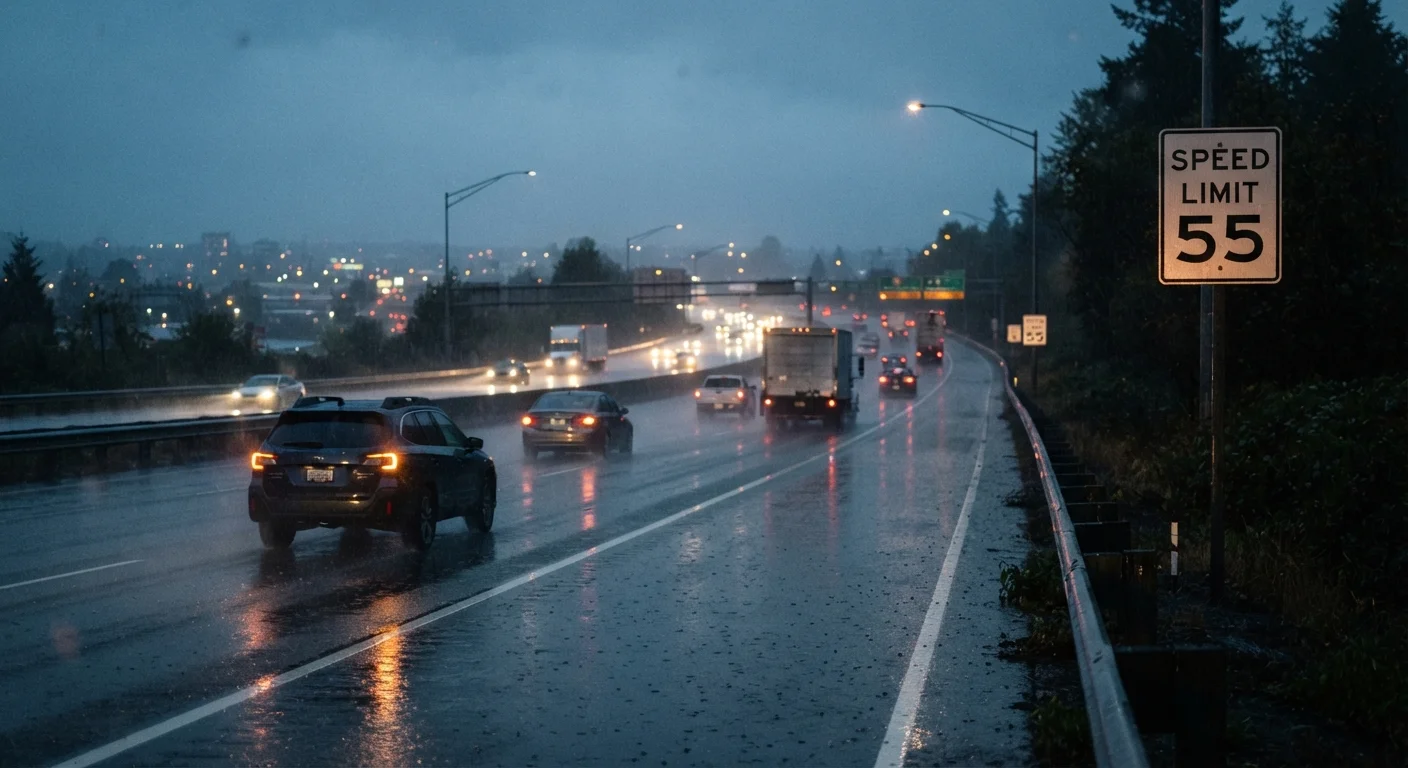
That process tells you something important: limits are calibrated for normal, unobstructed conditions. They are not designed with fog, ice, standing water, heavy pedestrian traffic, or road construction factored in. When those conditions appear, the appropriateness of the posted number changes - even though the sign on the roadside does not.
Understanding this distinction is the starting point for what traffic safety professionals call situational speed - choosing your speed based on the full picture around you, not just the number on the sign.
Common Myths About Speed Limits and the Facts That Counter Them
Several persistent misconceptions push drivers toward treating speed limits as a floor rather than a ceiling. The myth-and-fact pairs below address the most common ones directly.
Myth
If I'm driving at the posted speed limit, I'm driving legally and safely - no adjustment needed.
Fact
Driving at the posted limit can still be unsafe and even illegal when conditions deteriorate. Basic speed laws in most states require speed to be appropriate for actual conditions.
Speed limits define the maximum permitted speed under ideal conditions - not a safe speed in all circumstances. When roads are wet, icy, or visibility is reduced, the stopping distance your vehicle requires increases dramatically. A car traveling at 55 mph on dry pavement may stop safely within a given distance; the same vehicle on ice at 55 mph may need two to three times that distance to stop. Courts and law enforcement recognize this distinction through basic speed law provisions.
Myth
Driving below the speed limit is always safer, no matter what.
Fact
Driving significantly below the speed limit in normal traffic flow can create its own hazards by disrupting the predictable movement of surrounding vehicles.
Safety research generally shows that large speed differentials between vehicles - not simply high speeds - contribute to crash risk. A driver traveling well below the flow of traffic can prompt sudden lane changes, tailgating, and erratic maneuvers by other drivers. The goal is to match a speed that is both appropriate for conditions and reasonably consistent with surrounding traffic, while never exceeding what conditions safely allow.
Myth
Speed limits account for bad weather - that's why they exist.
Fact
Speed limits are set based on studies conducted under favorable, dry-road conditions and do not automatically adjust for rain, snow, fog, or ice.
Traffic engineers study vehicle speeds on roads under normal conditions and apply formulas - typically the 85th percentile speed - to arrive at a posted limit. Weather is not built into that calculation. Some jurisdictions post reduced advisory speeds in known hazard zones, but these are the exception. When conditions change, the responsibility for speed adjustment falls entirely on the driver. The article Driving in Rain, Snow, and Fog provides specific guidance on speed and distance adjustments for adverse weather.
Myth
Only reckless or aggressive drivers get cited for speeding-related violations. If I follow the signs, I'm fine.
Fact
A driver traveling at the posted limit in icy conditions or dense fog can be cited for driving too fast for conditions under state basic speed laws.
Basic speed laws are enforceable and are regularly applied in crash investigations. When a collision occurs and vehicle speed - even at or below the limit - contributed to the driver's inability to avoid the crash, that driver may face legal consequences. Insurance outcomes can also be affected. Following the posted number is a necessary but not sufficient condition for lawful and safe driving.
Myth
Highway speed limits apply uniformly - merging zones, work zones, and open stretches are all the same.
Fact
Speed requirements vary significantly within a single highway, and work zones, merging areas, and curves carry their own legal and physical speed considerations.
Work zone speed limits are often legally enforced at elevated fine levels, and many states double standard fines for violations in active work zones. Merging areas require speed calibration to safely join traffic. Curves have design speeds - the speed at which engineers calculated the curve can be safely navigated - that may be lower than the posted limit on the straight sections surrounding them. Treating the highway as a uniform environment is a common and consequential error.
The Legal Side: Basic Speed Laws
Beyond posted limits, almost every US state has what is known as a basic speed law (sometimes called the prima facie speed law). These statutes hold that no driver shall operate a vehicle at a speed greater than is reasonable and prudent for current conditions - regardless of the posted limit.
In practical terms, this means you can receive a speeding citation even when traveling at or below the posted limit if an officer determines your speed was unsafe given the conditions at the time. Adverse weather, reduced visibility, heavy foot traffic, and road surface hazards are all factors courts and law enforcement consider.
Conditions Can Change Faster Than Signs Do
Road signs are updated infrequently, but surface conditions - wet pavement, debris, sudden fog - can change in seconds. Never assume the posted limit reflects what the road is currently demanding of your vehicle. If in doubt, slow down, increase your following distance, and give yourself more time to react.
For a deeper look at how speed rules shift in specific zones, the article Understanding School Zone and Work Zone Speed Laws Across States outlines how penalties and requirements vary by state and setting.
Putting Situational Speed Into Practice
Adjusting your speed to conditions is not about driving timidly - it is about maintaining a margin of safety that the posted limit alone cannot guarantee. A few concrete habits make a significant difference:
- Increase following distance in poor conditions. The standard two-second gap is a baseline for dry roads. In rain, snow, or fog, that gap should expand considerably. See The Two-Second Rule and Why Most Drivers Underuse It for a practical breakdown.
- Scan further ahead. Looking 10-15 seconds down the road gives you more time to react to emerging hazards. This habit is explored in detail in Scanning the Road Ahead: The Visual Habits of Safer Drivers.
- Reduce speed before entering curves, intersections, and congested areas - not after you are already in them.
- Match speed to visibility. If your headlights illuminate only 200 feet ahead at night, traveling at a speed that requires 300 feet to stop puts you in what safety experts call an overdriving your headlights situation.
~33%
Of US traffic fatalities involving speeding
The National Highway Traffic Safety Administration (NHTSA) has consistently reported that speeding is a contributing factor in roughly one-third of all US traffic fatalities annually.
2-3×
Increase in stopping distance on ice vs. dry pavement
Traffic safety engineers estimate stopping distances can increase by two to three times or more on icy surfaces compared with dry asphalt at the same speed.
For a broader framework on how these habits connect, Defensive Driving: What It Really Involves Beyond the Basics covers the core principles that reduce crash risk across all driving environments.
The content on this site is for informational purposes only and is not a substitute for professional advice. Always consult a qualified professional for guidance specific to your situation.