

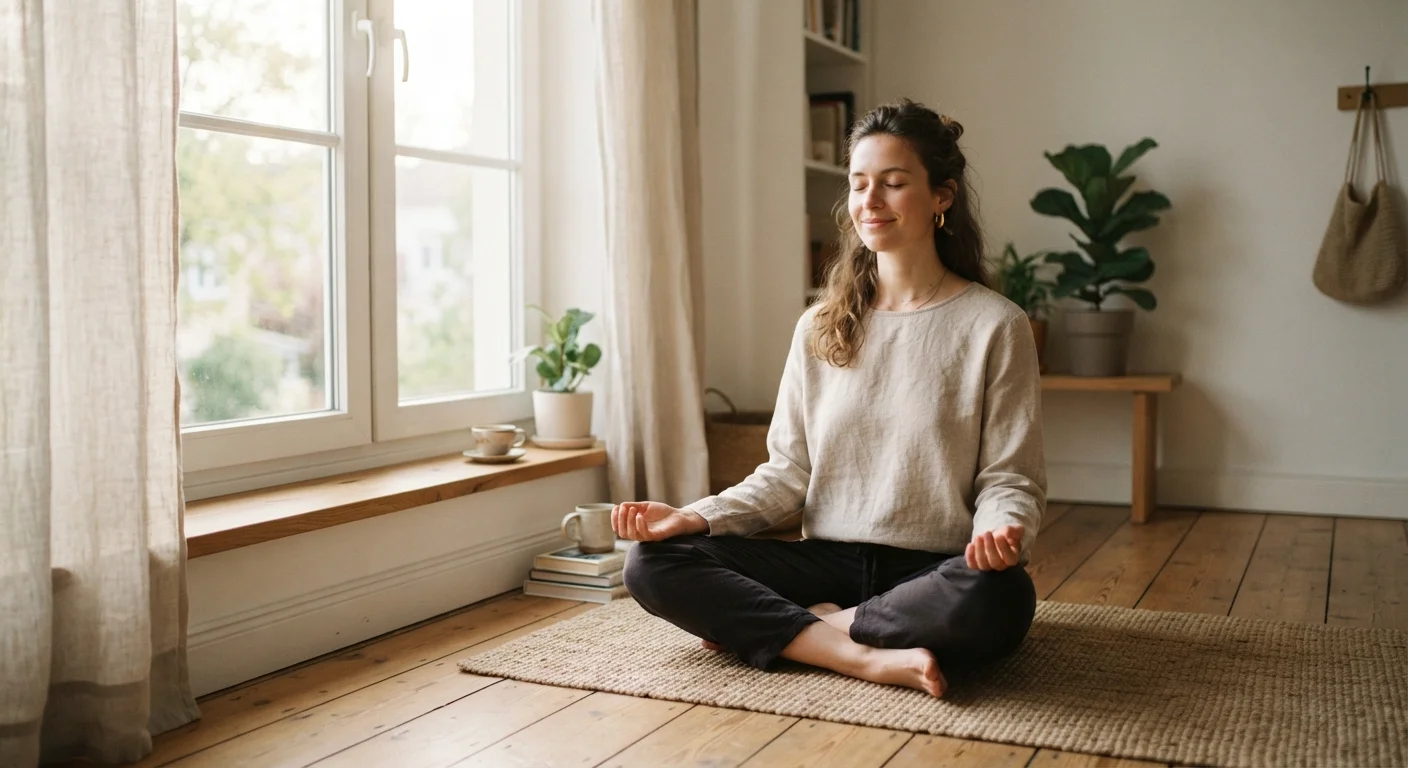
Option A
Mindfulness
An awareness you can practice anywhere, anytime.
Best for: People who want to reduce reactive thinking and stay present during everyday life - no dedicated time or setting required.
Option B
Meditation
A structured, intentional mental training practice.
Best for: People who benefit from a consistent, focused routine to build concentration, emotional regulation, or stress resilience over time.
Two Words, Two Different Things
The terms mindfulness and meditation appear together so often that most people treat them as synonyms. They're not - and that confusion can make both harder to use well.
Mindfulness refers to a mental quality: the ability to direct attention to the present moment without judgment. It describes an awareness you can bring to any experience - eating, walking, listening to someone speak. It's a capacity, not a technique.
Meditation, by contrast, refers to a formal practice. It's a deliberate exercise in which you intentionally train the mind - often by focusing on breath, body sensations, imagery, or sound - for a defined period. Many forms of meditation are specifically designed to cultivate mindfulness, but meditation encompasses a much wider range of approaches, including visualization, loving-kindness (metta), and focused-attention practices that aren't primarily mindfulness-oriented.
A useful shorthand: mindfulness is a skill; meditation is one way to develop it.
| Criterion | Mindfulness | Meditation |
|---|---|---|
| What it is | A quality of present-moment awareness | A formal, structured mental practice |
| Requires dedicated time | No - can be practiced anytime | Yes - typically a set session |
| Requires a quiet setting | No - works in everyday situations | Often helpful, but not always required |
| Techniques involved | Intentional attention to present experience | Breath focus, body scans, visualization, and more |
| Research base | Strong - especially in MBSR program contexts | Varies widely by practice type and study design |
| Barrier to entry | Low - no equipment or training needed | Low to moderate - guided resources widely available |
| Can include mindfulness | Is mindfulness | Often, but not always |
What the Research Actually Shows
Both mindfulness and meditation have accumulated a meaningful body of research, though the quality and scope varies. Mindfulness-Based Stress Reduction (MBSR) - an eight-week structured program developed at the University of Massachusetts Medical School - is among the most studied frameworks, with evidence suggesting benefits for perceived stress, anxiety, and certain chronic pain conditions. Meta-analyses published in journals such as JAMA Internal Medicine have found moderate support for mindfulness-based interventions in improving anxiety, depression, and pain.
~47%
Time minds wander during daily tasks
A Harvard study using experience-sampling found that people's minds are not focused on their current activity roughly half the time.
8 weeks
Typical duration of structured MBSR programs
Mindfulness-Based Stress Reduction, the most-researched mindfulness program, is typically delivered over eight weeks of guided group sessions.
Moderate
Evidence strength for mindfulness-based interventions
A 2014 meta-analysis in JAMA Internal Medicine found moderate evidence that mindfulness meditation programs improve anxiety, depression, and pain.
It's worth noting that study designs differ widely - group programs, apps, and self-guided practices are not equivalent. Effect sizes are generally modest, and individual results vary considerably. Mindfulness and meditation are not treatments for clinical mental health conditions on their own. If you're managing anxiety, depression, trauma, or another condition, these practices may complement professional care but shouldn't replace it. See our guide to therapy, counseling, and psychiatry to understand when professional support makes sense.
Everyday Mindfulness vs. a Formal Meditation Session
One practical advantage of mindfulness is its portability. You don't need a quiet room or a scheduled block of time. Washing dishes, waiting in line, or taking a short walk can all become opportunities to practice present-moment awareness - noticing sensory details, observing thoughts without following them, or simply feeling the ground beneath your feet.
Meditation, by design, asks more of your schedule. A typical session might last anywhere from five to thirty minutes, and most guidance emphasizes some form of consistency - sitting regularly rather than sporadically. That structure is part of what makes it effective for building the kind of durable mental habits that show up in research.
Neither approach is inherently superior. Many people find that a formal meditation practice deepens their informal mindfulness throughout the day - and that mindfulness moments help them return to practice when motivation dips. For a broader look at mental wellness concepts, the Mental Wellness Full-Picture Reference covers additional frameworks in plain language.
A Note on Terminology in Mental Health Settings
In clinical and therapeutic contexts, you may hear terms like 'mindfulness-based cognitive therapy' (MBCT) or 'mindfulness-based stress reduction' (MBSR). These are specific structured programs - not simply 'doing mindfulness.' If a clinician recommends one, it typically involves a formal curriculum. Understanding that distinction can help you ask better questions and set realistic expectations.
Which One Should You Try First?
If formal practice feels intimidating, starting with informal mindfulness exercises is entirely valid - and may naturally lead you toward meditation on your own timeline. Paying deliberate attention to a single daily activity for a week is a low-pressure way to experience what present-moment awareness actually feels like.
If you prefer structure or have a specific goal in mind - improving sleep quality, reducing rumination, building focus - a guided meditation program may give you more to work with. Many community centers, hospitals, and therapists offer evidence-based programs like MBSR. Digital tools, including apps, can provide accessible introductions, though they come with their own limitations. Our balanced look at mental health apps explores what those tools offer and where they fall short.
Most importantly: neither practice requires perfection. A wandering mind during meditation isn't failure - it's the practice itself. Noticing that your attention drifted and gently returning it is exactly what the training involves.
This article is for general informational purposes only and does not constitute medical or mental health advice. If you are experiencing a mental health concern, please consult a qualified healthcare professional.
The content on this site is for informational purposes only and is not a substitute for professional advice. Always consult a qualified professional for guidance specific to your situation.