

Our Verdict
Mental health apps can be genuinely useful entry points for building self-awareness, practicing relaxation techniques, and tracking mood patterns over time. However, their effectiveness is inconsistent, clinical evidence remains limited for most products, and they carry real privacy considerations. They are a supplement, not a replacement, for professional care.
Best for adults who want low-barrier tools to support everyday stress management, mindfulness practice, or mood awareness - particularly as one part of a broader personal wellness routine.
What Mental Health Apps Actually Do
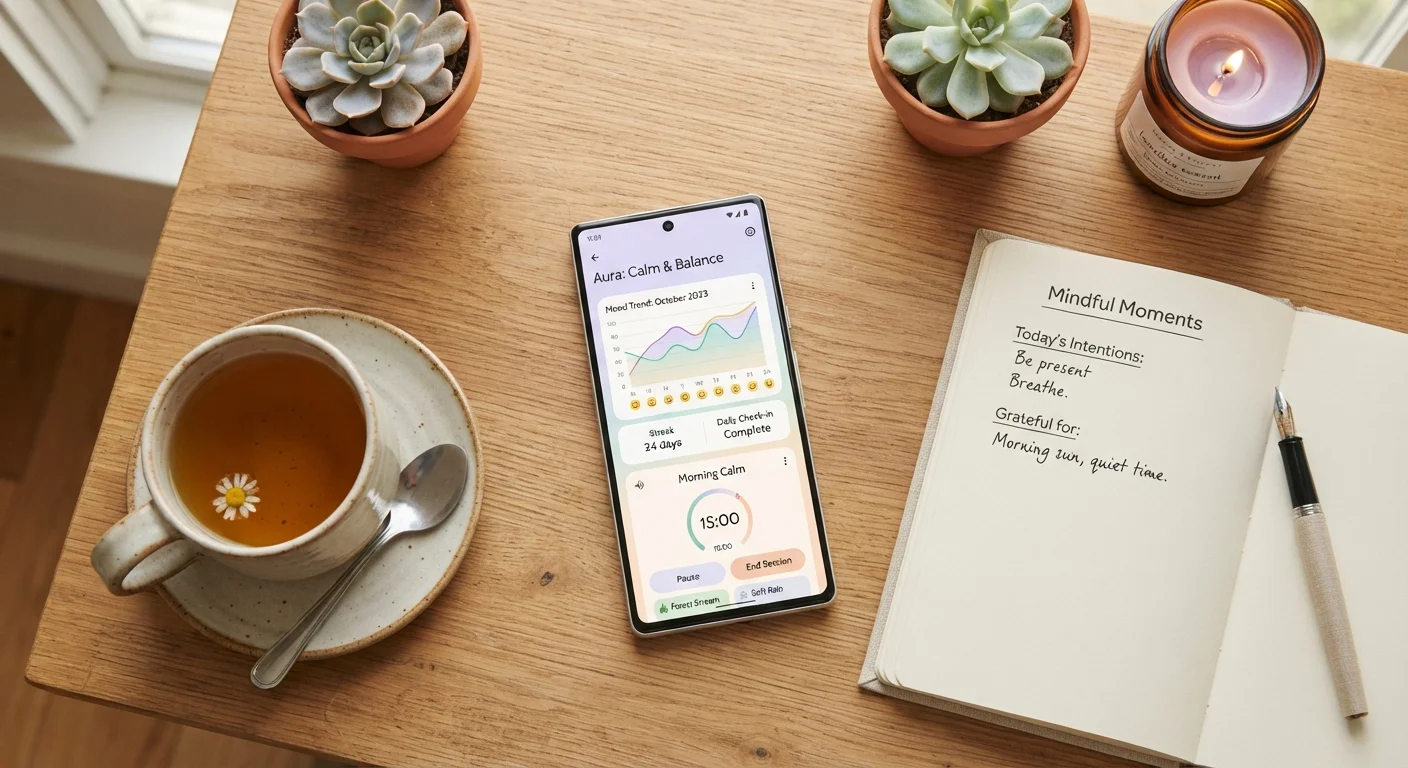
Mental health apps are smartphone-based tools designed to support psychological well-being through features like guided meditation, mood journaling, breathing exercises, cognitive behavioral therapy (CBT)-style prompts, and crisis resources. They range from simple daily check-ins to structured programs modeled on therapeutic frameworks.
It helps to understand what these tools are - and are not. Most are wellness applications, not regulated medical devices. A small number have sought FDA designation as prescription digital therapeutics, but the vast majority fall into a self-help category with no requirement to demonstrate clinical effectiveness before reaching users. For a grounding in the broader concepts at play, see our mental wellness reference guide.
Apps Are Not Crisis Resources
If you or someone you know is in immediate psychological distress or experiencing thoughts of self-harm, please contact the 988 Suicide and Crisis Lifeline (call or text 988 in the US) or go to your nearest emergency room. Mental health apps are not designed to handle crisis situations and should never be used as a substitute for emergency support.
The Advantages Worth Knowing
For many people, these apps genuinely reduce friction when it comes to engaging with mental health support.
Available anytime without scheduling or waitlists
Apps are accessible 24/7 on a device most people already carry, removing the logistical barriers - cost, transportation, appointment availability - that often prevent people from seeking support.
Low cost compared to formal therapy
Many apps offer free tiers or low monthly subscriptions, making mood tracking and guided exercises accessible to people who cannot afford regular therapy sessions.
Useful for building daily mindfulness habits
Structured reminders and brief guided sessions can help users establish consistent practices - like breathing exercises or short meditations - that genuinely support stress reduction over time.
Reduces stigma through private, discreet use
For people who feel embarrassed or uncertain about seeking traditional mental health care, an app offers a private starting point with no social exposure.
Mood tracking creates useful self-awareness
Logging emotions over weeks can reveal patterns - such as sleep, work, or social triggers - that a user might not otherwise notice, potentially informing more productive conversations with a clinician.
Research does support some app-based approaches - particularly mindfulness and CBT-based tools - for reducing mild anxiety and stress symptoms. Apps also pair well with practices like meditation. If you're curious how mindfulness and meditation differ, our guide on mindfulness vs. meditation offers helpful clarity.
The Limitations You Should Understand
The appeal of mental health apps is real, but so are the gaps between what they promise and what they reliably deliver.
Most lack rigorous clinical validation
The majority of mental health apps available in app stores have not been tested in peer-reviewed clinical trials. Effectiveness claims are often based on general research about a technique, not on the app itself.
Not appropriate for moderate-to-severe conditions
Apps are not equipped to assess risk, respond to crises, or deliver the individualized, adaptive care that conditions like major depression, PTSD, or bipolar disorder require.
Significant data privacy concerns
Mental health data is sensitive, and many apps share or sell user information to third parties. Privacy policies vary widely and are often opaque; users should review them carefully before engaging.
Risk of replacing - rather than supplementing - professional care
Ease of access can create a false sense of treatment adequacy, leading some users to delay or avoid professional help they genuinely need.
Engagement drops off quickly for most users
Studies on digital health tools consistently find that user retention falls sharply after the first few weeks, limiting the long-term benefit most apps can realistically deliver.
Quality and accuracy vary enormously
Without regulatory oversight, apps claiming CBT or DBT foundations may misrepresent or oversimplify evidence-based techniques, potentially providing misleading guidance. See our article on mental health myths for related context.
It's also worth recognizing that apps, like other digital tools, are no substitute for human connection. The evidence on social connection and mental health is robust - relationships offer something no algorithm can replicate.
10,000+
Mental health apps available in major app stores
Research published in journals such as npj Digital Medicine has noted the rapid proliferation of mental health apps with minimal regulatory review.
~3-4%
Apps with published clinical evidence
Analyses of app store mental health offerings have consistently found that only a small fraction have been evaluated in peer-reviewed clinical research.
Who Might Benefit - and Who Should Think Carefully
Apps may offer the most value to people experiencing mild, everyday stress who want simple, accessible tools to build consistent habits. They can also serve as a useful bridge for someone waiting to begin formal therapy or exploring what kind of support feels right for them.
However, individuals managing moderate-to-severe depression, anxiety disorders, trauma, or other diagnosable conditions should not rely on apps as primary care. If you're unsure which professional to see, a breakdown of therapy, counseling, and psychiatry can help clarify your options. Apps work best as one component within a fuller routine - see our guide to building a personal mental wellness routine for a broader framework.
This article is for general informational purposes only and does not constitute medical or mental health advice. If you are experiencing symptoms of a mental health condition, please consult a licensed healthcare professional.
The content on this site is for informational purposes only and is not a substitute for professional advice. Always consult a qualified professional for guidance specific to your situation.