

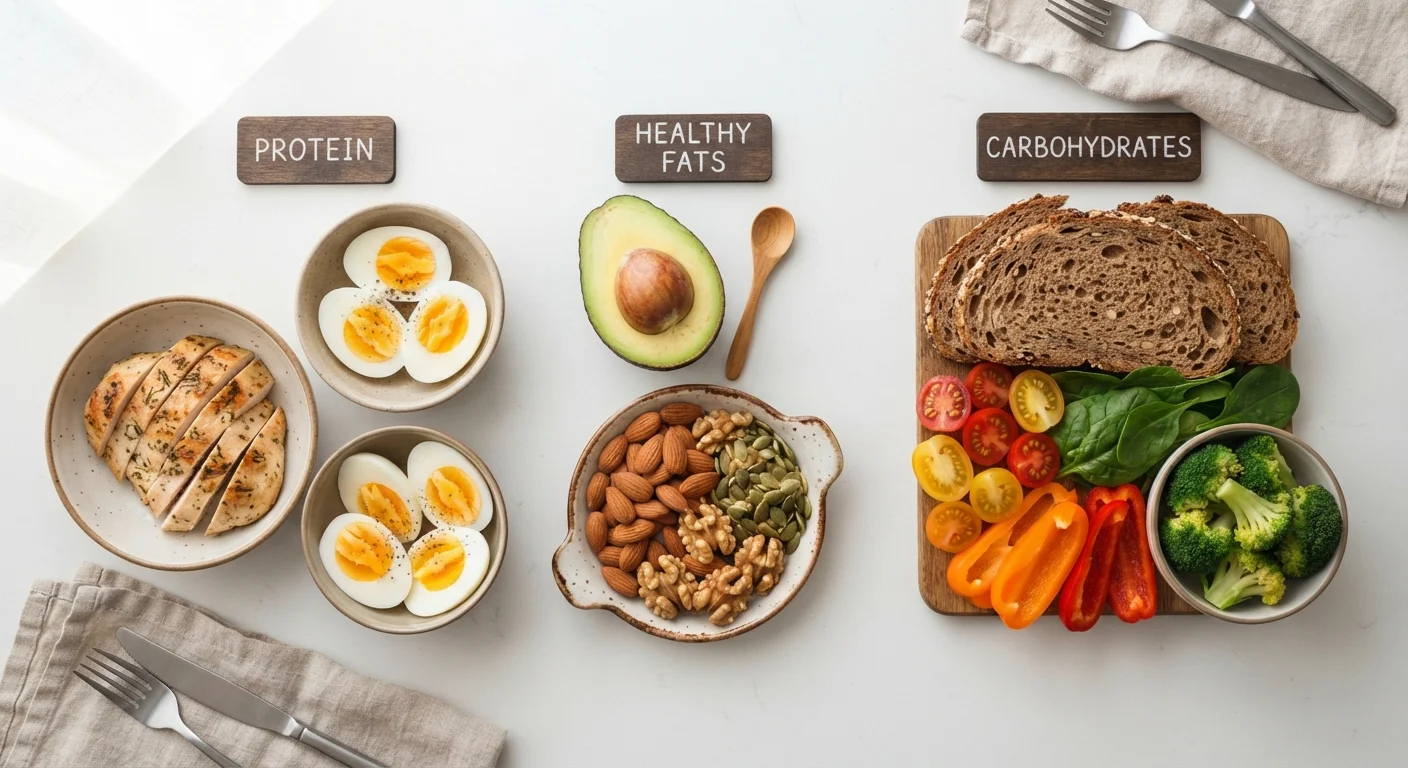
Carbohydrates: Your Body's Preferred Fuel
When you eat carbohydrates - from bread, rice, fruit, or vegetables - your digestive system breaks them down into glucose, a simple sugar that circulates in your blood and powers your cells. Your brain alone relies on glucose as its primary fuel, which is why low-carb diets can cause mental fogginess for some people during an adjustment period.
Carbohydrates come in two main forms: simple carbohydrates (sugars found in fruit, dairy, and processed sweets) and complex carbohydrates (starches and fiber found in whole grains, legumes, and vegetables). Complex carbs digest more slowly, helping stabilize blood sugar and keeping you feeling full longer. Fiber - technically a carbohydrate your body can't fully digest - plays a key role in gut health and may support healthy cholesterol levels.
One persistent misconception is that all carbs are equally harmful. For a balanced look at where that idea comes from and why the evidence is more nuanced, see what registered dietitians say about common nutrition myths.
Fiber Is Technically a Carbohydrate
Dietary fiber - found in fruits, vegetables, legumes, and whole grains - is classified as a carbohydrate, but it behaves differently from starches and sugars. Because humans lack the enzymes to fully digest most fiber, it passes largely intact through the digestive tract, supporting gut microbiome health and helping regulate blood sugar and cholesterol levels. Most Americans consume well below the recommended daily fiber intake.
Protein: More Than Muscle Building
Protein gets most of its cultural attention from fitness circles focused on muscle, but its roles extend far beyond the gym. Proteins are made of amino acids, and your body uses them to repair damaged tissue, produce enzymes and hormones, support immune function, and transport oxygen through the blood via hemoglobin.
Your body can synthesize some amino acids on its own, but nine are considered essential - meaning you must get them from food. Animal proteins (meat, fish, eggs, dairy) typically contain all nine essential amino acids in sufficient amounts, making them complete proteins. Most plant proteins are incomplete, but eating a varied plant-based diet across the day can still meet all essential amino acid needs.
Protein also has a higher thermic effect than carbs or fat, meaning your body burns slightly more calories digesting it - one reason higher-protein diets are associated with sustained satiety in research settings.
Combine Protein Sources for Plant-Based Diets
If you eat primarily plant-based foods, varying your protein sources throughout the day - combining legumes, whole grains, nuts, and seeds - helps ensure you're getting all nine essential amino acids your body can't produce on its own. You don't need to combine them in every single meal; variety over the course of a day is sufficient according to most nutrition guidance.
Fat: Essential, Not the Enemy
Dietary fat spent decades being vilified in American nutrition culture, but research increasingly supports its essential role in overall health. Fat enables the absorption of fat-soluble vitamins - A, D, E, and K - which means a very low-fat diet can quietly create micronutrient deficiencies even if your diet looks otherwise varied.
Fat also forms the structural backbone of every cell membrane in your body, supports brain function (the brain is roughly 60% fat by dry weight), and is necessary for producing steroid hormones including estrogen and testosterone.
Not all fats are equivalent in their effects. Unsaturated fats - found in olive oil, avocados, nuts, and fatty fish - are generally associated with favorable cardiovascular outcomes in large observational studies. Saturated fats, found in red meat and full-fat dairy, are associated with raising LDL cholesterol in many studies, though the picture is more complex than it once seemed. Trans fats, largely removed from the US food supply since the FDA's 2018 ban, are consistently linked to poor cardiovascular outcomes.
45-65%
Recommended calorie share from carbohydrates
According to the Dietary Guidelines for Americans, this range applies to most healthy adults as a population-level target.
60%
Approximate fat content of the adult brain (dry weight)
Research cited by the National Institutes of Health highlights fat's structural role in brain tissue, underscoring why dietary fat is biologically essential.
9 kcal/g
Energy density of dietary fat
Fat provides more than twice the calories per gram compared to protein or carbohydrates, which each yield 4 kcal/g, according to established nutrition science.
Understanding how fat is listed on food labels - including the breakdown by type - is a practical skill. Our guide to reading a Nutrition Facts label walks through exactly how to find and interpret that information.
Why Balance Across All Three Matters
Popular diets often center on restricting one macronutrient dramatically - very low-fat, low-carb, or high-protein approaches each have their advocates. While short-term strategies may work for specific goals under professional guidance, long-term elimination of any macronutrient category carries real nutritional risks.
The Dietary Guidelines for Americans recommend that most adults get roughly 45-65% of calories from carbohydrates, 20-35% from fat, and 10-35% from protein - though these are population-level ranges, not personal prescriptions. Individual needs vary based on age, activity, health status, and other factors.
The quality of each macronutrient source also matters at least as much as the ratio. A diet built around whole grains, lean proteins, healthy fats, and plenty of fiber-rich produce will generally outperform one that hits the same macro percentages through ultra-processed foods. If you have specific health conditions or goals, a registered dietitian can help you identify an eating pattern that fits your individual needs.
This article is for general informational and educational purposes only and is not a substitute for professional medical or dietary advice. Consult a qualified healthcare provider or registered dietitian before making significant changes to your diet.
Frequently Asked Questions
Most people do not need to formally track macronutrients. Focusing on whole, minimally processed foods across all three categories generally produces a balanced intake. Macro tracking can be a useful educational tool but is not required for good health.
Carbohydrates are not inherently harmful. The quality and quantity matter more than the macronutrient itself. Whole grains, legumes, fruits, and vegetables provide carbs alongside fiber and nutrients, while refined sugars offer little nutritional value.
The Recommended Dietary Allowance (RDA) for protein is 0.8 grams per kilogram of body weight per day for sedentary adults, according to the National Academies of Sciences. Individual needs vary based on age, activity level, and health status - a registered dietitian can help determine what's right for you.
Weight changes are driven by overall energy balance, not any single macronutrient. Fat is calorie-dense, but it also promotes satiety and supports essential body functions. Excess calories from any source - protein, carbs, or fat - can contribute to weight gain.
Many whole foods contain a mix of macronutrients. For example, Greek yogurt provides protein, fat, and some carbohydrates. Legumes like lentils offer both protein and carbohydrates with a small amount of fat. Reading a nutrition label can help you see the breakdown.
The relationship between dietary fat and cholesterol is nuanced. Saturated and trans fats are generally associated with raising LDL ("bad") cholesterol, while unsaturated fats may be more favorable. Anyone managing high cholesterol should consult a healthcare provider or registered dietitian for personalized guidance.
The content on this site is for informational purposes only and is not a substitute for professional advice. Always consult a qualified professional for guidance specific to your situation.