

Why the Nutrition Facts Label Exists and What It Covers
The Nutrition Facts panel is a federally mandated disclosure required by the FDA on most packaged foods sold in the United States. Its most recent major update - finalizing changes that took effect for larger manufacturers in 2020 - revised serving sizes to better reflect actual consumption, added the "added sugars" line, and increased the prominence of calorie and serving information.
The label is designed to give consumers standardized, comparable data regardless of brand or packaging. That standardization is its greatest strength: once you understand the format, you can apply the same reading strategy to virtually every packaged food in the grocery store. If you want to pair this skill with a practical shopping approach, our guide on eating well on a budget shows how to apply label knowledge to value-focused grocery decisions.
Don't Stop at the Front of the Package
Marketing terms like "natural," "multigrain," and "low-fat" are not regulated nutrition claims and can create a misleading impression of healthfulness. The Nutrition Facts panel and ingredient list on the back or side of the package are where objective data lives. See our companion piece on packaging claims vs. actual nutrition for a deeper look at this gap.
For broader context on how label reading fits into overall healthy eating habits, see our foundational article on building a balanced plate.
How to Read the Label: Step-by-Step
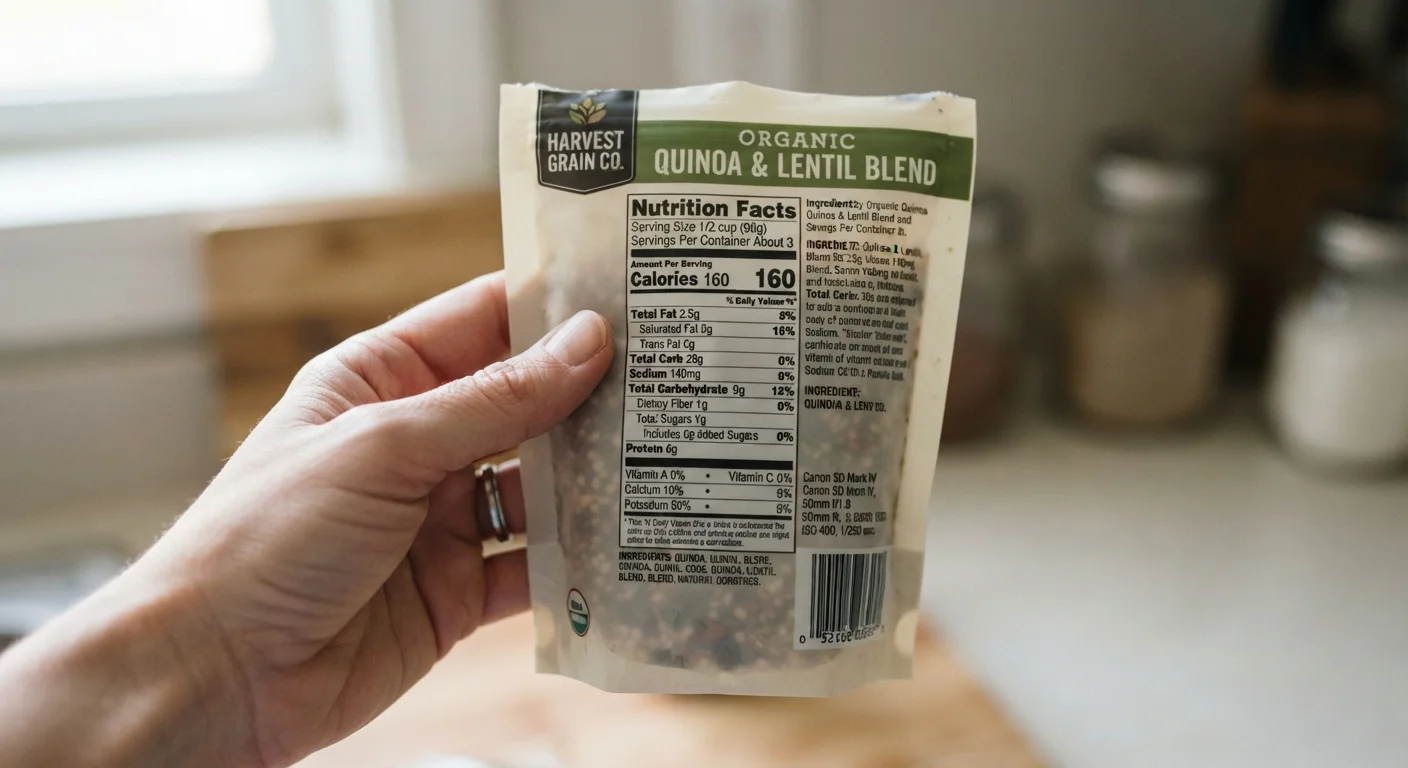
Work through these steps the next time you pick up a packaged product. Having a real label in hand will make each step concrete.
What you will need
A food package with a Nutrition Facts label
The primary item you will be reading and interpreting throughout these steps.
Smartphone calculator (or any calculator)
Useful for calculating nutrient totals when consuming more or fewer servings than the listed serving size.
Locate the serving size and servings per container
The very first line of the Nutrition Facts panel shows the serving size (e.g., "2 crackers" or "1 cup") and the number of servings in the entire package. Every single number below it - calories, fat, sodium, everything - reflects that one serving, not the whole package.
If a bag of chips lists 7 chips as one serving but you eat 21, you must multiply all values by three. This step is non-negotiable; skipping it is the single most common label-reading mistake.
Check the calorie count
The large, bold calorie number tells you how much energy one serving provides. Calories come from carbohydrates, protein, and fat - the three macronutrients. This figure is useful context, but calorie quality matters alongside quantity: 200 calories from lentils delivers fiber, protein, and micronutrients that 200 calories from a sugary snack does not.
Review the nutrients to limit
The panel groups certain nutrients under an implicit "limit these" heading. Pay particular attention to:
- Saturated fat - associated with cardiovascular risk when consumed in excess, according to major health bodies including the American Heart Association.
- Sodium - most Americans consume well above guideline levels; processed and packaged foods are the primary source. For more context, see our article on sodium in the American diet.
- Added sugars - now required as a separate line below total sugars since the FDA's updated label rule. A teaspoon of granulated sugar equals roughly 4 grams, which can help you visualize the amount. Our piece on where added sugars hide covers this in depth.
Identify the nutrients to get enough of
Below the "limit" nutrients, the label lists nutrients many Americans fall short on:
- Dietary fiber - supports digestive health and is linked to reduced risk of several chronic conditions. Most US adults consume well under the recommended amount. Learn more in our guide on why most Americans don't get enough fiber.
- Vitamin D, calcium, iron, and potassium - mandated on the updated label because deficiencies in these are a recognized public health concern. For a broader reference, see our vitamins and minerals guide.
Interpret the % Daily Value column
The right-hand column expresses each nutrient as a percentage of the daily reference amount for a 2,000-calorie diet. This column is most useful for comparison shopping - quickly telling you whether a product is a meaningful source of a nutrient you want more of, or a disproportionate contributor to one you're watching.
[tip_callout]Glance at the ingredient list
The ingredient list sits just below or beside the Nutrition Facts panel and is ordered by weight - the first ingredient is present in the largest amount. A short list with recognizable whole-food ingredients generally indicates less processing, though ingredient count alone is not a definitive measure of healthfulness. This list is also where you confirm the presence of allergens and where added sugars hide under alternate names like maltose, dextrose, or cane syrup.
Putting It All Together at the Store
Reading a label gets faster with repetition. Most experienced label readers focus on three to four key lines - serving size, calories, the nutrient they're personally managing (often sodium, added sugars, or fiber), and the % DV column - rather than every figure on the panel.
Labels Reflect a Reference Diet, Not Yours
All % Daily Values on the Nutrition Facts label are based on a 2,000-calorie-per-day reference diet set by the FDA. Your actual calorie and nutrient needs depend on your age, sex, activity level, and health status. Use % DV as a general benchmark, not a personal prescription. Consult a registered dietitian or your healthcare provider for guidance tailored to your situation.
Once you're comfortable with the basics, you can build this into a consistent grocery habit. Our nutrition label shopping checklist condenses the most important checkpoints into a quick reference you can use on any grocery run.
This article is for general informational and educational purposes only and is not a substitute for professional medical or dietary advice. Consult a qualified healthcare provider or registered dietitian for guidance specific to your health needs.
The content on this site is for informational purposes only and is not a substitute for professional advice. Always consult a qualified professional for guidance specific to your situation.