

Why Perennials Make Sense for Busy Gardeners
Annuals offer big seasonal color, but they require replanting every year - a cost in both time and money. Perennials, by contrast, establish their root systems over time and return reliably season after season. For gardeners who want a yard that looks good without constant intervention, the right perennials can do most of the heavy lifting.
That said, "low-maintenance" doesn't mean zero-maintenance. Most perennials benefit from a light cleanup in early spring, occasional division every few years to prevent overcrowding, and appropriate watering while they're getting established. Once settled in, however, many varieties are remarkably self-sufficient.
The plants listed below were selected based on their adaptability across a range of US climates, their tolerance for common gardening challenges like drought or poor drainage, and their general reputation for reliability among home gardeners. Before planting, it's worth checking your USDA hardiness zone to confirm a plant will overwinter successfully in your area. You can also pair this list with our spring garden prep checklist to time your planting and bed preparation effectively.
Coneflower (Echinacea)
Coneflower is one of the most dependable choices for a low-fuss perennial garden. Native to North American prairies, it handles heat, drought, and clay soil with relative ease. Its daisy-like blooms in shades of pink, purple, and white appear from midsummer through early fall, and if you leave the seedheads in place, they attract goldfinches and other birds throughout winter.
Coneflowers grow well in USDA zones 3-9 and prefer full sun, though they can tolerate partial shade. Division every three to four years helps maintain vigor, but otherwise they largely care for themselves once established.
Leave coneflower seedheads standing through winter - they feed birds and self-sow naturally.
Black-Eyed Susan (Rudbeckia hirta)
Few perennials are as cheerful or as forgiving as black-eyed Susan. Its bold yellow blooms with dark centers brighten gardens from mid-July through September, and it tolerates a wide range of conditions - including poor soil, moderate drought, and air pollution. That resilience makes it a particularly strong choice for gardeners working with challenging sites.
Hardy in zones 3-9, black-eyed Susan pairs naturally with ornamental grasses and coneflowers for a prairie-style planting that requires minimal upkeep. It self-seeds readily, so you may find it spreading gently over time - an advantage if you want more coverage, something to manage if you prefer defined borders.
Black-eyed Susan thrives in poor soil and drought conditions - an ideal filler for difficult spots.
Daylily (Hemerocallis)
Daylilies have a well-earned reputation as nearly indestructible garden plants. They spread steadily, suppress weeds with their dense foliage, and produce abundant blooms over a long season. While individual flowers last only a single day, each plant carries multiple buds and continues flowering for several weeks.
They perform well in zones 3-9 and adapt to sun or partial shade. Once established, daylilies tolerate drought and require little fertilization. The main maintenance task is dividing clumps every four to five years to prevent overcrowding and maintain bloom quality - a simple job that also gives you free plants to share or expand with.
Daylilies suppress weeds naturally and need dividing only every few years to stay productive.
Creeping Phlox (Phlox subulata)
For a groundcover that doubles as a spring showstopper, creeping phlox is hard to beat. It forms a low mat of needle-like foliage that erupts in dense blooms - typically in shades of pink, purple, white, or red - in April and May. After flowering, the foliage remains attractive all season, providing year-round coverage that helps crowd out weeds.
Creeping phlox suits zones 3-9 and thrives in well-drained soil and full to partial sun. It's particularly effective on slopes or along garden edges where erosion control is also a priority. Shear it lightly after blooming to maintain a compact shape, but otherwise it needs very little attention.
Creeping phlox acts as a weed-suppressing groundcover while delivering dramatic spring color.
Ornamental Grasses (various genera)
Ornamental grasses - including varieties like Karl Foerster feather reed grass, blue oat grass, and switchgrass - add movement, texture, and four-season interest to a garden with almost no maintenance demands. They're drought-tolerant once established, rarely need fertilizing, and are mostly ignored by deer and rabbits.
Most ornamental grasses simply need cutting back to a few inches above the ground in late winter before new growth emerges - a once-a-year task. Hardy across a wide range of zones depending on species, they work well as focal points, in mass plantings, or as a backdrop to flowering perennials. Their feathery plumes and rustling stems extend seasonal interest well into fall and winter.
Ornamental grasses need just one annual cutback to deliver year-round texture and movement.
Sedum (Stonecrop)
Sedum earns its place in low-maintenance gardens through exceptional drought tolerance and a long season of interest. Taller varieties like 'Autumn Joy' form dense, upright clumps that produce clusters of blooms shifting from pink to rusty red as the season progresses - a reliable presence from late summer through frost. Shorter spreading sedums work well as groundcovers in dry, sunny spots where other plants struggle.
Hardy in zones 3-9, sedums prefer well-drained soil and full sun. They're particularly well suited to rock gardens, slopes, or any area prone to drying out. Overwatering or heavy, wet soils are among the few conditions that can cause problems - in appropriate settings, they're among the most self-sufficient plants available.
Sedums thrive on neglect - their main enemy is too much water, not too little.
Hosta
For shaded areas where flowering perennials often struggle, hostas are a reliable standby. Grown primarily for their striking foliage - which ranges from deep green to blue-gray to variegated cream and gold - hostas provide consistent, bold texture throughout the growing season. Some varieties also produce attractive lavender flower spikes in midsummer.
Hardy in zones 3-9, hostas thrive in partial to full shade and prefer consistently moist, well-drained soil. Once established, they're largely self-sufficient - just cut back the dying foliage in fall. The main challenge is slug and deer pressure, which can damage leaves. Choosing slug-resistant varieties and addressing deer pressure with appropriate fencing or deterrents can help minimize issues.
Hostas turn challenging shady spots into polished, textured garden beds with minimal care.
Building a Garden That Works for You
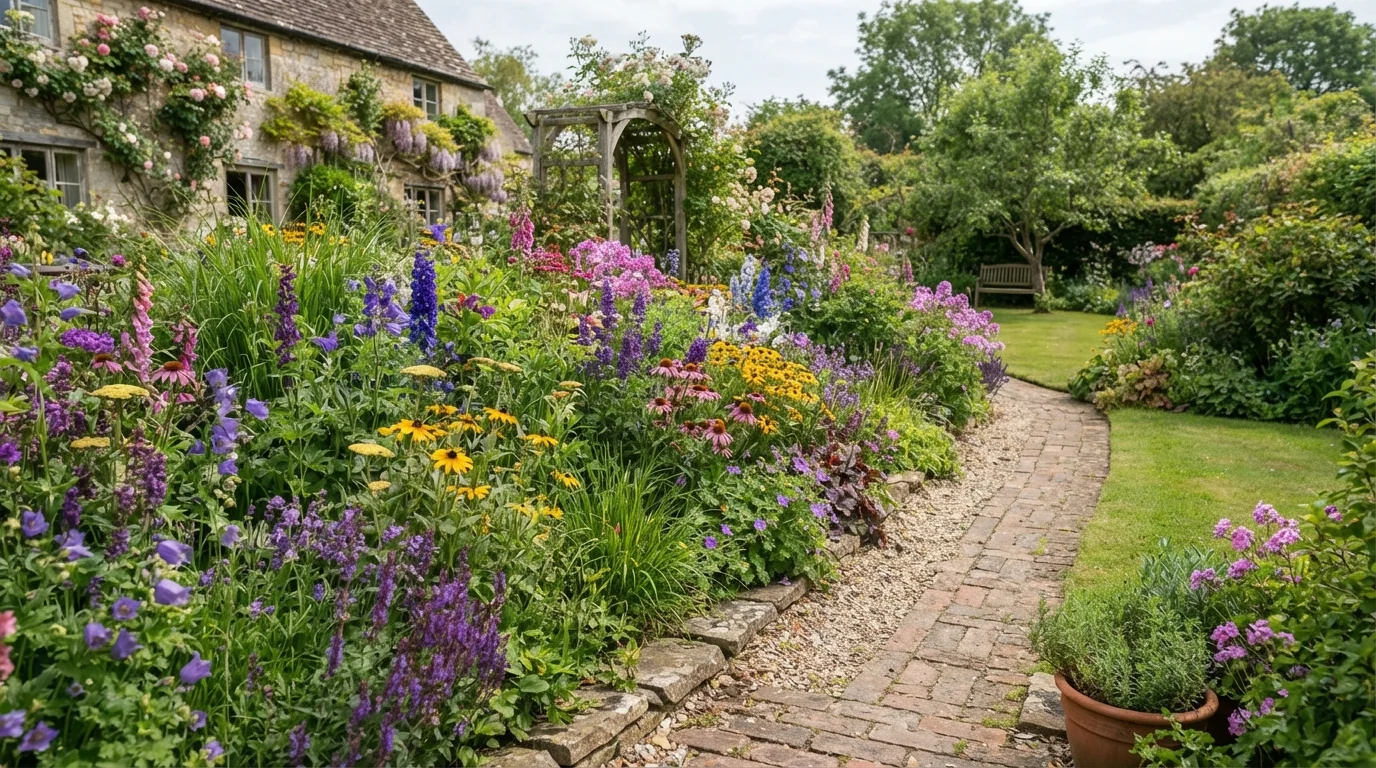
A well-chosen mix of perennials can provide interest across multiple seasons - early spring bloomers like coneflowers give way to midsummer stalwarts like black-eyed Susans, with ornamental grasses extending the show into fall. Layering plants by height and bloom time creates a garden that shifts visually without demanding constant replanting.
If you're drawn to plants that do double duty for your local ecosystem, our article on native plants in a home garden explores how regionally adapted species can reduce your maintenance load while supporting pollinators and local wildlife. Many of the perennials covered here - particularly coneflower, black-eyed Susan, and wild blue salvia - have native or near-native cultivars that carry those same benefits.
Start with the Right Plant for Your Site
Before choosing a perennial, assess your garden's sun exposure, drainage, and soil type. Even the toughest plants perform better when matched to conditions they're adapted to. A five-minute site assessment before you plant can save you months of troubleshooting later.
Keep in mind that even tough perennials need a good start. Planting at the right time of year, amending soil if needed, and watering consistently through the first growing season gives each plant the foundation to thrive on its own in subsequent years. From there, your garden's maintenance burden generally decreases as root systems deepen and plants become more self-reliant.
The content on this site is for informational purposes only and is not a substitute for professional advice. Always consult a qualified professional for guidance specific to your situation.