

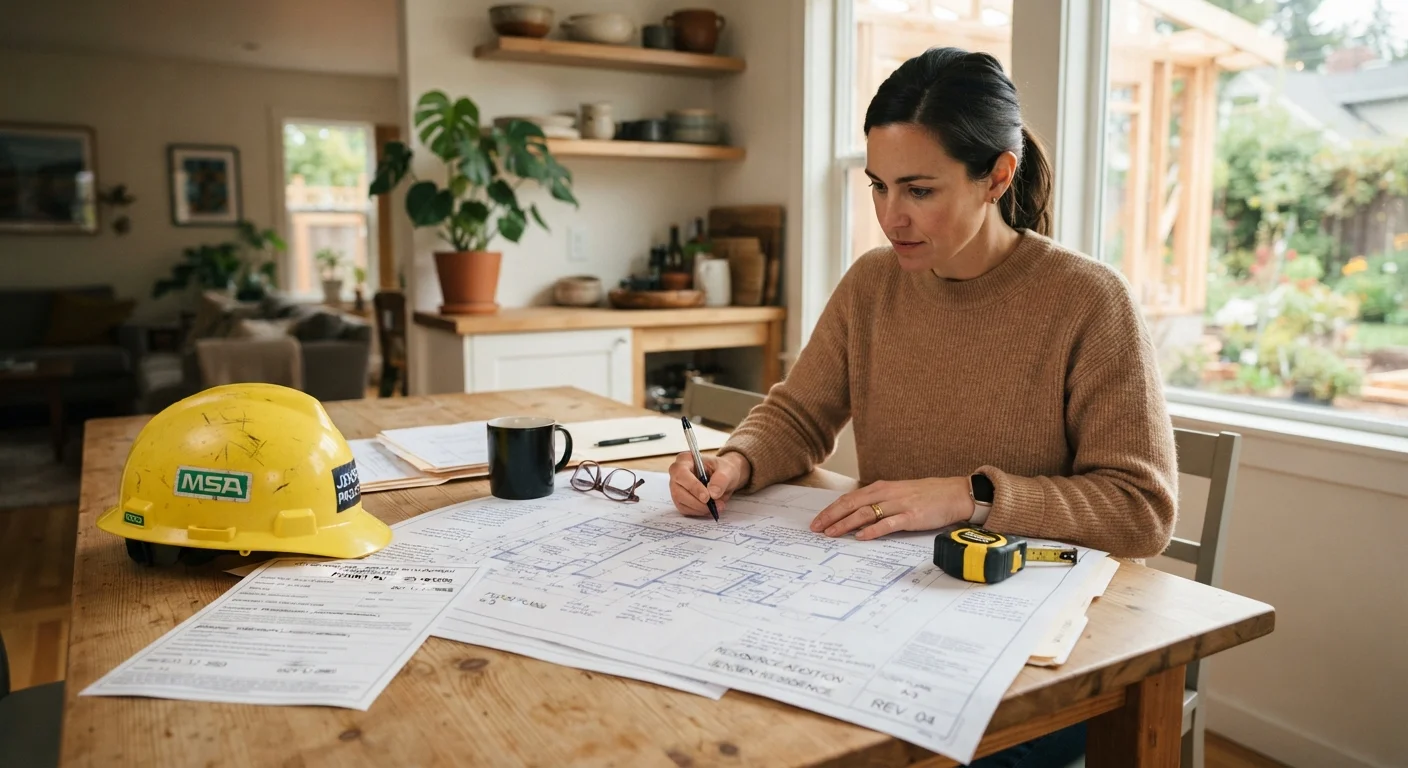
Why Permits Exist in the First Place
Building permits are not designed to slow down your renovation - they exist to protect people. Code inspections catch real hazards: overloaded electrical circuits, undersized structural beams, improperly vented gas appliances. When work is reviewed and inspected by a qualified building official, there's a documented record that it was done safely.
Think of the permit process as a series of checkpoints. You submit your plans, the building department reviews them for code compliance, you do the work, and an inspector verifies it at one or more stages before the project is officially closed. That sign-off matters to future buyers, insurers, and lenders. See our pre-project renovation checklist for a broader look at what to confirm before any project begins.
Permits Apply to Renters' Landlords Too
If you're renting, your landlord is responsible for pulling permits for significant construction or renovation work done on the property. As a tenant, you generally cannot pull a permit yourself, but you can ask your landlord for documentation of permitted work - especially for electrical or gas-related projects that affect your safety.
Projects That Typically Require a Permit
While rules vary by municipality, the following categories almost universally require a permit:
- Structural changes: Removing or adding walls, especially load-bearing ones; adding a room addition or dormer; building a deck above a certain height.
- Electrical work: Installing a new panel, adding circuits, rewiring rooms, or installing a whole-home generator.
- Plumbing changes: Moving or adding supply lines or drain lines; installing a water heater in many jurisdictions.
- HVAC: Installing or replacing a furnace, central air conditioner, or ductwork systems.
- New construction and conversions: Building a garage, converting a garage to living space, or finishing a basement with habitable rooms.
- Fences and pools: Many localities require permits for fences above a certain height and for all in-ground or above-ground pools.
This is not an exhaustive list. Your local building department's website is the most reliable source for your specific address and project type.
~$500-$2,000+
Typical fine range for unpermitted work
Fines vary widely by jurisdiction and project type; repeat violations or hazardous work can result in significantly higher penalties.
3-4 weeks
Average plan review time for complex projects
Major renovations requiring structural or engineer-stamped drawings often take several weeks for review; simple permits may be issued same-day.
Projects That Usually Don't Require a Permit
Cosmetic and maintenance work generally falls outside the permit requirement. Common examples include painting interior or exterior surfaces, replacing flooring, installing cabinets without moving plumbing, and swapping out fixtures like faucets or light fixtures on existing circuits.
Landscaping - planting trees, laying sod, or building a garden bed - typically doesn't require a permit, though grading that affects drainage may in some areas. Minor repairs that restore existing conditions rather than alter them are also usually exempt.
When in Doubt, Ask the Building Department
Many homeowners avoid contacting their local building department out of fear it will trigger unwanted scrutiny. In practice, departments field basic questions routinely and without consequence. A short inquiry can confirm whether your project needs a permit, saving you from a much harder conversation after the fact.
Even if your project seems minor, a quick call or email to your local building or planning department takes minutes and can prevent significant problems. Many departments now offer online permit lookup tools.
What Happens When You Skip a Required Permit
Skipping a required permit might seem like a shortcut, but the long-term risks are real. The three most common consequences homeowners face are:
- Fines and stop-work orders: If unpermitted work is discovered - by a neighbor complaint, routine inspection, or utility worker visit - you can be ordered to halt all work immediately and pay penalties.
- Disclosure requirements at resale: Most states require sellers to disclose known unpermitted work. Buyers and their lenders scrutinize this closely. Appraisers may not include an unpermitted addition in the home's value, and lenders may refuse to finance a sale until the issue is resolved. See what first-time buyers often discover too late when reviewing a property's history.
- Insurance complications: If damage occurs in an area where unpermitted work was performed - say, a fire starting in an improperly wired addition - your insurer may dispute or reduce the claim. Review how your coverage is structured with our overview of homeowner's insurance vs. home warranties.
How to Navigate the Permit Process
Getting a permit is more straightforward than many homeowners expect. Here's a general overview of how the process typically works:
- Define your project scope before contacting anyone. The more clearly you can describe the work, the faster you'll get an accurate answer about what's required.
- Contact your local building department - by phone, email, or their online portal. Ask specifically whether your project requires a permit, what documents you'll need to submit, and what the review timeline looks like.
- Submit required plans or documentation. Smaller projects may only need a simple form and site sketch; larger ones may require professional drawings.
- Schedule inspections at the stages the permit specifies - typically before walls are closed in and after work is complete.
- Receive your final sign-off and keep all documentation. Store your permit and inspection records with your home's important papers.
If you're working with a licensed contractor, ask upfront who will be responsible for pulling the permit and scheduling inspections. A reputable contractor will handle this as a matter of course - and if one suggests skipping the permit to save time or money, treat that as a warning sign.
Frequently Asked Questions
Either the homeowner or the licensed contractor can pull the permit, depending on local rules. However, the property owner is ultimately responsible for ensuring all required permits are obtained. If a contractor tells you no permit is needed for major structural or mechanical work, verify that claim independently with your local building department.
Unpermitted work can result in fines, a stop-work order, or a requirement to demolish and redo the work correctly. It can also complicate the sale of your home, since buyers and their lenders often flag unpermitted additions or alterations during inspection. In some cases, homeowner's insurance may deny claims related to unpermitted work.
Timelines vary widely by municipality and project complexity. Simple permits may be issued same-day or online; larger projects involving structural or plan reviews can take several weeks. Contact your local building or planning department early in your project planning to get a realistic timeline.
It depends on your jurisdiction and the scope of the replacement. Like-for-like window swaps are often exempt, but changes to window size, structural openings, or egress requirements typically require a permit. Check with your local building department before proceeding.
It can. When permitted improvements are inspected and finalized, the local assessor may update your property's assessed value, which could raise your property taxes. This is something to factor into your renovation budget planning.
Many jurisdictions allow retroactive or "after-the-fact" permits, but the process often requires inspections, and work may need to be exposed or redone to verify code compliance. It's nearly always easier and less expensive to pull the permit before the work begins.
The content on this site is for informational purposes only and is not a substitute for professional advice. Always consult a qualified professional for guidance specific to your situation.