

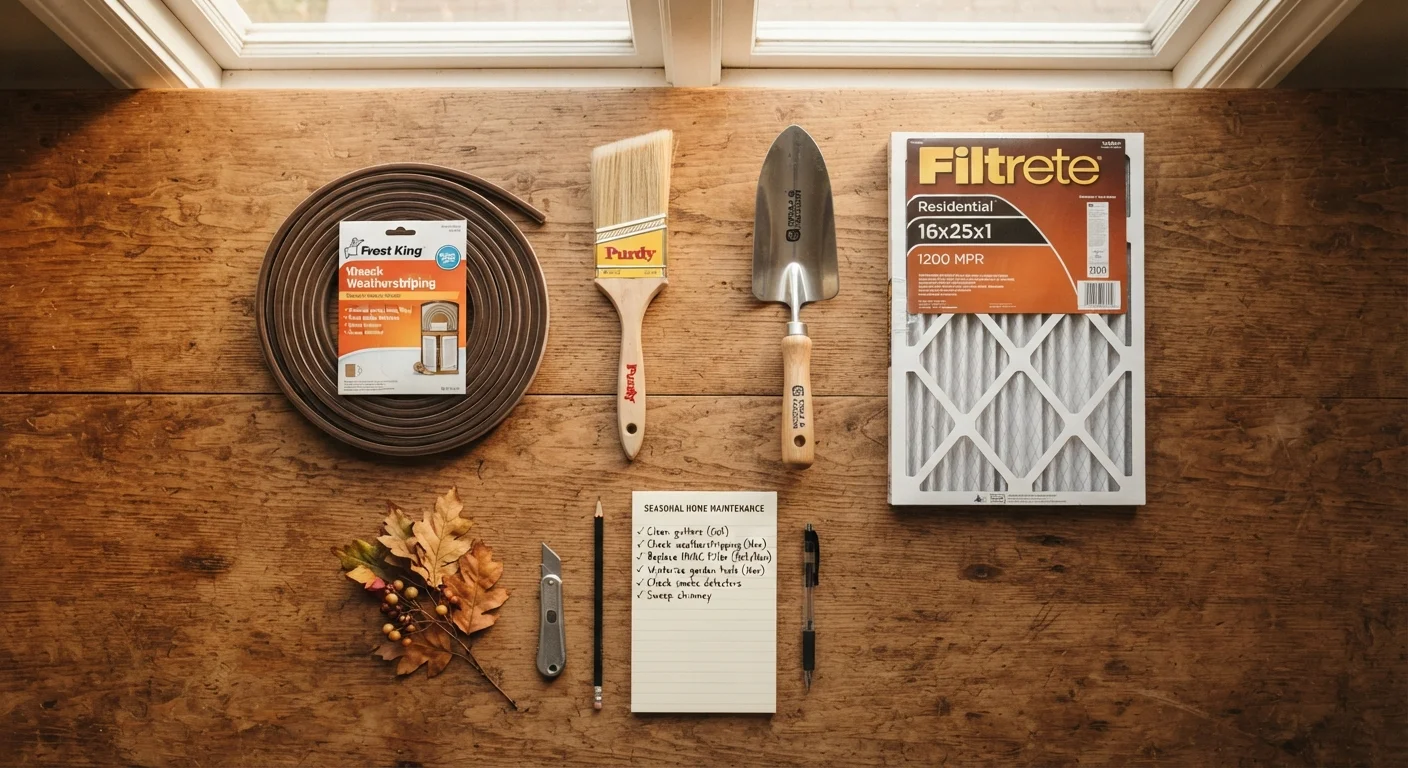
Why a Seasonal Maintenance Calendar Works
Reactive repairs almost always cost more than preventive ones. A seasonal calendar turns an overwhelming to-do list into manageable, time-appropriate tasks - so nothing critical gets overlooked and every job is tackled when conditions make it easiest to do so. Think of it the way a car maintenance schedule brings order to vehicle upkeep: a clear cadence prevents small issues from growing into expensive emergencies.
This reference covers the core checks and tasks US homeowners commonly perform each season. Specific needs will vary by climate, home age, and construction type - treat this as a starting framework and adjust for your situation.
| Recommended HVAC filter replacement | Every 1-3 months depending on filter type and household conditions (General industry guidance) |
| Gutter cleaning frequency | At least twice per year - spring and late fall |
| Smoke detector battery replacement | At least once per year; replace unit every 10 years (NFPA guidance) |
| Water heater flush interval | Once per year to remove sediment buildup |
| Recommended indoor humidity range | 30-50% relative humidity (EPA general guidance) |
| Chimney inspection frequency | Annually, before heating season (Chimney Safety Institute of America) |
Spring (March-May): Open Up and Inspect
Spring is prime time to assess any damage winter left behind and prepare systems for warmer weather.
- Roof and gutters: Inspect shingles for lifted edges, cracks, or missing sections after freeze-thaw cycles. Clean gutters and downspouts of winter debris; confirm water flows away from the foundation.
- HVAC switchover: Replace furnace and air-handler filters before running the air conditioner for the first time. Schedule a professional tune-up if the system hasn't been serviced in over a year.
- Exterior caulking and weatherstripping: Inspect seals around windows, doors, and where utility lines enter the home. Cracked or missing caulk allows moisture intrusion and raises energy bills.
- Lawn and irrigation: Check sprinkler heads for winter damage, test the system zone by zone, and service any drip irrigation lines before summer heat arrives.
- Smoke and CO detectors: Test all units and replace batteries if they're over a year old.
Ice dam
A ridge of ice that forms along the edge of a roof when heat escaping from the attic melts snow, which then refreezes at the cold overhang. Ice dams can force meltwater under shingles and cause interior water damage.
Weatherstripping
Strips of material - foam, rubber, or metal - applied around doors and windows to seal gaps that allow drafts, moisture, and insects to enter. It should be inspected and replaced when worn or cracked.
Hydronic heating
A heating system that circulates hot water through radiators or in-floor pipes rather than forcing warm air through ducts. Bleeding air from the lines periodically keeps the system running efficiently.
Creosote
A tar-like byproduct of wood combustion that accumulates inside chimney flues. It is highly flammable and must be removed by a certified chimney sweep to reduce fire risk.
Soffit and ridge vents
Ventilation openings located at the lowest (soffit) and highest (ridge) points of a roof. Together, they allow cool air to enter at the bottom and hot air to escape at the top, regulating attic temperature.
Summer (June-August): Maintain and Monitor
Summer maintenance focuses on keeping cooling systems efficient and catching moisture problems before they worsen in heat and humidity.
- Air conditioner filters: Replace or clean filters every 30-60 days during heavy-use months. A clogged filter forces the unit to work harder and shortens its lifespan.
- Deck and fence: Look for splintered boards, wobbly posts, and rust on hardware. Re-seal wood decking if water no longer beads on the surface.
- Pest inspection: Check window screens for tears and inspect the foundation perimeter for ant trails or termite mud tubes. Address entry points promptly.
- Water heater: Flush sediment from the tank by draining a few gallons from the relief valve - sediment buildup reduces efficiency and shortens tank life.
- Attic ventilation: Confirm soffit and ridge vents are unobstructed. Proper airflow reduces attic temperatures that can otherwise warp roof sheathing and drive up cooling costs.
Fall (September-November): Weatherize and Winterize
Fall is arguably the most critical maintenance window. Tasks completed now directly protect the home during the harshest months.
- Chimney and fireplace: Have a certified chimney sweep inspect and clean the flue before the first fire of the season. Creosote buildup is a leading cause of chimney fires.
- Heating system: Replace furnace filters, test the thermostat, and bleed air from hot-water radiators if your home uses hydronic heat. Consider a professional inspection for systems older than ten years.
- Weatherstripping and insulation: Re-check door sweeps and window seals. Adding attic insulation before cold weather arrives can noticeably reduce heating costs.
- Outdoor plumbing: Disconnect garden hoses, shut off and drain outdoor spigots, and blow out irrigation lines in freeze-prone climates. A burst pipe is one of the most costly and disruptive home repairs.
- Gutters (second pass): Clean gutters again after leaves have fallen to prevent ice dams from forming along eaves.
For a deeper seasonal walkthrough, the seasonal home maintenance calendar in our homeownership section covers each task in greater detail.
Winter (December-February): Protect and Prevent
With the home buttoned up, winter tasks shift toward safety monitoring and protecting pipes and structures from cold-related damage.
- Pipe insulation: Insulate exposed pipes in unheated crawl spaces, garages, and exterior walls. During extreme cold snaps, let faucets drip slightly to keep water moving.
- Carbon monoxide detectors: Homes with gas appliances, wood stoves, or attached garages face elevated CO risk in winter. Test detectors monthly and replace any unit older than seven years.
- Roof and ice dams: After heavy snowfall, use a roof rake from the ground to clear snow from eaves. Ice dams form when heat escapes through the roof, melts snow, and refreezes at cold overhangs - they can force water under shingles.
- Interior humidity: Aim for relative humidity between 30-50% indoors. Too low causes wood floors and trim to crack; too high promotes mold on windows and walls.
- Emergency kit: Confirm you have flashlights, extra batteries, a manual can opener, and at least three days of water stored in case of a storm-related outage.
Good home habits complement smart upkeep elsewhere - explore our home improvement guides for project-specific help year-round.
When to Call a Licensed Professional
Some tasks on this calendar - especially anything involving gas lines, electrical panels, structural repairs, or significant roofing work - should be handled by a licensed contractor rather than as a DIY project. Local codes and permit requirements vary by municipality, so verify what's required in your area before starting work. When in doubt, consulting a professional protects both safety and home value.
The content on this site is for informational purposes only and is not a substitute for professional advice. Always consult a qualified professional for guidance specific to your situation.