

Start here
Why Organization Feels So Hard (And Why That's Normal)
Build your foundation
The Core Principles Behind Every Organized Home
Take action
How to Start: Room by Room vs. Category by Category
Stay consistent
Maintaining Order Without Starting Over Every Month
Next step
Organization in Shared Homes
Why Organization Feels So Hard (And Why That's Normal)
Most people don't struggle with organization because they're lazy or careless. They struggle because no one ever taught them a reliable system. Homes accumulate stuff gradually - a bag left on the chair, a stack of mail on the counter, a drawer that becomes a catch-all - and before long, the disorder feels overwhelming and permanent.
The good news: disorganization is almost never a character flaw. It's usually just an absent or broken system. Understanding that is the first practical step, because it shifts the question from "What's wrong with me?" to "What's missing from my setup?"
Decluttering
The process of removing items from your home that you no longer use, need, or want. It always comes before organizing.
Assigned home
The specific, consistent place where an item is stored when not in use. Every item in an organized space has one.
Maintenance habit
A small, regular action - like a daily reset - that keeps a space organized over time without requiring a full reorganization.
Category method
An organizing approach where you gather all items of one type from across the home before sorting and assigning them.
One in, one out rule
A guideline where each new item brought into the home is balanced by removing a comparable item, keeping total volume steady.
This guide is designed for people who feel like they're starting from scratch. You don't need a perfectly clean slate to begin - you just need a framework you can apply room by room, a little at a time.
The Core Principles Behind Every Organized Home
Regardless of home size, lifestyle, or budget, every well-organized space is built on three repeating actions:
- Reduce: Own only what you actually use, need, or genuinely value. The less you have, the less there is to manage. This isn't about minimalism for its own sake - it's about making sure your belongings don't outnumber your ability to organize them.
- Assign: Every item needs a designated home - a specific place where it lives when not in use. When things don't have a home, they pile up wherever they land. Assigned spots make it easy to put things away and easy to find them again.
- Maintain: Organization isn't a one-time event. It requires small, regular habits to stay functional. A five-minute reset at the end of each day does more for long-term order than a weekend deep-clean once a month.
Buy Storage Last, Not First
It's tempting to start an organization project by shopping for bins and baskets. Resist that urge. First sort through what you own and decide what stays. Once you know the quantity and type of items you're keeping, you'll buy only what you actually need - saving both money and space.
Storage products - bins, baskets, drawer dividers - are tools that support a system, not substitutes for one. Buy them after you've reduced and assigned, not before.
How to Start: Room by Room vs. Category by Category
There are two widely used approaches to tackling a home, and neither is universally right. The best choice depends on how you think and how much energy you have for the project.
Room by Room
Work through one room at a time - finish it completely before moving to the next. This approach is visible and satisfying, especially if you're motivated by seeing results in a defined space. It works particularly well for kitchens, bathrooms, and bedrooms.
Category by Category
Gather all items of one type from across the entire home - every piece of clothing, every book, every tool - then sort and assign them together. This method surfaces duplicates and gives you a clearer picture of how much of any one thing you actually own. It takes more upfront coordination but tends to produce lasting results.
Whichever method you choose, start small. A single junk drawer or one kitchen cabinet is enough to begin. Finishing something - anything - builds momentum.
As you make decisions about what to keep, consider the following practical test: Have I used this in the past year? Would I replace it if it were gone? Does it earn its space? If the answer to all three is no, it's a strong candidate for removal.
Maintaining Order Without Starting Over Every Month
The most common pitfall in home organization is treating it as a one-time project. People spend a weekend organizing, feel great, and then watch it slowly unravel over the following weeks. The missing ingredient is a maintenance habit.
A few lightweight habits make a significant difference:
- The daily reset: Before bed or at the end of the day, spend five to ten minutes returning items to their assigned spots. This prevents small messes from compounding.
- One in, one out: When a new item enters the home, a comparable item leaves. This keeps volume steady over time.
- Seasonal review: Every three to four months, revisit storage areas and reassess what's still being used. Seasons change needs - summer gear gets swapped for winter gear, for example.
- Don't let the mail pile up: Paper clutter is among the fastest-growing types. Sort mail the day it arrives: recycle immediately what isn't needed, file what must be kept, and act on anything that requires a response.
If maintaining organization feels difficult alongside other household responsibilities, it may help to look at the bigger picture. Our household budget guide can help you think through how to allocate time and resources across home management tasks.
Progress Beats Perfection Every Time
An organized home doesn't need to look like a magazine spread. A system that's 80% consistent and easy for your household to follow will always outperform a perfect system nobody maintains. Focus on functional over flawless, and adjust as your needs change.
Organization in Shared Homes
When more than one person uses a space, organization requires more than a good system - it requires shared agreement. A filing method or storage setup that makes perfect sense to one person may be completely unintuitive to another.
A few principles help shared households stay functional:
- Involve everyone early: When setting up a new system, include the people who will use it. Systems imposed on others rarely stick.
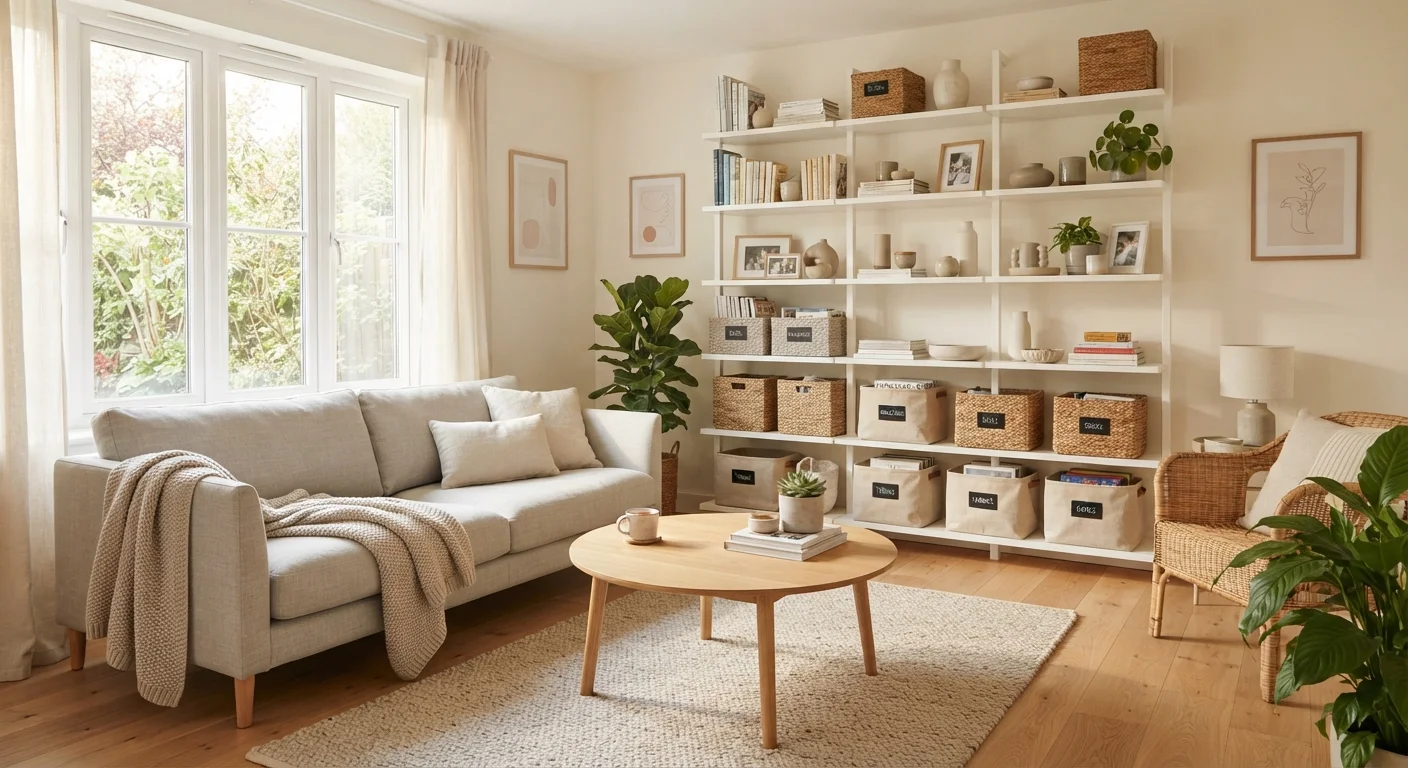
- Use clear labeling: Labels reduce guesswork. When anyone can see where something belongs, it's much easier for everyone to participate in maintaining it.
- Assign personal zones: Give each person ownership over their own space - a shelf, a drawer, a designated area. This reduces friction over shared zones.
- Keep shared areas simple: The more people use a space, the simpler the system needs to be. Overly complex setups break down quickly in households with multiple users.
For a deeper look at coordination strategies in multi-person households, see our guide on organizing a shared home.
Frequently Asked Questions
Start with one small, manageable area - a single drawer, countertop, or shelf. Completing a small zone gives you a quick win and helps you develop a process before scaling up. Avoid trying to organize your whole home in a single day.
No. Start by sorting and reducing what you already own before buying any storage products. Many people purchase containers first and end up organizing clutter rather than eliminating it. Let the items you decide to keep determine the storage you actually need.
The key is building small daily habits - spending five to ten minutes resetting common areas each evening makes a significant difference over time. It also helps to do a seasonal review where you reassess what stays and what goes.
Decluttering is the process of removing items you no longer need, use, or want. Organizing is arranging what remains in a functional, accessible way. Decluttering should always come first - organizing items you don't need is wasted effort.
Make the system easy to follow for everyone who lives there. Involve household members in setting up the system so they feel ownership over it. Clear labeling and logical placement reduce the mental effort required to put things back.
Yes. The most impactful step - reducing what you own - costs nothing. Repurposing boxes, jars, and containers you already have is a practical low-cost approach. Targeted purchases make sense only after you know exactly what storage gaps remain.
The content on this site is for informational purposes only and is not a substitute for professional advice. Always consult a qualified professional for guidance specific to your situation.