

Why Shared Homes Need a Different Approach
Organizing a household you share with roommates, family members, or a partner isn't just a matter of tidying up - it requires a layer of coordination that solo living doesn't demand. When multiple people move through the same spaces with different habits, schedules, and tolerances for clutter, even a well-intentioned system can break down quickly without buy-in from everyone involved.
The good news is that shared homes don't need military-level rules. They need a handful of clear, agreed-upon structures that make it easy for everyone to put things away correctly and maintain the space without constant reminders. If you're starting from scratch, the core principles of home organization provide a useful foundation before layering in the shared-living dynamics covered here.
Best Practices for Keeping a Shared Home Organized
These approaches work across a range of shared household types - couples, families with kids, adult roommates, or multigenerational arrangements.
Assign each person a clearly defined personal storage zone
When individuals have a dedicated shelf, drawer, or cabinet that belongs to them, they're less likely to spread belongings into shared areas. It also eliminates guesswork about where things belong. Defined personal zones reduce the 'whose stuff is this?' friction that quietly erodes household harmony.
Hold a short household conversation before setting up any new system
Systems that one person installs unilaterally tend to be ignored by others. Getting even informal agreement upfront increases the likelihood that everyone follows through. Five minutes of conversation about how the pantry will be organized saves weeks of passive frustration.
Use visual cues like labels or color-coding for shared storage areas
In communal spaces, it's easy for items to drift out of place simply because the correct location isn't obvious. Visual labeling removes the need to remember the system - the right place is self-evident. This is especially helpful in households with children or anyone new to the home.
Establish a daily 'reset window' that everyone participates in
A brief, consistent time each day - even just ten minutes - when each person tidies their zone and the shared spaces prevents gradual accumulation. Habits built around a predictable time of day are far easier to sustain than vague intentions to 'clean up when it gets messy.'
Keep shared entryways clear with a simple drop-zone structure
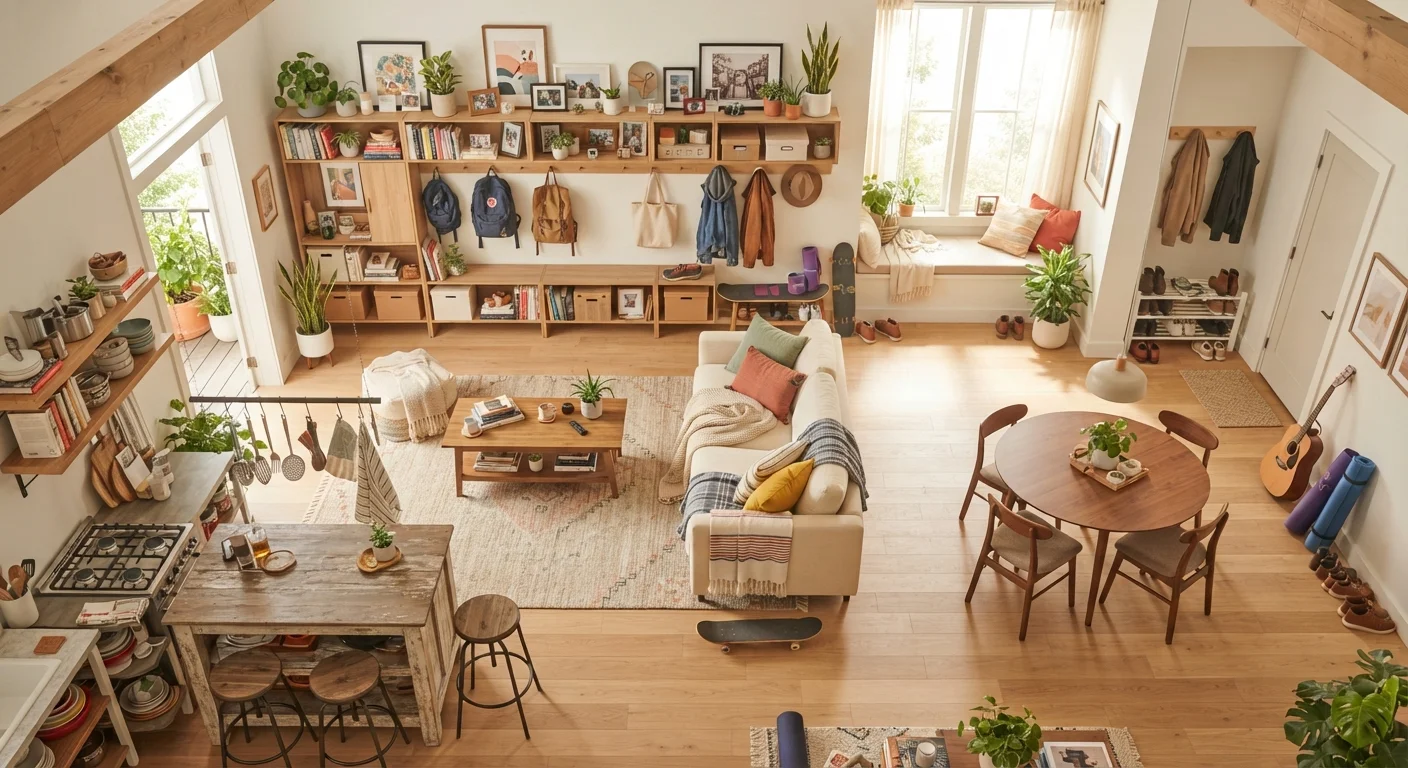
Entryways bear the brunt of daily traffic - bags, shoes, keys, and mail pile up fast. A clear, low-effort structure (hooks, a shoe rack, a tray for keys and mail) prevents the entry from becoming a dumping ground that spreads disorder into the rest of the home.
Quick Wins to Get Started Today
You don't need a full household overhaul to start making a difference. A few targeted actions can shift the dynamic quickly.
Start With One Room, Not the Whole House
Trying to reorganize every shared space at once is a reliable path to burnout and abandoned plans. Choose the single room that causes the most daily friction - usually the kitchen or entryway - and get that working well before moving on. Early wins build momentum and give housemates confidence in the process.
Making Peace With Shared Spaces
Open or semi-open areas like living rooms and kitchens are the most common friction points in shared homes. Because no single person owns them, responsibility for maintaining them often feels unclear. Establishing a light framework - who resets the living room in the evening, who wipes down the kitchen after dinner - removes the ambiguity that leads to passive frustration.
If your household is tight on square footage, maximizing every inch of storage becomes even more critical. Our guide to storage solutions for small spaces covers underused areas like vertical wall space, under-bed clearance, and door-back organizers that can relieve pressure in shared zones. For homes with open floor plans in particular, consider how furniture placement can subtly define each person's zone - a topic explored in depth in our look at the upsides and downsides of open-plan living.
Clutter tends to accumulate faster in shared homes simply because there are more people generating it. Rather than waiting until it becomes overwhelming, a monthly reset - one room at a time - keeps things manageable. A room-by-room decluttering approach can make this feel far less daunting than tackling the whole home at once.
Shared Homes Aren't All the Same
Strategies for roommates renting together may look different from those for a family with young children or an adult child living with aging parents. The underlying principles - clear ownership, visual cues, agreed-upon routines - apply broadly, but the specifics should be adapted to your household's actual dynamics. What works well in one arrangement may feel unnecessary or too rigid in another.
The content on this site is for informational purposes only and is not a substitute for professional advice. Always consult a qualified professional for guidance specific to your situation.