

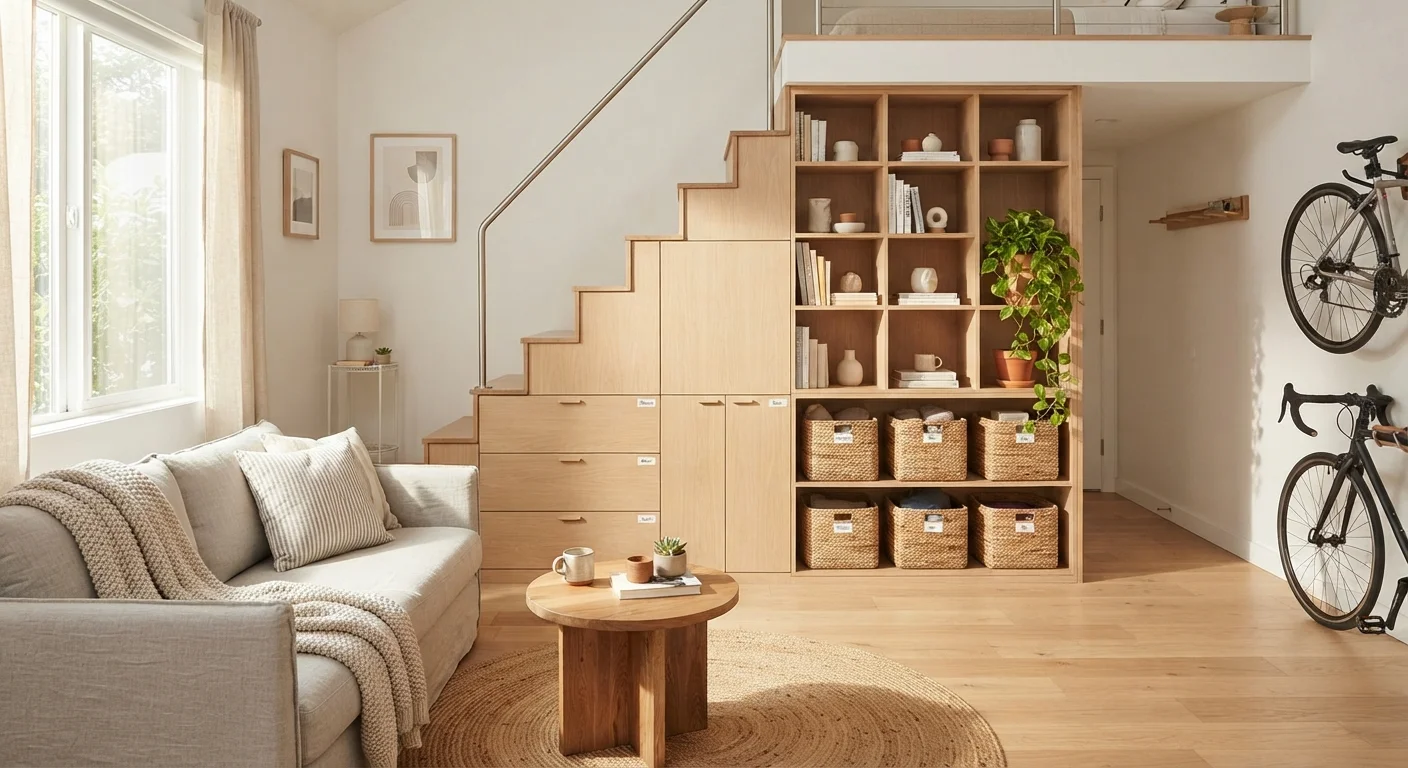
Why Small-Space Storage Requires a Different Mindset
In a compact home, the usual approach of simply buying more storage containers rarely solves the problem - it often adds to it. Effective small-space organization starts with a shift in thinking: every surface, wall, and overlooked gap becomes a candidate for smarter use.
Before adding a single shelf or bin, take stock of what you actually own and what truly needs to stay. Reducing volume is almost always the most powerful storage upgrade available. Once you've edited your belongings, the strategies below can help you make the most of the space that remains. If you share your home with others, coordination adds another layer - our guide to organizing a shared home walks through how to keep multi-person households functional.
Edit Before You Organize
Adding storage to a cluttered space just buries the problem. Before implementing any of the strategies below, do a quick audit of each area and remove items you no longer use, need, or want. Donating, recycling, or discarding the excess means you're only organizing what truly earns its place in your home.
The list below focuses on practical, widely applicable techniques that work across room types - from studio apartments to compact suburban bedrooms and small kitchens.
Go vertical with wall-mounted shelving
Most rooms have several feet of wall space above eye level that goes completely unused. Wall-mounted shelves - installed from about chest height up to near the ceiling - dramatically expand storage without occupying any floor space. This approach works especially well in kitchens, home offices, and living rooms.
Use higher shelves for items you access infrequently, such as seasonal décor or rarely used reference books. Keep everyday items within easy reach on lower shelves. Floating shelves, bracket-mounted shelves, and modular wall systems all serve this purpose well depending on the weight you need to support.
Note: Always anchor wall shelves into studs or use appropriate wall anchors rated for the load. For heavier installations, consult a home improvement professional or follow manufacturer load guidelines carefully.
Wall space above eye level is among the most overlooked storage opportunities in any small room.
Choose furniture that pulls double duty
In a small home, any piece of furniture that serves only one function is a missed opportunity. Ottomans with hinged lids, bed frames with built-in drawers, storage benches at entryways, and coffee tables with lower shelves or hidden compartments all add meaningful capacity without requiring additional square footage.
When shopping for new furniture pieces, treat storage as a core feature - not a bonus. A bed frame with under-bed drawers, for instance, can replace a standalone dresser in a compact bedroom, freeing up considerable floor space in the process.
Every furniture piece that stores something useful eliminates the need for a dedicated storage unit elsewhere.
Reclaim the backs of doors
The interior surface of closet doors, pantry doors, bathroom doors, and even bedroom doors represents usable storage that most people ignore entirely. Over-the-door organizers are available in a wide range of configurations - shallow pockets for toiletries, deeper bins for cleaning supplies, racks for shoes, or hooks for bags and accessories.
Because these organizers hang from the door itself rather than attaching to walls, they're typically renter-friendly and easy to reposition as your needs change. In a bathroom with no linen closet, a door-mounted organizer can house everything from towels to hair tools.
Door backs offer instant, renter-friendly storage that requires no tools and no permanent installation.
Use under-bed space strategically
The area beneath a bed is one of the largest unused storage zones in most homes. Low-profile bins, rolling drawers, and vacuum-seal bags make it practical for storing off-season clothing, extra bedding, shoes, or even flat items like luggage.
For beds that sit close to the floor, bed risers can add several inches of clearance without replacing the bed frame itself. Use shallow, lidded containers to keep dust out and contents identifiable. Label bins clearly so you aren't digging through multiple containers to find what you need.
Under-bed storage is ideal for bulky seasonal items that are needed only a few times a year.
Zone and label everything consistently
One reason small-space organization breaks down quickly is the absence of a clear system. Zoning means assigning specific categories of items to specific locations - all cleaning supplies in one cabinet, all snacks on one shelf, all chargers in one drawer - so that both retrieval and return become automatic habits.
Labeling reinforces zoning, especially in households where more than one person accesses shared storage. Simple masking tape and a marker work just as well as printed labels. The consistency of the system matters far more than how polished it looks.
A labeled, zoned storage system reduces daily decision-making and keeps small spaces from reverting to clutter.
Think in layers inside closets
Standard closets are often configured with a single hanging rod and one shelf above - a setup that wastes the lower two-thirds of available space. Adding a second hanging rod below the first effectively doubles hanging capacity for shorter items like shirts and folded pants. Stackable bins or drawers on the closet floor make use of the remaining depth.
Shelf dividers keep folded stacks from toppling, and hanging organizers add pockets for accessories, belts, or small folded items without any installation. Closet systems don't need to be expensive or custom-built to be effective - a few low-cost accessories can transform an underperforming closet significantly.
Adding a second hanging rod is one of the simplest ways to double usable closet capacity instantly.
Putting It All Together
Small-space storage works best as a system, not a collection of isolated fixes. Once you've identified the right combination of vertical storage, dual-purpose furniture, and reclaimed zones, maintaining organization becomes far less effort than starting over repeatedly.
Revisit your setup seasonally - what worked when you first organized a space may need adjusting as your belongings or routines change. The goal isn't a perfectly styled home for a photoshoot; it's a home that stays functional and comfortable with minimal friction day to day.
Storage Systems Need Periodic Reassessment
What works today may not work six months from now - especially if your household size, hobbies, or routines shift. Plan to briefly review each storage zone at least once or twice a year. Small adjustments made early prevent the slow creep of clutter from undoing a system that was working well.
If your small space also doubles as a media or entertainment room, thoughtful layout matters beyond storage - see our tips for home theaters in compact rooms for ideas on keeping gear organized without overwhelming the space.
The content on this site is for informational purposes only and is not a substitute for professional advice. Always consult a qualified professional for guidance specific to your situation.