

Why One Room at a Time Works Better
The impulse to declutter the entire home at once is understandable - but it almost always backfires. Pulling everything out at the same time creates chaos that's harder to manage than the original clutter, and it leads to decision fatigue before you're halfway through. A room-by-room approach keeps the scope manageable, gives you visible wins quickly, and builds the momentum to keep going.
If you're new to home organization principles, the foundational guide to home organization is a useful starting point before diving into room-specific work. It covers the core concepts that make the process feel less arbitrary and more systematic.
Avoid the 'All or Nothing' Trap
Trying to declutter your entire home in a single weekend often leads to burnout and abandoned half-finished rooms. Set a realistic scope for each session - one room, or even one zone within a room. Progress matters more than speed.
The goal isn't a perfectly minimalist home - it's a home where things have clear places, surfaces feel breathable, and you spend less time looking for items you need. That's achievable in stages, without a single overwhelming weekend.
What you will need
Room-by-Room Steps
Use the steps below as a flexible guide. You don't need to follow the exact order if a different room is causing more immediate stress - start wherever you'll get the most relief. What matters is working through one defined area before moving to the next.
Start With the Entryway
The entryway sets the tone for the whole home. Clear surfaces first: remove shoes, bags, and mail that don't belong there permanently. Designate specific homes for everyday items - hooks for keys, a tray for incoming mail, a shelf or cubby for shoes. Anything that consistently ends up here but belongs elsewhere should be returned to its proper room before you move on.
Work Through the Kitchen in Zones
Kitchens accumulate clutter fast because they're high-use spaces. Divide the room into zones: countertops, cabinets, the pantry or food storage area, and the junk drawer. Tackle one zone per session. Pull everything out of a single cabinet or drawer, wipe the interior, and only return what you genuinely use. Duplicate gadgets, expired pantry items, and mismatched containers are common culprits - be decisive.
Clear Living Room Surfaces and Storage
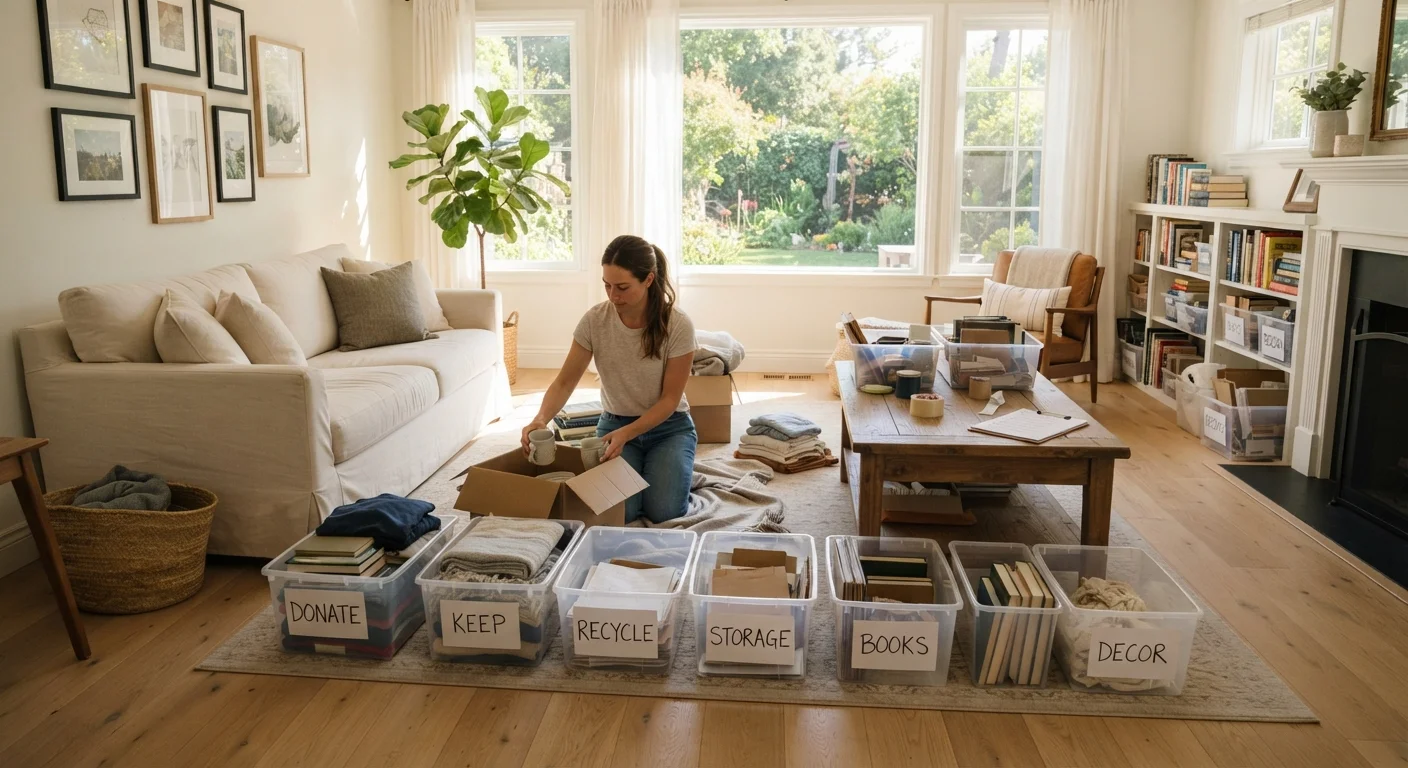
Living rooms often collect items that belong in other rooms. Do a first pass by gathering everything that's out of place and returning it. Then focus on media storage, bookshelves, and coffee table surfaces. Ask honestly: does this item add function or meaning to the space, or is it just occupying surface area? Decorative items can be edited down to a curated few, which often makes the room feel more intentional and restful.
Declutter Bedroom Closets and Surfaces
Bedrooms benefit most from a calm, uncluttered feel. Start with surfaces - nightstands, dressers, and chairs that collect clothing. Then move to the closet. The standard approach: pull everything out, sort by category (tops, bottoms, shoes, accessories), and only return items you wear and that fit well. Clothes you're keeping for 'someday' can be boxed and stored elsewhere so they're not taking up prime closet real estate.
Tackle the Bathroom Cabinet by Cabinet
Bathrooms are smaller but can harbor surprising amounts of expired products, duplicates, and items that drifted in from elsewhere. Check expiration dates on medications, sunscreen, and skincare products - most have a shelf life. Clear under-sink areas of anything that doesn't belong in a bathroom. Group remaining items by use (daily routine products, first aid, hair care) and store like with like.
Address Catch-All Spaces Last
Garages, basements, spare rooms, and storage closets are typically where decluttering feels most daunting. Save these for last, once you've built momentum and decision-making confidence from smaller rooms. Break them into defined zones - tools, seasonal items, sports equipment - and work through one zone per session. Be realistic about what you've actually used in the past year versus what you're storing out of habit.
Don't Skip the Safety Check
As you declutter, watch for items that require special disposal - old medications, batteries, paint cans, and certain electronics should not go in household trash. Check your local municipality's guidelines for hazardous waste drop-off events or designated facilities. Improper disposal can carry fines and environmental harm.
Once you've worked through each room, the logical next question is where to put what remains. Thoughtful storage solutions make the difference between a space that stays organized and one that reverts to clutter within weeks. The storage solutions guide for small spaces offers practical strategies for closets, corners, and underused areas that can extend the work you've done here.
The 'One Box' Rule for Sentimental Items
Give yourself permission to keep sentimental objects, but confine them to a single box or bin per household member. When the box is full, something must come out before anything new goes in. This creates a boundary without forcing painful decisions in the moment.
If your household includes multiple people, maintaining the results of a declutter requires coordination. The shared household organizing guide addresses how to build systems that work when more than one person is using and contributing to a space.
The content on this site is for informational purposes only and is not a substitute for professional advice. Always consult a qualified professional for guidance specific to your situation.