

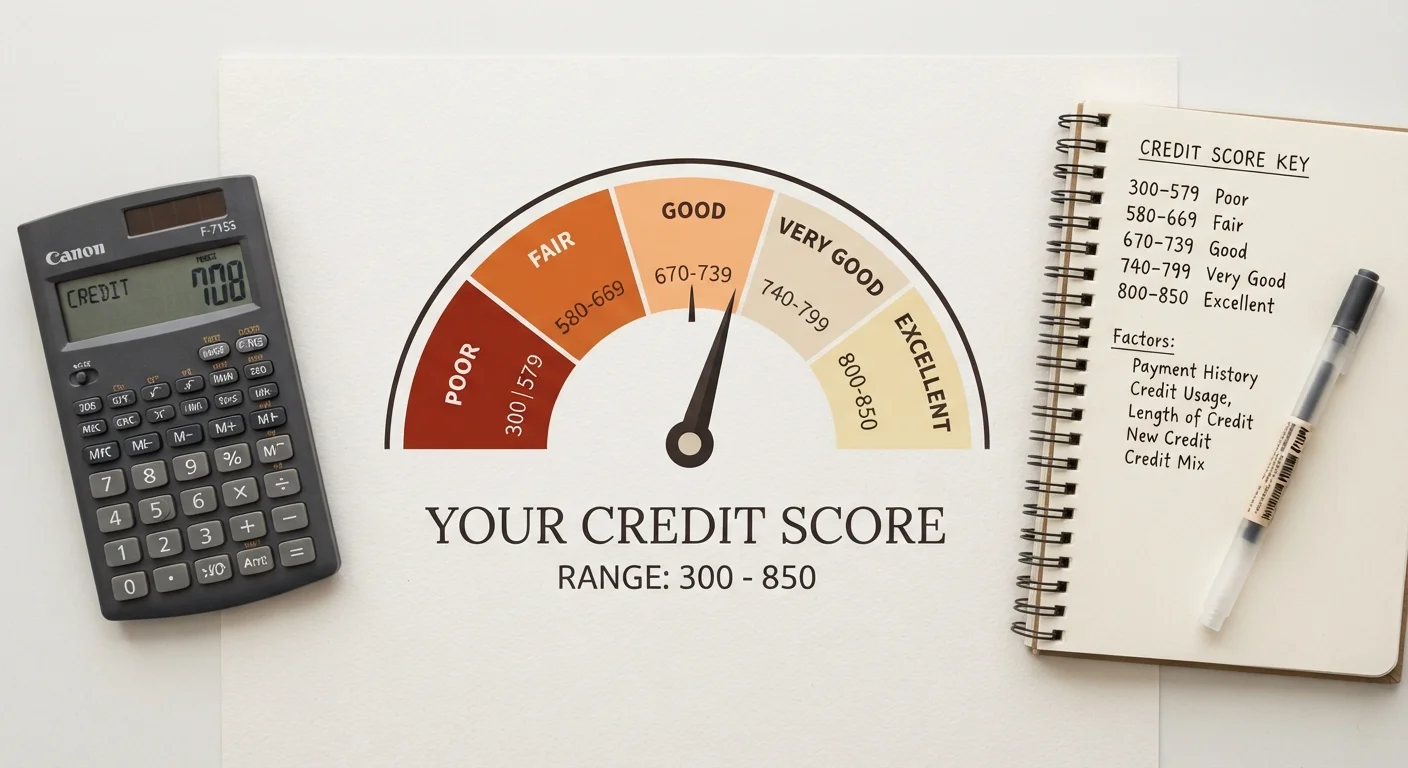
The Five FICO Score Ranges Explained
The FICO scoring model - the most commonly used by U.S. lenders - divides the 300-850 scale into five distinct tiers. Here's what each one signals to a lender:
- Exceptional (800-850): Borrowers in this tier are considered the lowest lending risk. They typically receive the most competitive interest rates and easiest approvals across mortgages, auto loans, and credit cards.
- Very Good (740-799): Still well above average. Most lenders offer near-top-tier terms to borrowers here, and approvals are rarely an obstacle.
- Good (670-739): The national median falls within this range. Approval is generally accessible, though rates may be modestly higher than the top two tiers.
- Fair (580-669): Borrowers here face more scrutiny. They may qualify for credit, but interest rates are noticeably higher, and some lenders may decline applications outright.
- Poor (300-579): This range indicates significant credit risk in lenders' eyes. Credit access is limited - secured cards and credit-builder loans are often the primary options - and rates can be steep.
Understanding where you fall is the first step. If you're new to credit scoring, this foundational guide covers the basics of how scores are created and who produces them.
716
Average U.S. FICO score
According to FICO's most recently published national data, the average American credit score sits in the 'good' tier.
~23%
Americans with scores below 600
Data from the Consumer Financial Protection Bureau indicates roughly one in five Americans carries a subprime credit score, limiting their access to mainstream lending.
3-5%
Typical APR gap between 'fair' and 'good' tiers
Industry analyses of auto and personal loan pricing consistently show a meaningful rate difference between credit score tiers, though exact figures vary by lender and product.
Why Your Range Matters More Than the Exact Number
Lenders typically evaluate applicants by tier, not by precise score. The difference between a 718 and a 725 may be negligible in practice, but the difference between a 665 (fair) and a 672 (good) can translate into a meaningfully lower interest rate on the same loan.
This tier-based logic is especially clear with auto financing. How your credit score affects your car loan rate explains how moving from one tier to another can shift your annual percentage rate by several points - a difference that compounds into hundreds or even thousands of dollars over the life of a loan.
The same principle applies to mortgages and credit cards. Issuers use score bands to set credit limits and APRs. Pushing your score across a tier boundary - even by 20 to 30 points - can meaningfully change what you're offered.
Focus on the Tier Boundary, Not the Perfect Score
If you're currently in the 'fair' range, aiming to cross into 'good' (670+) will deliver a more immediate practical benefit than chasing a perfect 850. Identify which specific factors are holding your score back and direct your energy there first. Even modest, consistent improvements compound over time.
What Moves Your Score Between Ranges
Two factors carry the most weight in your credit score: payment history (roughly 35% of your FICO score) and credit utilization (approximately 30%). Together they account for nearly two-thirds of your number. For a full breakdown of every factor and how much each one counts, see the complete picture of how credit scores are calculated.
One of the fastest levers available to most people is reducing their credit utilization ratio - the percentage of available revolving credit currently in use. Credit utilization and why it quietly moves your score digs into why keeping this ratio low can produce noticeable score movement within just a couple of billing cycles.
Errors on your credit report can also suppress your score unfairly. A structured review of your report can uncover mistakes worth disputing. A credit report checkup guide walks through what to look for line by line.
FICO vs. VantageScore: Know the Difference
While FICO is the dominant scoring model used by most mortgage and auto lenders, VantageScore - developed jointly by the three major credit bureaus - is also widely used, particularly by credit card issuers and for consumer-facing score displays. Both models use a 300-850 scale, but their tier definitions and factor weightings differ slightly. Always ask which model a lender relies on before assuming your score translates directly.
This article is for general informational purposes only and does not constitute personalized financial or credit advice. Consult a licensed financial professional for guidance specific to your situation.
Frequently Asked Questions
Under the FICO model, a score of 670 to 739 is classified as 'good.' Scores of 740 and above are considered 'very good' to 'exceptional' and typically qualify borrowers for the most favorable interest rates and terms.
The timeline varies depending on what's dragging your score down. Paying down high balances can show results within one to two billing cycles, while recovering from a missed payment or collection account may take months to years. No specific outcome can be guaranteed.
Checking your own score is a 'soft inquiry' and does not affect your score at all. Only 'hard inquiries' - initiated when you formally apply for credit - can cause a small, temporary dip.
Minimum requirements vary by loan type and lender. Conventional loans often require at least a 620, while some government-backed programs may accept lower scores. A higher score generally means a lower mortgage interest rate, which can save you significantly over the life of the loan.
A score of 700 falls in the 'good' range and is sufficient for approval with most mainstream lenders. However, the very best rates are typically reserved for scores above 740, so there may still be room to improve your position.
The content on this site is for informational purposes only and is not a substitute for professional advice. Always consult a qualified professional for guidance specific to your situation.