

Start here
What Is a Credit Score?
Next
Who Creates and Uses Credit Scores?
Then
What Goes Into Your Score?
Apply it
How to Start Building Credit Responsibly
Protect yourself
Common Mistakes to Avoid Early On
What Is a Credit Score?
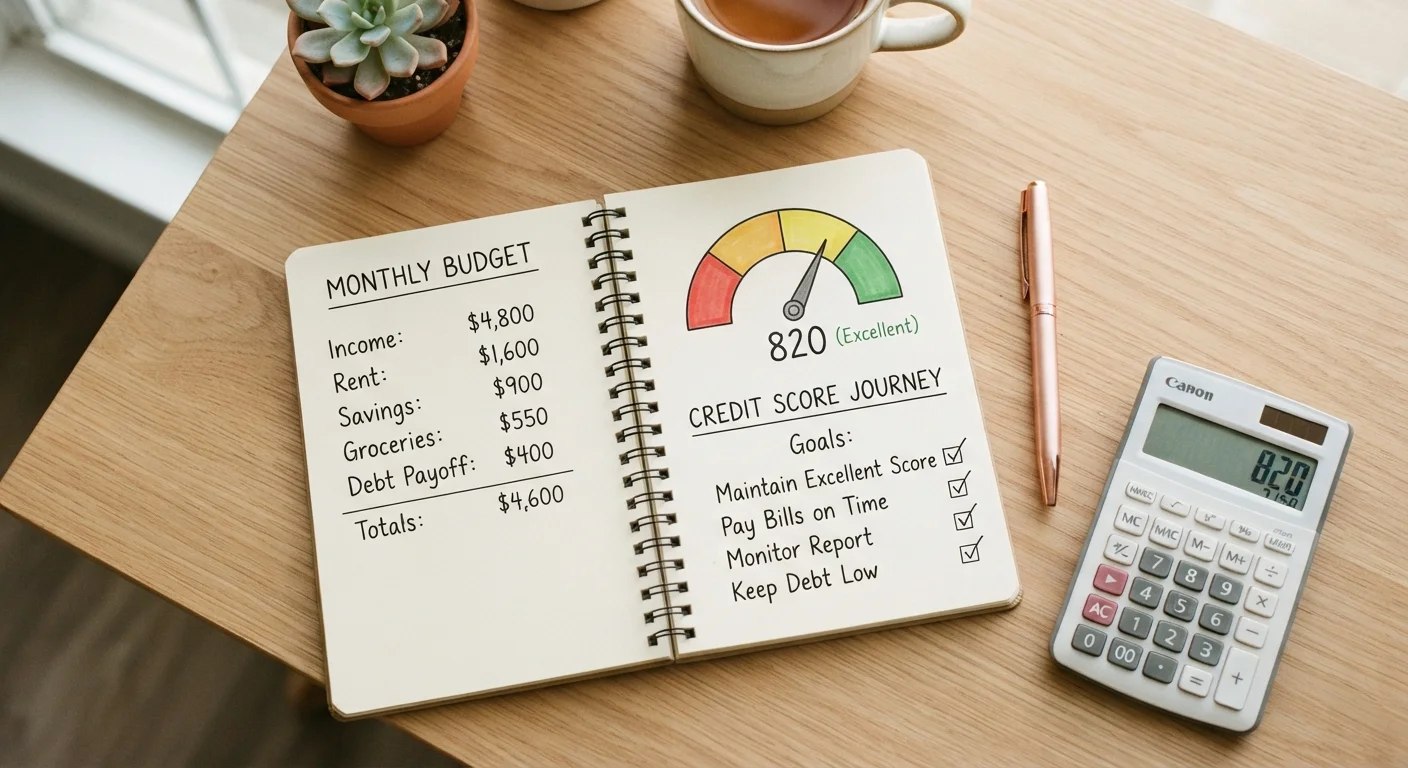
A credit score is a three-digit number, typically ranging from 300 to 850, that represents your creditworthiness - essentially, how likely lenders believe you are to repay borrowed money on time. The higher the number, the more favorably lenders tend to view you.
Think of it as a financial report card compiled from your borrowing history. Lenders, landlords, and even some employers use it to gauge risk before extending credit, approving a lease, or making a hiring decision.
Credit score
A three-digit number, typically 300-850, that summarizes how reliably you've repaid debts in the past. Higher scores indicate lower perceived risk to lenders.
Credit bureau
A company that collects and maintains records of consumers' borrowing and payment behavior, then provides that data to lenders and scoring companies.
Credit utilization
The percentage of your available credit limit that you're currently using. For example, a $300 balance on a $1,000 limit card equals 30% utilization.
Hard inquiry
A check of your credit report triggered when you apply for new credit. Hard inquiries can cause a small, temporary dip in your score.
Soft inquiry
A credit check that does not affect your score - such as when you check your own credit or a company pre-screens you for a promotional offer.
Credit-builder loan
A small loan designed specifically to help people establish or improve credit history, offered by some credit unions and community banks.
For a broader explanation of credit and savings terminology, the Personal Finance Glossary is a useful companion reference.
Who Creates and Uses Credit Scores?
Credit scores are calculated by scoring companies using data collected by credit bureaus - also called credit reporting agencies. In the US, the three major bureaus are Equifax, Experian, and TransUnion. They gather information from lenders, credit card issuers, and other creditors who voluntarily report your account activity.
The two dominant scoring models are FICO (Fair Isaac Corporation) and VantageScore. Both use similar input data but weigh factors slightly differently, which is why your score can vary a bit depending on which model a lender uses.
Your Score Can Vary by Bureau
Not all lenders report to all three major credit bureaus, so your credit file - and resulting score - may differ slightly between Equifax, Experian, and TransUnion. When monitoring your credit health, it's worth checking all three reports periodically to get a complete picture.
You are entitled to a free credit report from each of the three major bureaus once per year through AnnualCreditReport.com, the official federally authorized source. Reviewing your report regularly helps you catch errors or unfamiliar accounts early.
What Goes Into Your Score?
Under the FICO model, five factors determine your score. Understanding their relative weight helps you prioritize your habits:
- Payment history (35%) - Whether you pay on time is the biggest single factor. Even one missed payment can cause a noticeable drop.
- Amounts owed / credit utilization (30%) - This measures how much of your available credit you're using. Keeping utilization below 30% of your credit limit is a commonly cited guideline.
- Length of credit history (15%) - Older accounts generally help your score. Closing old accounts can unintentionally shorten your average account age.
- Credit mix (10%) - Having a variety of account types (credit cards, installment loans) can be a modest positive signal.
- New credit (10%) - Applying for several new accounts in a short period can temporarily lower your score through hard inquiries.
For context on how lenders also evaluate these factors when reviewing loan applications, see the First-Time Borrower's Introduction to How Loans Work.
How to Start Building Credit Responsibly
If you have little or no credit history, you're not alone - and there are practical paths forward. Here are some common starting points:
- Secured credit card - You deposit money as collateral, which becomes your credit limit. Used responsibly, it reports to the bureaus just like a regular card.
- Credit-builder loan - Offered by some credit unions and community banks, these small loans are designed specifically to help people establish a record of on-time payments.
- Authorized user status - A trusted family member can add you to their credit card account. Their positive payment history may appear on your report, though practices vary by issuer.
Start Small and Stay Consistent
You don't need multiple accounts to begin building credit. One card or loan used consistently - with on-time payments and low balances - is enough to establish a solid foundation. Patience and routine matter more than the number of accounts you hold.
To compare your options in more detail, the article on secured vs. unsecured credit cards walks through which approach may fit different starting situations. For broader context on debt and borrowing, the Debt & Loans hub offers educational overviews of common loan types and repayment strategies.
Common Mistakes to Avoid Early On
Building credit takes time, and a few early missteps can slow your progress significantly. Watch out for:
- Missing payments - Even a single 30-day late payment can remain on your credit report for up to seven years.
- Maxing out your credit limit - High utilization signals financial stress to scoring models, even if you pay the balance in full later that month.
- Applying for too many accounts at once - Each application typically triggers a hard inquiry. Spacing out applications is a more protective approach.
- Ignoring your credit report - Errors on your report - such as accounts you don't recognize - can unfairly drag down your score. Disputing inaccuracies is a right protected under federal law (the Fair Credit Reporting Act).
Late Payments Have Lasting Consequences
A payment reported 30 or more days late can stay on your credit report for up to seven years, making it harder to qualify for future loans, apartments, or favorable interest rates. If you're struggling to pay, contact your creditor before the due date - many have hardship programs that may help you avoid a negative mark.
This article is for general informational and educational purposes only and does not constitute personalized financial or legal advice. Your individual circumstances vary - consider consulting a qualified financial professional for guidance specific to your situation.
Frequently Asked Questions
Most scoring models label scores of 670 and above as 'good.' As a newcomer, simply having an active score - even in the 580-669 range - is a starting point. Consistent on-time payments will move your score upward over time.
Under the FICO model, you generally need at least one account open for six months and one creditor reporting activity to generate a score. With regular, responsible use of even a single credit account, many people see an initial score within three to six months.
No. Reviewing your own credit score or report is a 'soft inquiry' and has no effect on your score. Only 'hard inquiries' - initiated when a lender checks your credit during an application - can cause a minor, temporary dip.
Possibly. Credit-builder loans, being added as an authorized user on someone else's card, or certain rent-reporting services can create a credit file even without a traditional credit card. Each bureau handles these differently, so results can vary.
Your score can change whenever a creditor reports new information to the credit bureaus, which typically happens once per month per account. Major events - like a missed payment or paying off a large balance - can shift your score more noticeably.
The content on this site is for informational purposes only and is not a substitute for professional advice. Always consult a qualified professional for guidance specific to your situation.