

Our Verdict
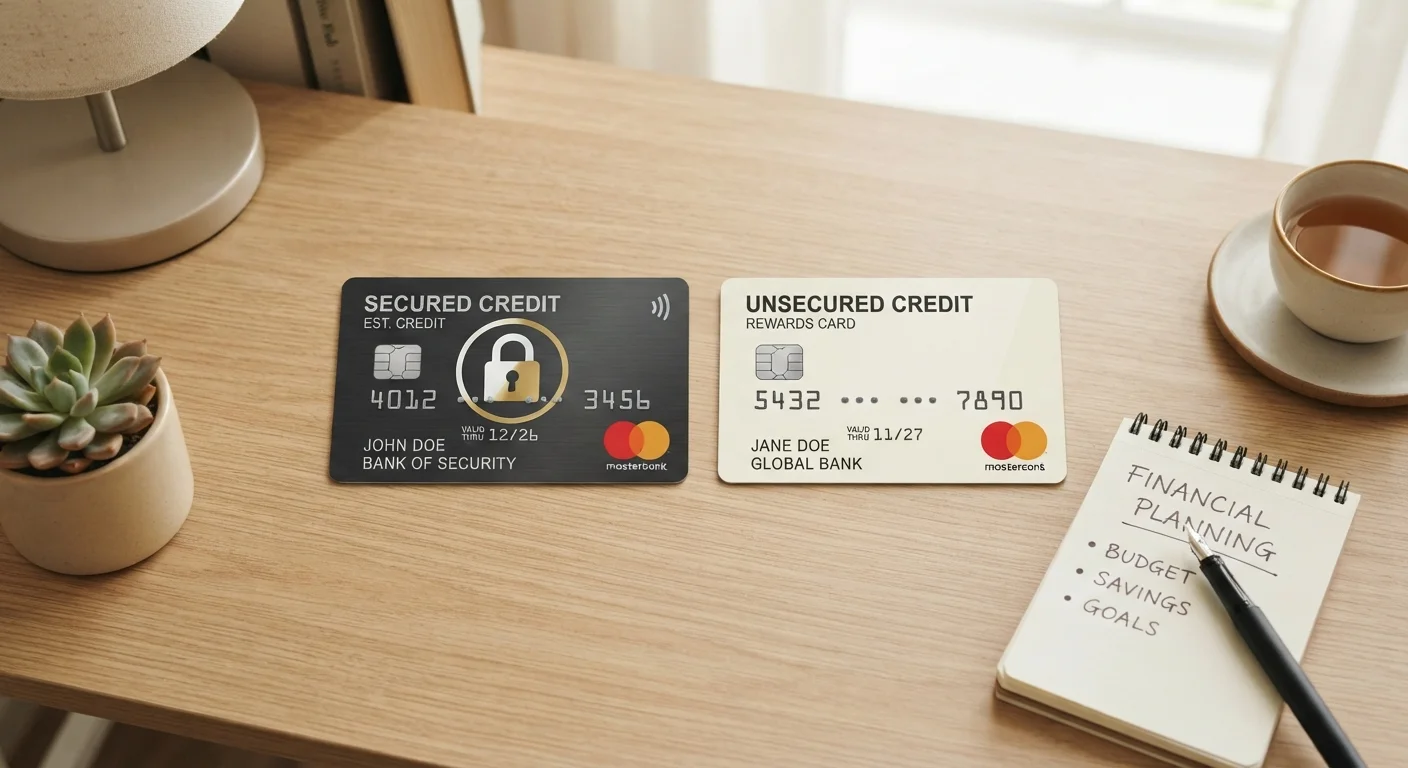
Secured cards are the most accessible starting point for people with no credit history or damaged credit, while unsecured cards offer more flexibility and fewer upfront costs for those who already have a basic credit footprint. Neither card is universally superior - the right choice depends on where you currently stand and what your credit goals are.
| Best for | Recommended |
|---|---|
| Those with no credit history or a very low credit score | Secured credit card |
| Those rebuilding after past financial difficulties | Secured credit card |
| Those with fair to good credit seeking more purchasing flexibility | Unsecured credit card |
| Those ready to graduate from a starter card to a standard product | Unsecured credit card |
How Each Card Type Works
Credit cards fall into two broad categories based on whether they require collateral. Understanding the structural difference is the foundation for making a smart choice. If you're new to the topic, our guide to understanding credit scores explains the basics of how credit is measured before you apply.
Secured Credit Cards
A secured credit card requires you to place a refundable cash deposit with the card issuer - typically ranging from $200 to $500, though amounts vary. That deposit usually equals your credit limit. Because the issuer holds collateral, they face less financial risk, which makes these cards accessible even to applicants with no credit history or a poor credit score.
Unsecured Credit Cards
An unsecured credit card involves no deposit. Instead, the issuer extends credit based on your creditworthiness - evaluated through your credit score, income, and credit history. Most standard consumer credit cards are unsecured. Lenders take on more risk here, so qualification requirements are generally higher. This category includes cards specifically designed for people with fair or limited credit, not just those with excellent scores.
Both card types function the same way at checkout: you make purchases, receive a monthly statement, and pay your balance. The structural difference lies in the deposit requirement and the qualification bar.
Key Differences That Matter for Credit Building
| Secured Credit Card | Unsecured Credit Card | |
|---|---|---|
| Deposit required | Yes - typically $200-$500 | No deposit needed |
| Qualification difficulty | Low - accessible with poor/no credit | Moderate - fair credit usually required |
| Typical credit limit | Equal to deposit amount | Set by issuer based on creditworthiness |
| Annual fees | Common; varies widely by issuer | Varies; some starter cards have fees |
| Reports to credit bureaus | Yes, if issuer participates | Yes, standard practice |
| Upgrade path | Often available after 12-24 months | Not applicable |
| Best use case | No credit or poor credit history | Limited or fair credit history |
Beyond the deposit, several factors distinguish how these cards work in practice:
- Fees: Secured cards often carry annual fees and sometimes processing or maintenance fees. These can meaningfully reduce the effective value of a small credit limit, so reading the fee schedule before applying matters.
- Credit limits: Because secured card limits are tied to your deposit, they tend to be lower - which can affect your credit utilization ratio (the percentage of available credit you're using). Keeping utilization below 30% is generally considered beneficial for your score.
- Credit bureau reporting: Both types report to the major credit bureaus (Equifax, Experian, TransUnion) when the issuer participates. Always confirm this before applying to a secured card - some prepaid or store-only products don't report, which means they won't help build your credit profile.
- Upgrade paths: Many secured cards offer a graduation process: after a period of on-time payments and responsible use - often 12 to 24 months - some issuers will convert your account to an unsecured card and return your deposit.
Confirm Bureau Reporting Before Applying
Not every card marketed to people with poor credit reports to all three major credit bureaus. Before submitting an application, verify directly with the issuer that they report to Equifax, Experian, and TransUnion. Reporting to all three gives you the broadest credit-building benefit and ensures your positive payment history shows up wherever lenders check.
Who Should Consider a Secured Card
A secured card is most appropriate when you're starting from zero or recovering from past credit problems. Specific situations include:
- You have no credit history and can't qualify for standard credit products.
- Your credit score is in the poor range (generally below 580) due to past missed payments, collections, or a bankruptcy.
- You want a structured, low-risk way to demonstrate responsible credit behavior over time.
The deposit functions as a safety net for the issuer - not a payment toward purchases. Think of it as a temporary hold on funds you'll get back when you close or upgrade the account in good standing. Before applying, it's worth doing a credit report checkup to understand exactly what's driving your current score and whether any errors need disputing first.
Watch Out for High Fees on Secured Cards
Some secured cards aimed at consumers with poor credit charge significant annual, monthly, or processing fees that can consume a large portion of a low credit limit before you make a single purchase. A card with a $200 limit and $75 in annual fees starts you at 37.5% utilization - potentially hurting the score you're trying to build. Compare the full fee schedule carefully, not just the deposit amount.
Who Should Consider an Unsecured Card for Credit Building
Unsecured cards designed for credit building - sometimes called starter or credit-builder cards - are aimed at people with limited or fair credit rather than excellent scores. You might be a good candidate if:
- You've had a secured card for at least a year and maintained a clean payment record.
- You have a thin credit file (meaning few accounts) but no significant negative marks.
- You qualify for a student credit card through a college program, which typically has more lenient requirements.
Unsecured cards in this tier often still come with lower credit limits and higher interest rates than cards marketed to consumers with excellent credit - so the goal remains the same: use the card lightly, pay the statement balance in full each month, and let the positive payment history accumulate. Credit cards are a form of revolving credit; if you want to understand how that differs from installment debt, see our overview of revolving credit vs. installment loans.
This article is for general informational and educational purposes only and does not constitute personalized financial advice. Consult a qualified financial professional for guidance tailored to your individual situation.
The content on this site is for informational purposes only and is not a substitute for professional advice. Always consult a qualified professional for guidance specific to your situation.