

Our Verdict
Neither revolving credit nor installment loans are inherently better - they serve different purposes. Revolving credit offers flexibility for ongoing expenses, while installment loans provide structure for large, defined purchases. Understanding how each works helps you borrow strategically and manage repayment costs effectively.
| Best for | Recommended |
|---|---|
| Ongoing, variable everyday spending | Revolving credit (e.g., credit cards) |
| Large, one-time purchases with predictable repayment | Installment loans (e.g., auto or personal loans) |
| Building a well-rounded credit profile | A mix of both, managed responsibly |
How Each Structure Works
At the core, revolving credit and installment loans represent two distinct ways lenders extend money to borrowers. Understanding the mechanics of each prevents costly surprises.
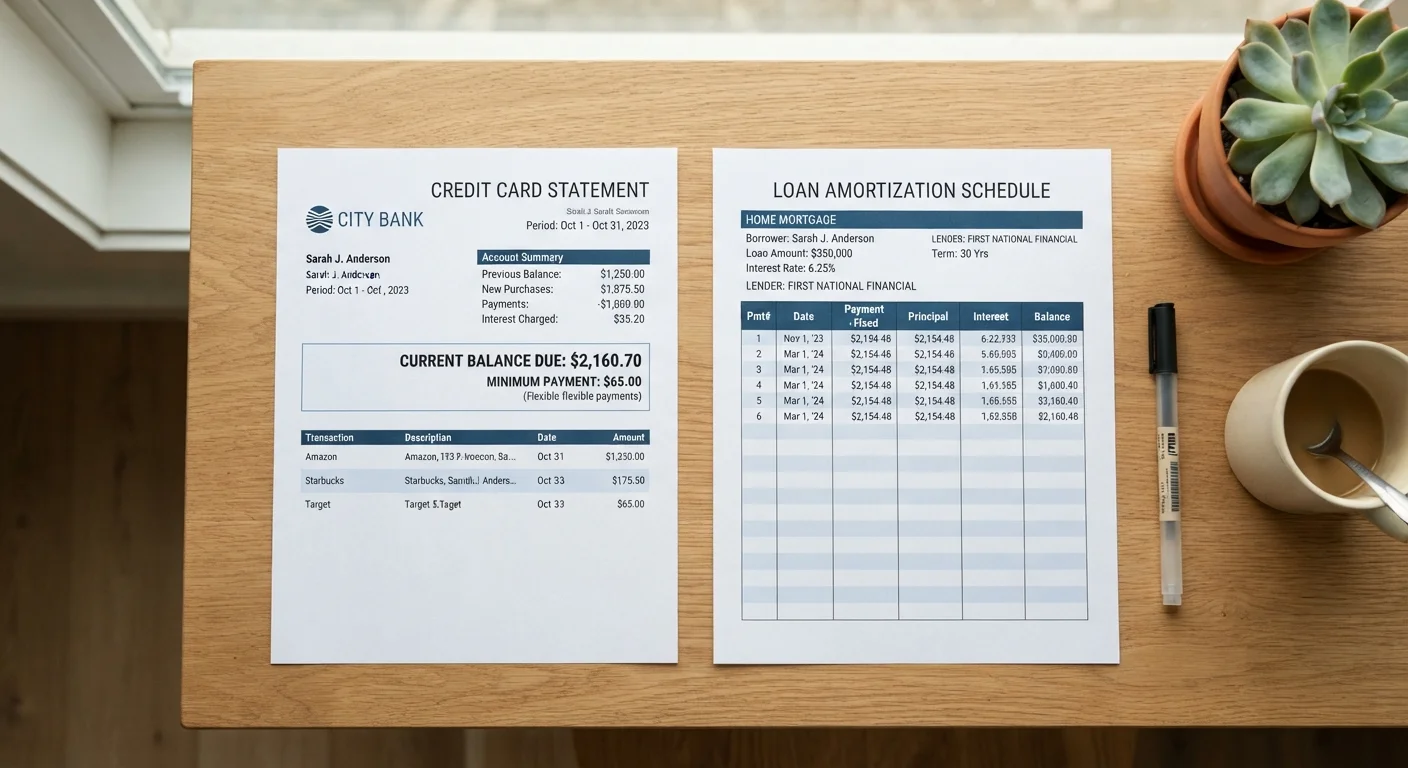
Revolving credit works like a reusable pool of funds. A lender sets a credit limit - say, $5,000 - and you can borrow any amount up to that ceiling, repay it, and borrow again. Credit cards are the most common example. Your balance, minimum payment, and available credit all shift month to month based on how much you charge and pay back. For a broader look at how these fit into the consumer debt landscape, see types of consumer debt.
Installment loans work differently. You receive a fixed lump sum upfront - for a car, a home, or a personal expense - and repay it through equal scheduled payments over a defined term. The loan closes once fully repaid. Personal loans are a common unsecured version of this structure. If you're entirely new to borrowing, the First-Time Borrower's Introduction to How Loans Work covers foundational concepts like interest and repayment terms.
| Revolving Credit | Installment Loans | |
|---|---|---|
| Loan structure | Reusable credit line up to a set limit | Fixed lump sum, repaid over set term |
| Common examples | Credit cards, HELOCs | Auto loans, mortgages, personal loans |
| Monthly payment | Varies based on balance | Fixed and predictable |
| Interest charges | Only if balance carried forward | Built into scheduled payments from start |
| Credit utilization impact | High - directly affects score | Not included in utilization calculation |
| Account lifecycle | Stays open; reusable indefinitely | Closes when fully repaid |
| Best use case | Flexible, recurring, short-term spending | Large, one-time, defined purchases |
Cost Differences: Interest and Fees
How interest accumulates differs dramatically between the two types.
With revolving credit, interest typically applies only if you carry a balance past the due date. If you pay the full statement balance each month, most credit cards charge no interest at all. But if you carry even a small balance, interest accrues on the outstanding amount - often at annual percentage rates (APRs) that can range well into the double digits. That compounding effect can make a modest balance expensive over time.
Installment loans, by contrast, calculate interest on the original loan amount (or the declining balance, depending on the loan type) and build it into fixed monthly payments from the start. Rates vary widely based on loan type, term length, and creditworthiness, but the payment amount itself is predictable. You always know what you owe each month.
Minimum Payments Can Trap You in Debt
On revolving accounts like credit cards, lenders set a minimum payment - often a small percentage of the balance or a flat dollar amount. Paying only the minimum keeps your account current but allows interest to accumulate on the remaining balance. Over time, a manageable balance can grow significantly if only minimum payments are made. Always pay as much above the minimum as possible.
Credit Score Impact: What Each Type Affects
Both debt types appear on your credit report, but they influence your score in different ways.
Credit utilization ratio - the percentage of your revolving credit limit you're currently using - is one of the more influential factors in common credit scoring models. Keeping revolving balances low relative to your total credit limits is generally associated with stronger scores. Maxing out a credit card, even temporarily, can noticeably lower your score. For more on how credit accounts interact with your score, the Saving & Credit hub is a useful resource.
Installment loans don't factor into utilization the same way. Instead, they contribute to your credit mix (showing you can manage different debt types) and your payment history. Consistently on-time payments on an installment loan strengthen your credit profile over time. Missing payments on either type damages it.
Carrying a healthy mix of both revolving and installment accounts - managed responsibly - tends to reflect positively in credit scoring models. See secured vs. unsecured credit cards if you're weighing how to build revolving credit strategically.
Keep Revolving Utilization Below 30%
Credit scoring models generally respond favorably when your revolving balances stay well below your total credit limits. Aim to use less than 30% of any individual card's limit - and ideally less across all cards combined. Paying your statement balance in full each month is the most effective way to achieve this while avoiding interest charges entirely.
Choosing and Managing Each Type Wisely
The right type of credit depends on what you need it for. Use revolving credit for purchases you can pay off quickly - it offers flexibility and, when managed well, can be interest-free. Installment loans suit large, defined expenses where you need to spread the cost over time with a clear repayment timeline.
When managing multiple debts, the structure of each matters for your payoff strategy. Because revolving balances can grow unpredictably, they often carry higher interest rates and should typically be prioritized. For a deeper look at structured repayment approaches, the Debt Avalanche and Debt Snowball methods offer two proven frameworks tailored to different borrower situations.
This article is for general informational purposes only and does not constitute personalized financial or legal advice. Consult a qualified financial professional for guidance specific to your situation.
The content on this site is for informational purposes only and is not a substitute for professional advice. Always consult a qualified professional for guidance specific to your situation.