

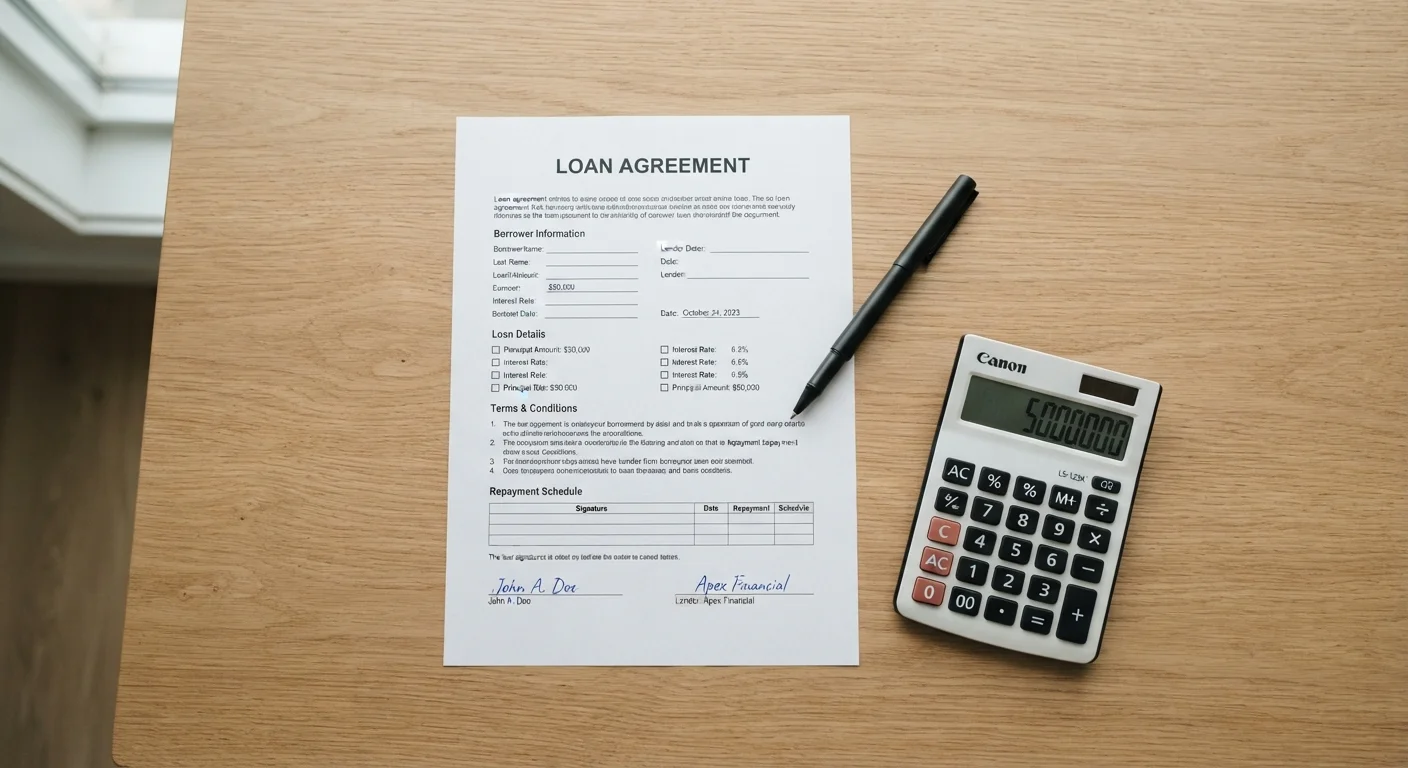
The Basic Structure of a Personal Loan
When you take out a personal loan, a lender deposits a specific dollar amount into your account. You then repay that amount - plus interest - in equal monthly installments over an agreed-upon term. This structure makes personal loans straightforward to budget for: the payment is the same every month and the loan ends on a known date.
This installment structure distinguishes personal loans from revolving credit like credit cards. For a fuller breakdown of those differences, see our guide on revolving credit vs. installment loans.
If you're new to borrowing altogether, the first-time borrower's introduction to how loans work covers foundational concepts like interest, credit checks, and what lenders evaluate.
~$11,600
Average personal loan balance per borrower
According to Experian's consumer credit data, the average personal loan balance in the U.S. has remained in this range in recent years.
2-7 years
Typical personal loan repayment term range
Most lenders offer terms between 24 and 84 months; shorter terms cost less in total interest but require higher monthly payments.
6%-36%
Approximate APR range for personal loans
Rates vary widely based on creditworthiness; borrowers with strong credit histories tend to qualify toward the lower end of this range.
What Personal Loans Actually Cost
The interest rate - expressed as an APR - is the primary cost driver. APR reflects not just the interest rate but also certain fees rolled into the annual cost of borrowing. Lenders set your rate based on your credit score, income, debt-to-income ratio, and the loan term you choose.
Beyond interest, watch for these common fees:
- Origination fee: A one-time charge, often 1%-8% of the loan amount, deducted from your disbursement or added to your balance.
- Prepayment penalty: A fee some lenders charge if you pay off the loan early.
- Late payment fee: Charged when a payment is missed or arrives after the due date.
The total amount you repay depends on the principal, the APR, and the loan term. A longer term means lower monthly payments but more interest paid overall. A shorter term costs less in total interest but requires higher monthly payments.
Use a Loan Calculator Before You Commit
Before signing any loan agreement, run the numbers using a simple online loan amortization calculator. Enter the principal, APR, and term to see your exact monthly payment and total interest paid over the life of the loan. This takes two minutes and gives you a clear picture of what you're agreeing to.
Common Uses for Personal Loans
Personal loans are flexible by design - most lenders don't restrict how you use the funds (though some prohibit using them for education or investments). Common legitimate uses include:
That said, a personal loan is not always the right tool. If you're financing a car, auto loans typically carry lower rates because the vehicle serves as collateral. Our guide on how auto financing works explains that structure. For home purchases, a mortgage operates under an entirely different framework - see fixed-rate vs. adjustable-rate mortgages explained.
Before You Apply: What to Consider
A personal loan can be a useful financial tool, but it adds a fixed obligation to your monthly budget. Before applying, ask yourself three things:
- Can I afford the monthly payment comfortably? Add it to your existing expenses and see whether the number works without straining your budget.
- Is this the lowest-cost option available? A home equity loan, 0% APR credit card offer, or even negotiating a payment plan with a provider may cost less depending on your situation.
- Do I understand the full loan terms? Read the agreement for rate, fees, prepayment penalties, and what happens if you miss a payment.
Fixed-Rate Personal Loans vs. Other Fixed-Rate Products
Personal loans aren't the only fixed-rate borrowing option. Auto loans are also commonly fixed-rate - our article on fixed vs. variable rate auto loans explains how that distinction works in vehicle financing. Understanding fixed-rate structures across different loan types helps you compare costs more accurately when evaluating your options.
For a comprehensive overview of how all types of debt connect, the end-to-end guide to debt and loans is a useful companion resource.
This article is for general informational purposes only and does not constitute personalized financial or legal advice. Consult a qualified financial professional before making borrowing decisions based on your individual circumstances.
Frequently Asked Questions
Minimum requirements vary by lender, but borrowers with scores of 670 or higher typically qualify for better rates. Some lenders work with lower scores, though the interest rates offered will be higher. Checking your credit report before applying helps you know where you stand.
Most personal loans carry a fixed interest rate, meaning your monthly payment stays the same throughout the loan term. Some lenders offer variable-rate personal loans, but these are less common. A fixed rate makes budgeting more predictable.
Many online lenders can deposit funds within one to three business days after approval. Traditional banks and credit unions may take longer - sometimes up to a week. Approval times vary depending on your application completeness and the lender's process.
Yes, but some lenders charge a prepayment penalty for paying off the loan ahead of schedule. Always review the loan agreement for any such fee before signing. If paying off early is a priority, look for lenders that do not charge this fee.
Applying for a personal loan triggers a hard credit inquiry, which can cause a small, temporary dip in your score. However, consistently making on-time payments can improve your credit over time. Adding an installment loan to your credit mix may also benefit your score.
A personal loan provides a fixed lump sum repaid over a set term, while a credit card is revolving credit you can borrow from repeatedly up to a limit. Personal loans usually carry lower interest rates than credit cards for qualified borrowers. See our article on <a href="/personal-finance/debt-and-loans/revolving-credit-vs-installment-loans-two-fundamentally-different-structures">revolving vs. installment credit</a> for a deeper comparison.
The content on this site is for informational purposes only and is not a substitute for professional advice. Always consult a qualified professional for guidance specific to your situation.