

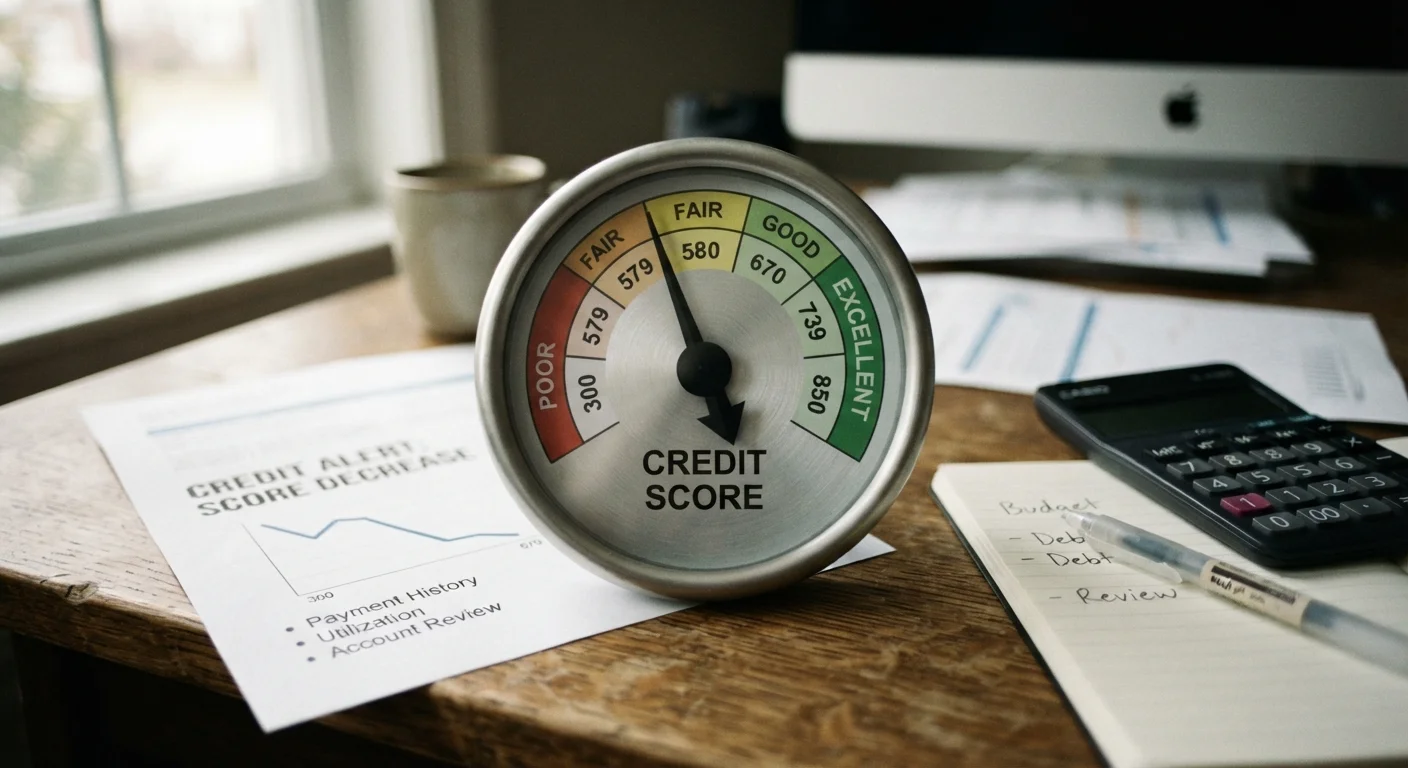
Why Your Score Can Slip Without Any Obvious Mistake
Most consumers know that missing payments or maxing out a credit card will hurt their credit score. What catches people off guard are the subtler, less-discussed factors - the ones that chip away at a score silently, often over months before the damage shows up. Understanding these hidden influences gives you a real opportunity to protect your credit standing without overhauling your entire financial life.
Your credit score is calculated from several distinct categories: payment history, amounts owed (including credit utilization), length of credit history, new credit, and credit mix. A change in any one of these - even one you didn't consciously make - can move your score in ways you didn't anticipate. Below are the most common culprits that go unnoticed until the damage is done.
Closing an Old Account You No Longer Use
When you close a credit card - especially one you've held for years - two things happen simultaneously: your total available credit drops, which pushes your utilization ratio higher, and your average age of accounts can decrease. Both factors work against your score. Many consumers assume that closing unused accounts is responsible housekeeping. In practice, it can cause a noticeable dip, particularly if the closed card was your oldest account or had a high credit limit.
Before closing any long-held account, consider the trade-offs carefully. What actually happens to your credit score when you close an old account walks through the mechanics in detail so you can make an informed decision.
Closing your oldest card can shorten your credit history and spike your utilization in one move.
A Forgotten Store Card With a Missed Payment
Retail store cards are easy to open at checkout and even easier to forget about. If a small annual fee posts to a dormant card and you don't catch it, the account can slide into delinquency - and a single 30-day late payment can remain on your credit report for up to seven years. The irony is that the balance may be just a few dollars, but the scoring impact is disproportionate because payment history is the single largest factor in most scoring models.
Set calendar reminders or account alerts for every credit account you hold, even the ones you rarely use. Those quietly accumulating debt traps - including forgotten fee charges - are far easier to prevent than to repair.
A forgotten store card fee can quietly become a seven-year blemish on your credit report.
Creeping Credit Utilization
You don't have to carry a large balance to have a utilization problem. If your credit limit is reduced - something issuers can do unilaterally on inactive cards - your utilization ratio rises even if your spending hasn't changed at all. Similarly, charging a large purchase on one card rather than spreading it across accounts can spike your per-card utilization, which some scoring models track separately from your overall ratio.
Most financial guidance suggests keeping utilization below 30%, though lower is generally better. Credit utilization: the one ratio that quietly moves your score explains why this number matters so much to lenders and how to manage it strategically.
A lender-initiated credit limit reduction can raise your utilization ratio without any change in your spending.
Multiple Credit Applications in a Short Period
Each time you apply for a new credit account, the lender typically performs a hard inquiry on your report. One inquiry has a modest, temporary effect. But applying for several cards, a car loan, and a personal loan within a few months signals to scoring models that you may be in financial distress or overextending yourself. The cumulative impact of multiple hard inquiries can meaningfully lower your score, even if every application is approved.
An important exception: mortgage, auto, and student loan inquiries made within a short window (typically 14-45 days, depending on the scoring model) are usually counted as a single inquiry for rate-shopping purposes. Credit card applications do not receive this treatment.
Rate shopping for a mortgage in a focused window is treated differently from applying for multiple credit cards.
Errors and Outdated Information on Your Report
Credit report errors are more common than many people realize. A debt that was paid may still appear as outstanding. An account belonging to someone with a similar name may have been merged with yours. A delinquency that should have aged off after seven years may still be listed. Each of these inaccuracies can suppress your score without any action on your part. Because the major scoring models work from the data in your report, inaccurate data produces an inaccurate score.
Reviewing all three of your credit reports - not just one - matters because lenders don't always report to every bureau. Dispute any error you find directly with the bureau in writing; they are required to investigate and respond within 30 days under federal law.
An unresolved reporting error can cost you points on a score derived entirely from flawed data.
Believing a Small Balance Helps Your Score
A persistent myth holds that carrying a small revolving balance each month signals responsible credit use and therefore boosts your score. This is not how credit scoring works. Leaving a balance means paying interest, and it raises your utilization ratio - neither of which helps your score. Paying your statement balance in full each month is the approach that keeps utilization low and avoids unnecessary interest charges entirely.
For a clear breakdown of why this belief persists and what the evidence actually shows, see why carrying a small credit card balance does not help your score.
Carrying any balance costs you interest and raises utilization - it does not signal creditworthiness.
Taking Stock and Staying Ahead
None of these factors require a financial crisis to cause damage. They work quietly, accumulating over time until a lender, landlord, or employer pulls your report and sees a picture that doesn't reflect your actual financial behavior. The good news is that most of them are correctable once identified.
Set Up Free Credit Monitoring Alerts
Many banks and credit unions now offer free credit score monitoring as part of their account features. Enabling alerts for score changes, new inquiries, or new accounts can give you early warning when something unexpected appears on your report. Acting quickly on unfamiliar activity reduces the window in which errors or unauthorized accounts can cause lasting damage.
Checking your credit reports regularly - you're entitled to free reports from each of the three major bureaus through AnnualCreditReport.com - is the single most effective way to catch these issues early. If you notice something that looks wrong, disputing errors directly with the reporting bureau is your legal right under the Fair Credit Reporting Act. For a fuller picture of how borrowing activity ripples through your score, see what makes your credit score move when you borrow.
This article is for general informational purposes only and does not constitute personalized financial or credit advice. Consider consulting a qualified financial professional for guidance specific to your situation.
The content on this site is for informational purposes only and is not a substitute for professional advice. Always consult a qualified professional for guidance specific to your situation.