

Why Income Growth Rarely Fixes a Savings Problem
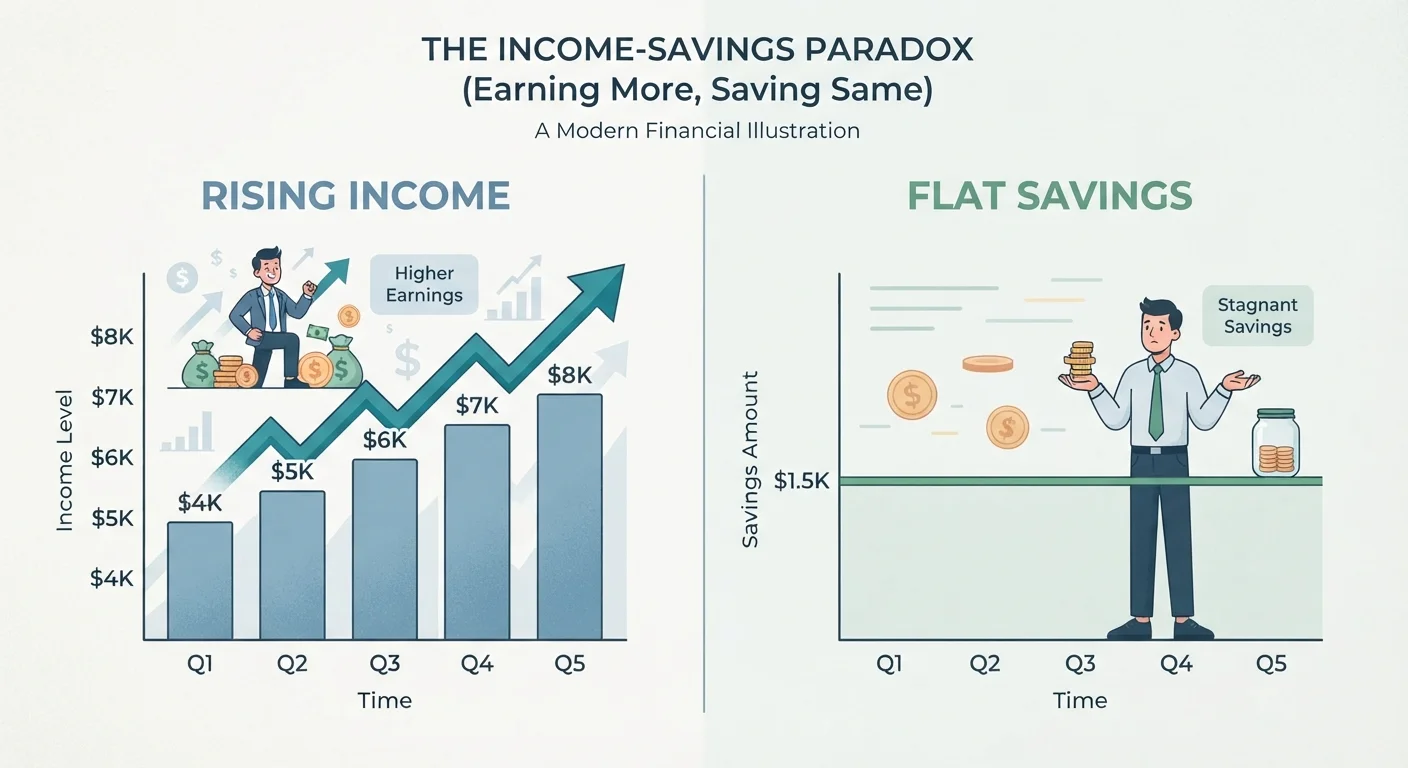
Many people assume that a bigger paycheck will finally give them the breathing room to save seriously. In practice, that moment often never arrives. Research in behavioral economics consistently shows that spending tends to rise in step with income - a pattern economists call lifestyle inflation (also known as lifestyle creep). The result is a savings rate that stays flat or even shrinks despite years of income growth.
The core issue isn't willpower or math - it's structure. Without a deliberate system that claims savings before discretionary spending begins, rising income simply raises the ceiling on what feels like a normal, justified expense. Understanding the specific mistakes that drive this trap is the first step toward breaking it.
Letting lifestyle inflate with every income increase instead of intentionally directing raises toward savings.
Why it happens: A raise feels like permission to upgrade - a nicer apartment, a newer car, more frequent dining out. These upgrades feel proportionate and earned, so they rarely register as a savings threat.
Saving whatever is left over at the end of the month rather than setting savings aside first.
Why it happens: This approach feels flexible and low-pressure, but most months spending expands to consume available funds, leaving little or nothing to save.
Treating bonuses and windfalls as spending money rather than as savings opportunities.
Why it happens: One-time payments feel mentally different from regular income - more like a reward than a resource - which makes it psychologically easier to spend them without guilt.
Tracking savings in dollar amounts rather than as a percentage of income.
Why it happens: Saving $400 a month sounds substantial, but if income has doubled, it represents a shrinking share of earnings. A dollar figure can stay constant while the savings rate quietly falls.
Spending more to match the lifestyle of peers, colleagues, or social circles without evaluating personal financial priorities.
Why it happens: Social spending pressure is real and often operates below conscious awareness - expensive group activities, keeping up with visible purchases, or avoiding the social awkwardness of opting out.
Building a System That Protects Your Savings Rate
Awareness alone rarely changes spending behavior. The most reliable fix is structural: automate savings as a fixed percentage of every paycheck so the decision is made once, not monthly. Automating your savings removes the friction of choosing between spending and saving in the moment - the moment when lifestyle inflation wins most often.
Equally important is having a concrete destination for saved money. Vague goals like "save more" are easy to abandon; specific goals with clear structures are not. If you're unsure how to split savings between emergencies and longer-term goals, managing both an emergency fund and a savings account under one strategy can help clarify which dollars go where. For sustainable change, pair structure with savings habits that behavioral research shows actually stick.
~5%
U.S. personal savings rate (recent years)
The U.S. Bureau of Economic Analysis has reported the personal savings rate hovering in the low-to-mid single digits in recent years, well below the 10-15% range many financial educators recommend.
2-in-3
Americans living paycheck to paycheck
Multiple surveys conducted by financial research organizations have found that roughly two-thirds of Americans report living paycheck to paycheck, a figure that spans a wide range of income levels.
This article is for general informational purposes only and does not constitute personalized financial advice. Consult a qualified financial professional for guidance specific to your situation.
The content on this site is for informational purposes only and is not a substitute for professional advice. Always consult a qualified professional for guidance specific to your situation.