

Why Some Projects Hold Value Better Than Others
Home improvement spending in the US runs into the hundreds of billions of dollars annually, yet not every dollar spent comes back at resale - or even holds its ground during an appraisal. The gap between what homeowners expect to recoup and what the market actually rewards is one of the most common misconceptions in real estate, and it's worth confronting directly before any project begins.
Projects that tend to preserve value share a few common traits: they address functional need, they align with neighborhood norms, and they use quality materials installed to a professional standard. Cosmetic upgrades with niche appeal, or renovations that push a home's price ceiling above what the local market supports, often fail to return their cost. For a deeper look at where expectations go wrong, see our piece on home improvement myths that cost homeowners money.
Return on Investment Varies by Market
No renovation carries a guaranteed return. Local market conditions, neighborhood price ceilings, quality of workmanship, and buyer preferences all influence outcomes. What recoups strongly in one metro area may barely move the needle in another. Industry cost-vs-value benchmarks offer useful directional guidance but should be treated as averages, not promises.
The six projects below have a consistent track record in industry research and real estate practice - though outcomes will always vary by property, execution, and local market.
Check Permits Before You Start
Many value-preserving improvements - particularly those involving structural, electrical, or plumbing work - require permits. Unpermitted work can complicate appraisals, title transfers, and insurance claims. Review our pre-project checklist before any renovation begins to avoid common compliance pitfalls.
Projects With a Durable Track Record
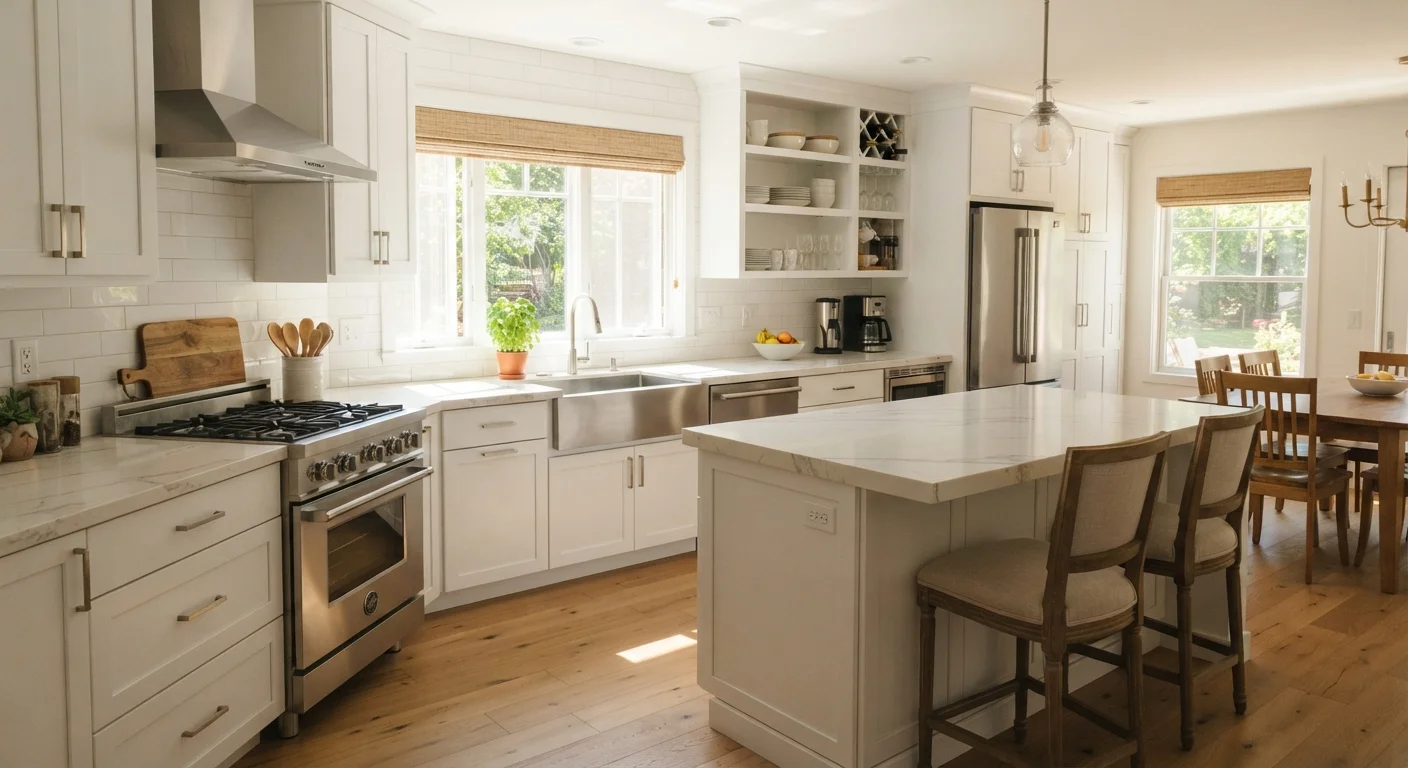
Minor kitchen remodels
Full gut renovations rarely recoup their full cost, but targeted kitchen updates - replacing cabinet fronts, upgrading fixtures, installing a new backsplash, or refreshing countertops - consistently perform well in resale analyses. Remodeling industry data has repeatedly shown that minor kitchen remodels tend to return a higher percentage of their cost than major overhauls.
The logic is straightforward: buyers respond to kitchens that feel functional, clean, and current without being so customized that they alienate taste. Sticking to neutral finishes and durable materials maximizes broad appeal.
Targeted kitchen updates often outperform full gut renovations in cost recovery.
Bathroom updates
Bathrooms are among the most scrutinized spaces in any home sale or appraisal. Updating fixtures, replacing worn tile, improving ventilation, and refreshing caulk and grout can meaningfully lift perceived condition without requiring a complete remodel.
A full primary bath renovation can add value, but proportionality matters - spending significantly more than what the neighborhood supports rarely pays back. If you're planning a more involved remodel, the early planning decisions you make around plumbing layout and ventilation will shape every downstream cost.
Bathroom improvements are highly scrutinized - proportionality to the neighborhood is key.
Roof replacement or repair
A compromised roof is a dealbreaker in most home inspections and appraisals. Replacing an aging roof before it fails - rather than after damage accumulates - protects the entire structure and avoids cascading repair costs from water intrusion.
While a new roof rarely earns back its full cost in appraised value, it removes a significant negotiating liability and prevents the kind of deferred maintenance spiral that quietly erodes a home's worth over time.
A sound roof removes negotiating liabilities and prevents costly cascading damage.
Energy efficiency improvements
Upgrades such as added insulation, double- or triple-pane windows, a high-efficiency HVAC system, or a smart thermostat serve dual purposes: they reduce ongoing utility costs and improve a home's marketability to energy-conscious buyers.
In many markets, homes with documented energy efficiency improvements carry measurable price premiums. Certifications or utility documentation supporting the improvements give buyers concrete proof of value rather than a seller's word.
Energy upgrades reduce ownership costs and can command measurable market premiums.
Curb appeal and exterior maintenance
First impressions set the tone for every other perception a buyer forms. Repainting exterior siding, replacing an entry door, updating landscaping, and repairing driveways or walkways all contribute to a home's condition score - and to the instinctive reaction buyers have before stepping inside.
These improvements tend to be cost-efficient relative to their impact. Entry door replacements, in particular, have historically ranked among the higher-returning projects in annual remodeling cost-vs-value studies.
Exterior updates are among the most cost-efficient improvements relative to their visual impact.
Finished basement or added living space
Adding usable square footage - whether a finished basement, a converted garage space, or an accessory dwelling unit where zoning permits - can substantively lift a home's appraised value by increasing livable area. The return varies significantly by market and by how well the space is finished.
It's worth noting that finished space below grade is typically valued differently than above-grade square footage in most appraisal methodologies. Understanding local norms before investing heavily is advisable. This connects directly to how home equity builds - improvements that genuinely increase livable utility tend to have lasting positive effects.
Added livable space can meaningfully lift value, but appraisal treatment varies by market and grade.
Making the Most of Your Renovation Decisions
Protecting your investment isn't only about choosing the right projects - it's about approaching each one with realistic expectations and sound preparation. Overimproving relative to your neighborhood, skipping permits, or deferring maintenance while funding cosmetic upgrades are patterns that consistently work against homeowners over time.
The strongest strategy is usually a combination: keep the home's systems and structure in good repair first, then pursue targeted upgrades that reflect what buyers in your specific market value. If you're thinking ahead to a potential sale, pre-sale preparation priorities can help you allocate effort and budget where it genuinely moves the needle.
For broader context on how improvement decisions connect to your financial position as a homeowner, our guide on home equity and long-term wealth offers useful framing for thinking about your home as a financial asset.
This article is for general informational purposes only and does not constitute financial, legal, or professional renovation advice. Consult qualified professionals - including licensed contractors and a real estate professional familiar with your local market - before undertaking significant home improvement projects.
The content on this site is for informational purposes only and is not a substitute for professional advice. Always consult a qualified professional for guidance specific to your situation.