

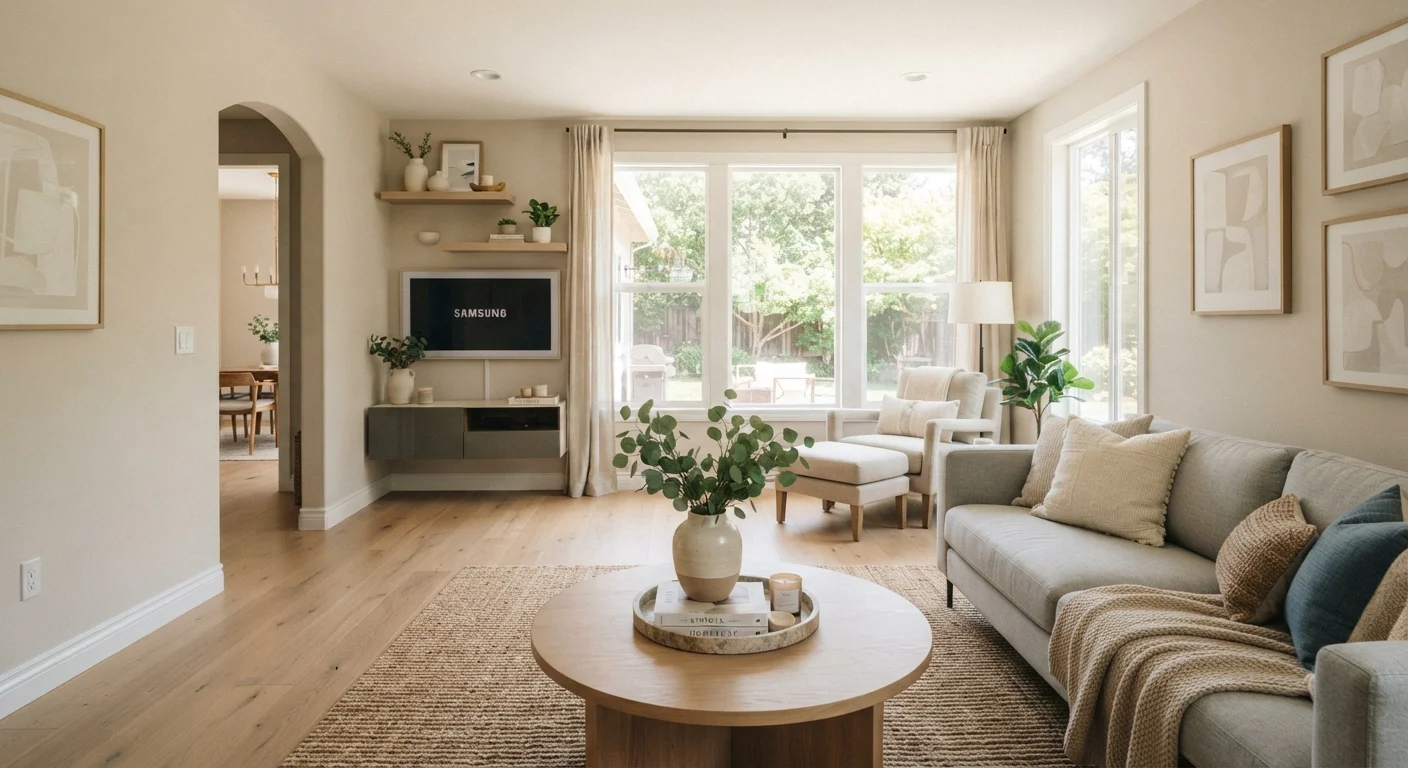
What Buyers Actually Notice First
The moment a buyer pulls up to your home - or clicks your listing online - a judgment forms. Curb appeal and listing photos shape emotional responses faster than any feature sheet can correct. A tidy exterior, a mowed lawn, and clean siding communicate that the home has been cared for. Conversely, peeling paint or overgrown landscaping can plant doubt before a foot crosses the threshold.
Inside, buyers respond strongly to light, space, and smell. Rooms that feel open and odor-free tend to photograph well and show well. Decluttering is not about making your home look unlived-in - it's about helping buyers mentally move themselves in. Remove excess furniture, clear countertops, and neutralize strong scents. These steps cost little and consistently improve perception.
Fresh paint in neutral tones is one of the most reliably worthwhile investments before a sale. It refreshes tired rooms and gives buyers a clean canvas. See our guide to prep work that actually matters for practical tips on doing it without the mess.
Listing Photos Set the First Impression
The majority of buyers begin their search online, which means your listing photos function as a first showing. Professional photography - or at minimum, excellent smartphone photography in good lighting - can meaningfully affect how many buyers request in-person tours. Declutter and stage before the photographer arrives, not after.
The High-Impact Preparations Worth Prioritizing
Not all pre-sale work is created equal. These practices tend to deliver meaningful returns across most US markets:
Deep clean every room, including areas buyers rarely see on first glance
Buyers equate cleanliness with maintenance. A spotless home signals that the seller has been attentive, while grime in corners or dingy grout can trigger concerns about what else may have been neglected.
Depersonalize spaces to help buyers visualize their own lives in the home
Family photos, collections, and highly personalized decor can distract buyers from the home's actual features. A more neutral presentation tends to broaden appeal.
Address obvious exterior wear before listing
Curb appeal is the first filter buyers apply, both online and in person. Small exterior improvements - fresh mulch, painted shutters, a clean front door - can improve perceived value relative to their cost.
Maximize natural light in every room during showings
Light is one of the most cited buyer preferences. Bright rooms photograph better and feel more spacious, which can influence offers.
Repair minor but visible defects before buyers walk through
Chipped baseboards, stuck cabinet doors, and dripping faucets may be trivial to fix, but their presence suggests neglect and gives buyers grounds to question the home's overall condition.
Understanding which upgrades tend to hold their value over time can also help you decide what's worth addressing now versus what you may have over-invested in during ownership. Our coverage of home improvement projects that tend to hold their value provides useful context.
What's Often Overhyped
The home-improvement industry has a financial interest in convincing sellers that full kitchen remodels or bathroom overhauls will pay off at closing. The reality is more nuanced. According to the Remodeling Cost vs. Value Report (a widely referenced industry benchmark), most major interior renovations recoup only a fraction of their cost in resale value - and returns vary significantly by region.
~69%
Average cost recouped on a major kitchen remodel
According to the Remodeling Magazine Cost vs. Value Report, upscale kitchen remodels have historically recouped well under their full cost at resale, with averages varying by region and year.
Top 5
Projects with highest cost recovery at resale
Exterior improvements - such as garage door replacements and stone veneer additions - have consistently ranked among the highest cost-recoup projects in national industry surveys.
High-end appliance packages, luxury flooring upgrades, and personalized design choices carry particular risk: what appeals to you may not align with buyer preferences in your specific neighborhood. Unless your home is notably outdated compared to direct competitors, targeted repairs and cosmetic refreshes typically outperform large-scale renovations on a dollar-for-dollar basis.
Buyers will also conduct their own due diligence. Understanding what they're scrutinizing - and what they sometimes miss - is worthwhile background reading. Our article on what buyers often overlook before closing offers a useful perspective from the other side of the transaction.
Maintenance Issues: Fix Them Before Buyers Find Them
One of the most overlooked pre-sale strategies is simply addressing deferred maintenance. Buyers - and their inspectors - will find leaky faucets, worn caulking, HVAC filters that haven't been replaced, and roof shingles in need of attention. When these surface during a home inspection, they give buyers leverage to renegotiate price or, in some cases, walk away.
Consider scheduling a pre-listing inspection. While not universally standard practice, it lets you identify problems on your own timeline rather than under contract pressure. You can then choose to repair items, disclose them, or price accordingly - all from a position of information rather than reaction.
For a clear breakdown of what inspectors examine and how findings are typically categorized, see our guide on reading your home inspection report without feeling overwhelmed.
Calibrating Effort to Your Market
Pre-sale preparation should be proportional to your market. In a highly competitive seller's market with low inventory, buyers may accept homes with less preparation simply because options are limited. In a slower market, presentation carries more weight - buyers have choices and are less willing to overlook visible issues.
Your listing agent is a key resource here. A knowledgeable local agent can tell you what comparable homes in your area look like and where your property stands by comparison. Spending $15,000 on a kitchen refresh makes little sense if competing listings are selling quickly without it.
The broader home buying process also helps illustrate what motivated buyers are evaluating - which can sharpen your sense of where to focus seller-side preparation. Keep preparation grounded in what your specific buyers are likely to prioritize, not what a national renovation trend suggests.
This article is for general informational purposes only and does not constitute financial, legal, or real estate advice. Market conditions vary by location. Consult a licensed real estate professional for guidance specific to your situation.
The content on this site is for informational purposes only and is not a substitute for professional advice. Always consult a qualified professional for guidance specific to your situation.