

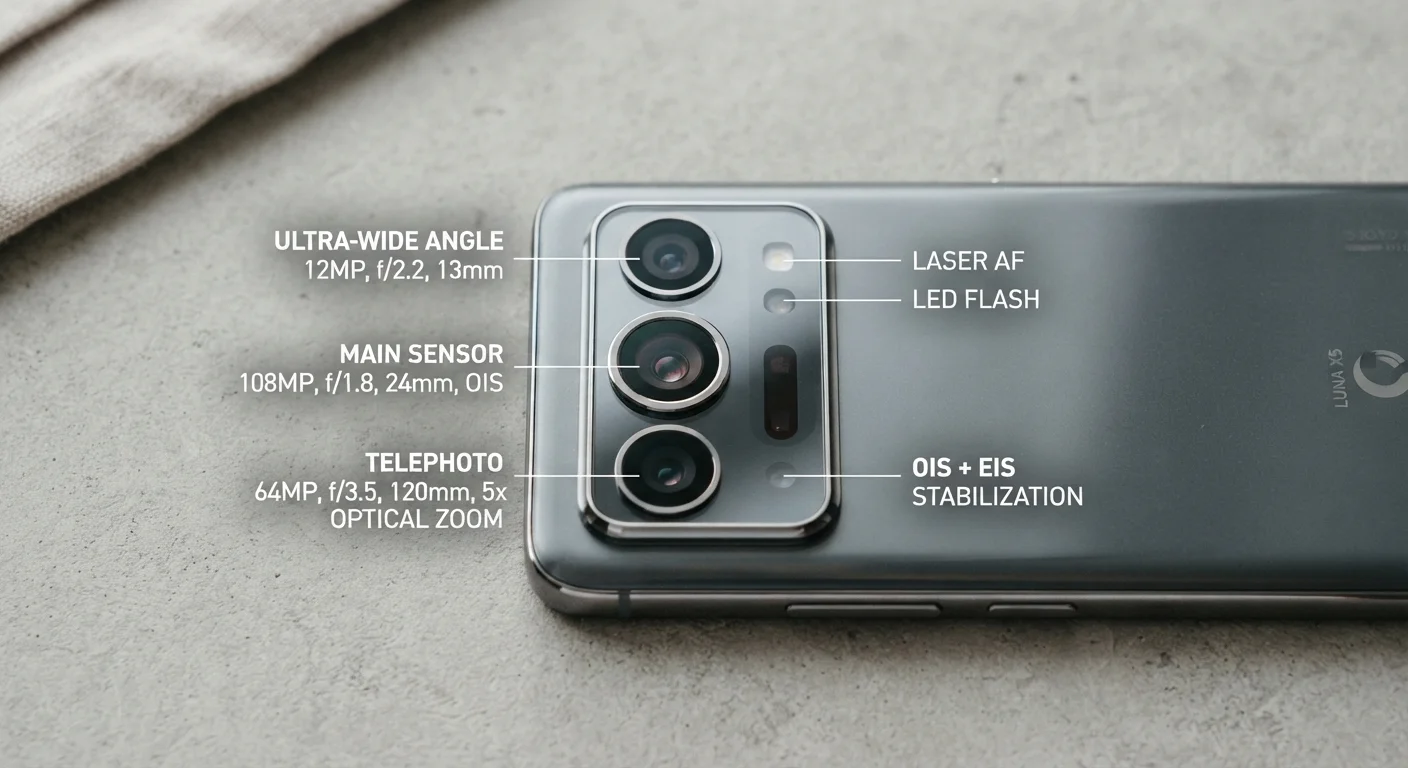
Megapixels: Resolution Isn't Everything
Megapixels (MP) measure how many millions of individual pixels make up a photo. A 48MP camera captures images with 48 million pixels. More pixels means you can print larger or crop tighter without losing sharpness - but only up to a point that most people never reach.
The catch: cramming more pixels onto a small sensor makes each individual pixel smaller, which means it captures less light. This is why a phone with a modest pixel count but a large sensor often outperforms a high-megapixel competitor in dim rooms or evening shots. For everyday social sharing and standard prints, the difference between 12MP and 50MP is rarely visible.
Pair Megapixels With Sensor Size
When comparing cameras, always check the sensor size alongside the megapixel count. A larger sensor with fewer megapixels often delivers better results than a tiny sensor packed with pixels. Most manufacturer spec pages list sensor size - look for it before judging a camera by pixel count alone.
If you're comparing two phones and one boasts dramatically more megapixels, look at the sensor size alongside it. That pairing tells you far more than the megapixel number alone.
Aperture: The f-Number and Light
Aperture describes how wide the camera lens opens to let in light. It's expressed as an f-number - such as f/1.8 or f/2.4. The counterintuitive part: a lower f-number means a wider opening and more light hitting the sensor.
A wide aperture (low f-number) is helpful in two situations: low-light photography, where more light means less blur and grain; and portrait shots, where it creates a shallow depth of field - the blurred background effect often called bokeh. A narrower aperture (higher f-number) keeps more of the scene in sharp focus, which can be useful for landscapes.
Unlike traditional cameras, most phone lenses have a fixed aperture - it doesn't change. So the spec sheet value tells you exactly what you'll get for every shot taken with that lens.
Sensor Size, Zoom, and the Other Numbers
Sensor size is listed in fractions of an inch - such as 1/1.28" or 1/2.55". Confusingly, a larger fraction doesn't always mean a bigger sensor; you need to compare the actual decimal values. A sensor described as 1/1.28" is physically larger than one listed as 1/2.55". Bigger sensors capture more light per pixel, which directly improves performance in challenging lighting.
Zoom specs require careful reading. Optical zoom uses a dedicated telephoto lens or periscope mechanism to genuinely magnify a scene - 3x optical zoom preserves sharpness. Digital zoom is software-based cropping and enlargement, which softens the image. When you see "up to 100x zoom" in a headline, most of that range is digital zoom.
OIS vs. Software Stabilization
Optical Image Stabilization (OIS) is a physical mechanism inside the camera module that counters hand movement in real time. Software stabilization, by contrast, processes footage after capture and typically crops the frame to smooth out motion. OIS generally produces better results, especially in video and night photography - it's worth checking whether a specific lens on a multi-camera phone includes it.
OIS (Optical Image Stabilization) is another spec worth noting. It's a hardware mechanism that physically compensates for hand movement during a shot, producing sharper photos in low light and smoother video. Not all phones include it, and it's distinct from software stabilization, which works after the fact.
For a broader look at how specs translate to real-world experience across different devices, see our guide to RAM, storage, and processing speed.
Why Software Is the Hidden Variable
Hardware specs describe what the camera can capture. Software - specifically the phone's image signal processor (ISP) and computational photography algorithms - determines what the final photo actually looks like. Night mode, HDR merging, portrait edge detection, and noise reduction are all software processes that can dramatically improve or alter an image after the shutter fires.
This means two phones with nearly identical hardware specs can produce noticeably different photos depending on how each manufacturer processes the image. It also means an older phone with excellent software support can still produce results that rival newer hardware.
The practical takeaway: when evaluating a phone's camera, sample photos taken in real conditions - especially indoors and at night - tell you more than any number on a spec sheet. Specs are a starting point, not a verdict.
Frequently Asked Questions
Not necessarily. Megapixels measure resolution - how many pixels make up an image - but quality also depends on sensor size, lens quality, and software processing. A 50MP camera with a small sensor can produce worse low-light photos than a 12MP camera with a larger sensor.
These are aperture values - they describe how wide the lens opening is. A lower number means a wider opening, which lets in more light. This matters most in dim conditions and also affects background blur (bokeh) in portrait shots.
Optical zoom uses actual lens movement or a dedicated telephoto lens to bring subjects closer without losing detail. Digital zoom simply crops and enlarges the image, which reduces sharpness. Optical zoom preserves image quality; digital zoom does not.
Sensor size is one of the most important specs for photo quality, especially in low light. A larger sensor captures more light per pixel, resulting in less noise and more detail in challenging conditions. Many budget phones compromise here even when advertising high megapixel counts.
OIS stands for Optical Image Stabilization. It uses tiny physical movements within the camera module to counteract hand shake, which produces sharper photos in low light and smoother video. It's a hardware feature, distinct from software-based stabilization.
The content on this site is for informational purposes only and is not a substitute for professional advice. Always consult a qualified professional for guidance specific to your situation.