

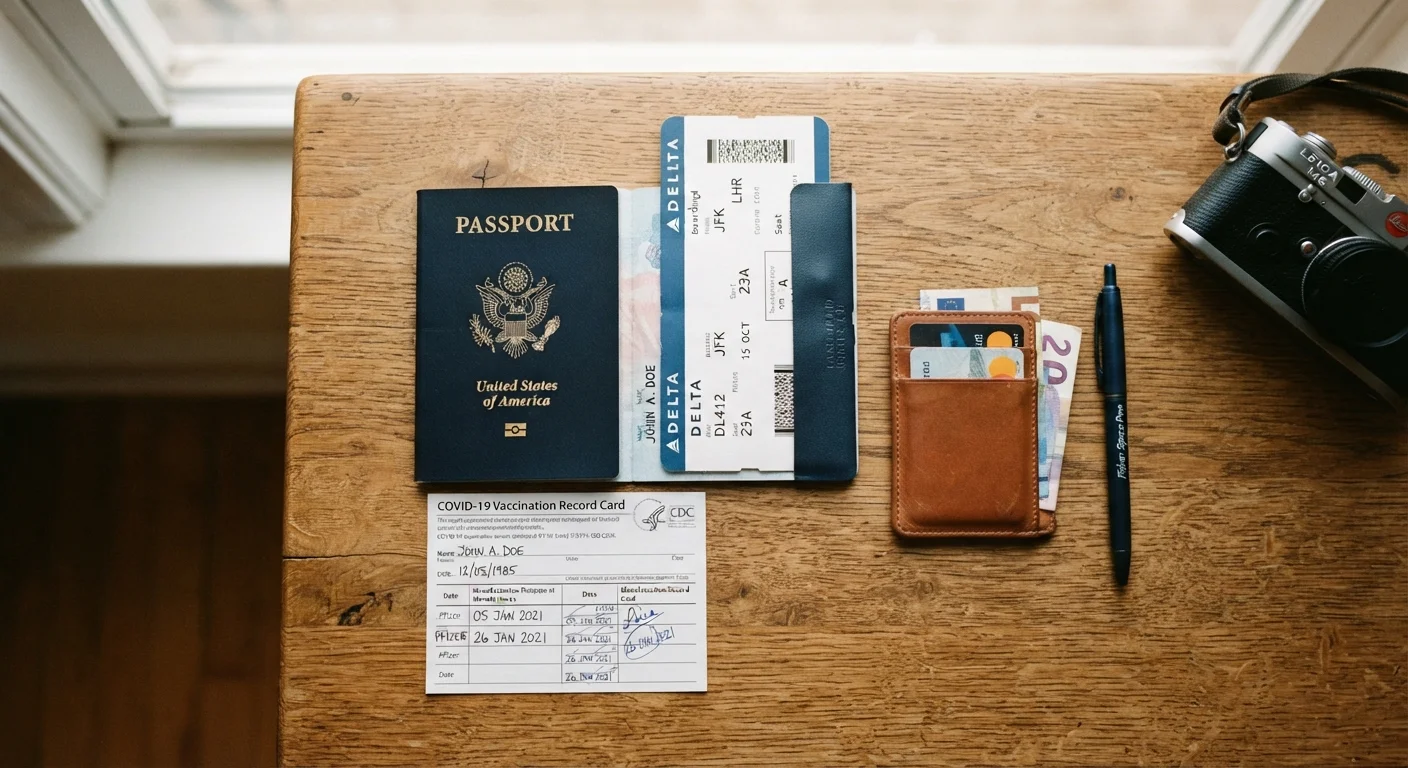
Start With Your Passport
Your passport is the single most important document you'll carry abroad, so it deserves attention well before your departure date. Most travelers are surprised to learn that many countries require your passport to remain valid for at least six months beyond the end of your trip - not just on the day you fly. Showing up at a border with a passport expiring in three months can result in denied boarding or refused entry, even if your trip is only a week long.
If you need a new or renewed US passport, standard processing has historically taken several weeks, and expedited processing can still take longer than expected during busy travel seasons. Build in ample lead time - ideally three to six months ahead of your trip. The US Department of State's website lists current processing times and is the authoritative source for up-to-date guidance.
Sign up for passport alerts through the State Department so you receive reminders about expiration well in advance - most travelers don't think about renewal until they're already planning a trip.
Passport processing times fluctuate and can extend significantly during peak periods, leaving travelers without a valid document if they wait too long.
When checking visa requirements, look at the rules for every country your flight routes through, not just your final destination - some transit connections require their own visas.
Transit visa oversights are one of the most common and preventable causes of denied boarding for international travelers.
Also consider whether your destination requires blank visa pages. Some countries stamp full pages and will refuse entry if none are available. Request additional pages during your next renewal if your passport is running short.
For a broader look at pre-departure logistics, see our pre-trip checklist covering everything from reservations to home security.
Visas and Entry Requirements
A valid passport gets you to the border - a visa (when required) gets you through it. US citizens enjoy visa-free or visa-on-arrival access to many countries, but that list is far from universal. Some destinations require a visa obtained in advance through an embassy or consulate, while others use electronic travel authorizations (ETAs) that must be approved online before departure.
Don't Rely on Third-Party Sites for Visa Rules
Travel booking platforms and blogs sometimes publish outdated or incomplete visa information. Entry rules can change with little public notice. Always verify requirements directly with the destination country's official immigration authority and the US Embassy website for that country before booking or traveling.
Entry rules can also include proof of onward travel, sufficient funds, or a return ticket. Countries in the Schengen Area of Europe, for instance, track cumulative days spent across member nations - not just individual countries. Overstaying these limits, even unintentionally, can affect future entry.
Always verify requirements through the destination country's official immigration authority and cross-reference with the US Embassy website for that country. Requirements change, and information from travel blogs or third-party booking sites may be outdated. Our article on common international travel myths debunks several widely repeated misconceptions about entry rules that catch Americans off guard.
186
Countries accessible visa-free to US passport holders
According to the Henley Passport Index, the US passport ranks among the world's most powerful for visa-free access.
6 months
Passport validity buffer required by many countries
Numerous countries across Asia, the Middle East, and Africa enforce a six-month validity rule beyond your travel dates.
4-6 weeks
Recommended lead time before travel for health prep
The CDC advises seeing a travel medicine provider at least four to six weeks before departure to allow time for vaccines to take effect.
Health Prep: Vaccinations and Prescriptions
Some countries require proof of specific vaccinations as a legal condition of entry - yellow fever vaccination certificates are among the most common examples for travel to or from certain regions of Africa and South America. Others strongly recommend vaccinations without mandating them. The distinction matters: a required vaccine means no proof, no entry.
The US Centers for Disease Control and Prevention (CDC) maintains destination-specific health recommendations, and consulting a travel medicine clinic or your primary care provider at least four to six weeks before departure gives your body time to build immunity from any necessary vaccines. Some vaccine series require multiple doses spread over weeks.
If you take prescription medications, research whether they are legal in your destination country. Some common US prescriptions - including certain pain medications and ADHD treatments - are controlled or prohibited in other nations. Carry medications in original labeled containers and bring a doctor's letter describing your condition and treatment. Always check with the destination country's embassy for clarity on controlled substances, as regulations vary significantly.
This section provides general health information for travel planning purposes only and is not medical advice. Consult a qualified healthcare provider for guidance tailored to your personal health needs before international travel.
Travel Insurance and Emergency Contacts
Most US domestic health insurance plans provide limited or no coverage outside the country. A medical evacuation abroad - a flight home on a medical aircraft - can cost tens of thousands of dollars out of pocket without coverage. Travel insurance policies vary widely in what they include, so reading the fine print matters more than price alone.
Key coverage areas to evaluate include emergency medical treatment, medical evacuation, trip cancellation or interruption, and lost or delayed baggage. Our detailed guide on travel insurance for international trips walks through exactly what these policies typically cover and the exclusions that surprise travelers most.
Credit Card Travel Benefits May Include Some Coverage
Some premium travel credit cards include limited trip cancellation, delay, or baggage coverage as a cardholder benefit. These protections vary significantly between cards and typically do not substitute for comprehensive travel medical or evacuation insurance. Review your card's benefits guide carefully and consider whether standalone travel insurance is appropriate for your trip.
Beyond insurance, register your trip with the US State Department's Smart Traveler Enrollment Program (STEP). It's free and allows the nearest US embassy or consulate to contact you in an emergency, share safety updates, and help locate you if needed. Save the local emergency number for your destination - it is not always 911.
Final Document Check Before You Fly
A few days before departure, run through a final document review. Confirm your passport is valid with the required buffer, your visa or ETA is approved and printed or saved digitally, and any required health certificates are in hand. Make photocopies of your passport photo page, visa, travel insurance policy, and any vaccination records - store one set separately from the originals in your luggage and email scanned copies to yourself.
Always Carry Physical Document Backups
Digital copies stored on your phone are helpful, but your phone can be lost, stolen, or run out of battery at the worst moment. Keep a printed copy of your passport photo page, visa, and travel insurance emergency number in a separate bag from your originals. This simple step can dramatically speed up assistance if your documents are lost or stolen abroad.
Load airline apps and download boarding passes offline in case connectivity is limited. Note your accommodation addresses for immigration arrival forms, which many countries require you to complete on the plane or at the border. Blank fields or vague answers can slow your entry significantly.
Once your documents are sorted, shift your attention to what you're packing. Our international flight packing checklist covers carry-on essentials, electronics, medications, and clothing so nothing gets left behind. And if this is your first time heading abroad, our first international trip guide walks through what to expect at every stage - from customs to currency.
The content on this site is for informational purposes only and is not a substitute for professional advice. Always consult a qualified professional for guidance specific to your situation.