

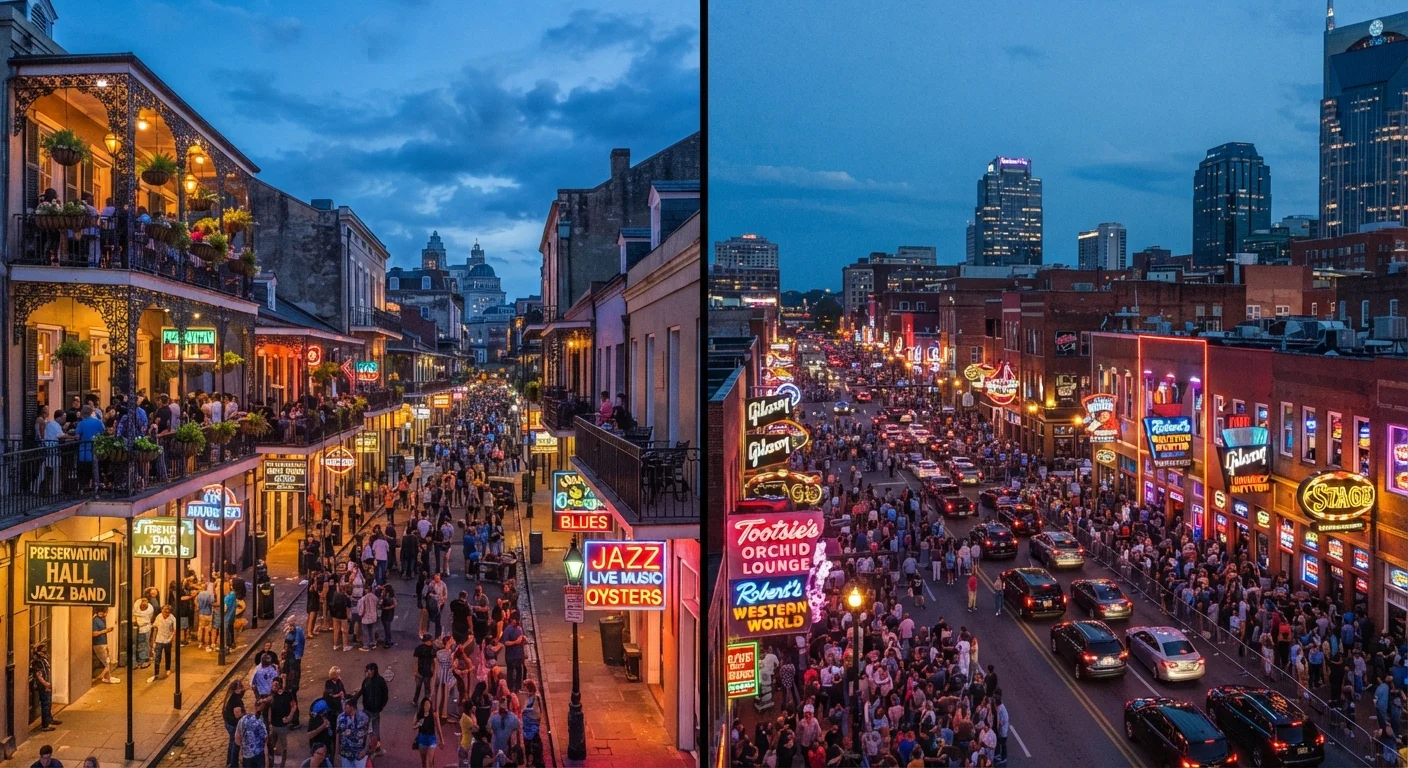
Option A
New Orleans, Louisiana
The soulful, layered city where history, Creole flavor, and jazz never sleep.
Best for: Travelers who want immersive cultural depth, world-class Creole and Cajun cuisine, and a nightlife experience unlike anything else in the US.
Option B
Nashville, Tennessee
The energetic, fast-growing honky-tonk capital with a booming food and arts scene.
Best for: Visitors drawn to live country and Americana music, a buzzing bachelor-party-friendly atmosphere, and a rapidly evolving culinary landscape.
Culture and Character: Two Cities, Two Identities
New Orleans and Nashville are often mentioned in the same breath as America's great music-and-food cities, but spending even a single afternoon in each makes clear how different they truly are.
New Orleans is one of the oldest and most culturally layered cities in the United States. Its French Quarter, with ornate wrought-iron balconies and centuries-old buildings, reflects a colonial past shaped by French, Spanish, African, and Caribbean influences. That cultural fusion - sometimes called Creole culture - permeates everything from its architecture and language to its music and food traditions. The city moves at its own unhurried pace, and that's part of its appeal.
Nashville, by contrast, is a city in fast-forward. Long synonymous with country music and the Grand Ole Opry (which opened in 1925 and remains a major cultural institution), Nashville has transformed dramatically over the past decade into a broader arts, dining, and entertainment hub. Broadway's honky-tonk strip pulses with live music from mid-morning until the early hours - it is loud, celebratory, and unapologetically fun.
| Criterion | New Orleans | Nashville |
|---|---|---|
| Primary music genre | Jazz, blues, brass band | Country, Americana |
| Signature cuisine | Creole and Cajun cooking | Hot chicken, meat-and-three |
| Cultural heritage depth | 300+ years, multi-ethnic Creole roots | Country music legacy since 1925 |
| Overall pace | Relaxed, atmospheric, sensory | High-energy, fast-paced, social |
| Neighborhood walkability | French Quarter, Garden District | Broadway strip, The Gulch |
| Group trip appeal | Strong, especially for culture seekers | Very high, especially for celebrations |
| Historical landmarks | St. Louis Cathedral, plantations | Grand Ole Opry, Ryman Auditorium |
Food Scenes: Creole Depth vs. Southern Comfort
Few debates in American travel spark more passion than comparing these two food cities - and for good reason. Both deliver, but in strikingly different directions.
New Orleans cuisine is a category of its own. Dishes like gumbo, jambalaya, crawfish étouffée, beignets, and the classic po'boy sandwich reflect a culinary tradition built over centuries at the intersection of African, French, Spanish, and Indigenous foodways. The city's neighborhood restaurants - many family-owned across multiple generations - are as much a cultural experience as a meal. Seafood, particularly gulf shrimp and oysters, is central to the local table.
Nashville's food scene has grown substantially beyond its meat-and-three (a Southern tradition of choosing one meat and three sides from a cafeteria-style spread) and hot chicken roots - though both remain must-try experiences. Hot chicken, a Nashville original characterized by cayenne-spiced fried chicken served on white bread with pickles, has become nationally recognized. The city's newer restaurant landscape spans craft cocktail bars, international cuisines, and inventive Southern cooking.
If comparing beach destinations along the Southern coast appeals to you after exploring these cities, our piece on Gulf Coast vs. Atlantic Coast beach differences offers a useful regional contrast.
Plan Around Seasonal Considerations
New Orleans summers are extremely hot and humid, with peak festival season (including Mardi Gras) running from late winter through spring. Nashville can also be hot in summer but is generally more temperate year-round. Both cities have busy periods that drive up accommodation demand significantly. Always verify current travel conditions and event schedules with official city tourism resources before booking.
Music, Nightlife, and the Overall Vibe
Music is the heartbeat of both cities, but the genres - and the atmospheres they create - are poles apart.
In New Orleans, jazz is the mother tongue. Street brass bands perform in the French Quarter and Marigny neighborhoods with a spontaneity that feels organic rather than staged. Frenchmen Street, in particular, offers a concentrated stretch of live jazz, blues, and funk clubs beloved by locals and visitors alike. The city's music culture feels rooted and lived-in.
Nashville's music identity is country and Americana, with a growing indie and rock undercurrent. The honky-tonks on Broadway offer free live music all day, every day - an extraordinary feat. Iconic venues like the Ryman Auditorium (often called the Mother Church of Country Music) add historical weight to a scene that can sometimes feel performance-driven for tourism.
1925
Year the Grand Ole Opry opened
The Grand Ole Opry, which began as a radio barn dance in 1925, remains one of Nashville's most enduring cultural institutions and a pilgrimage site for country music fans.
~18 million
Annual visitors to New Orleans
New Orleans attracts tens of millions of visitors annually, drawn by its festivals, cuisine, music, and distinctive historic neighborhoods, according to city tourism estimates.
300+
Years of New Orleans cultural history
Founded in 1718 by French colonists, New Orleans has accumulated over three centuries of layered French, Spanish, African, and Caribbean cultural influence.
In terms of nightlife pace, Nashville skews energetic and extroverted; New Orleans is more mysterious and sensory. Neither is better - they simply suit different travelers. Those who want to feel swept up in a crowd will thrive on Broadway; those who want to feel absorbed by a place will find New Orleans endlessly rewarding.
The content on this site is for informational purposes only and is not a substitute for professional advice. Always consult a qualified professional for guidance specific to your situation.