

Our Verdict
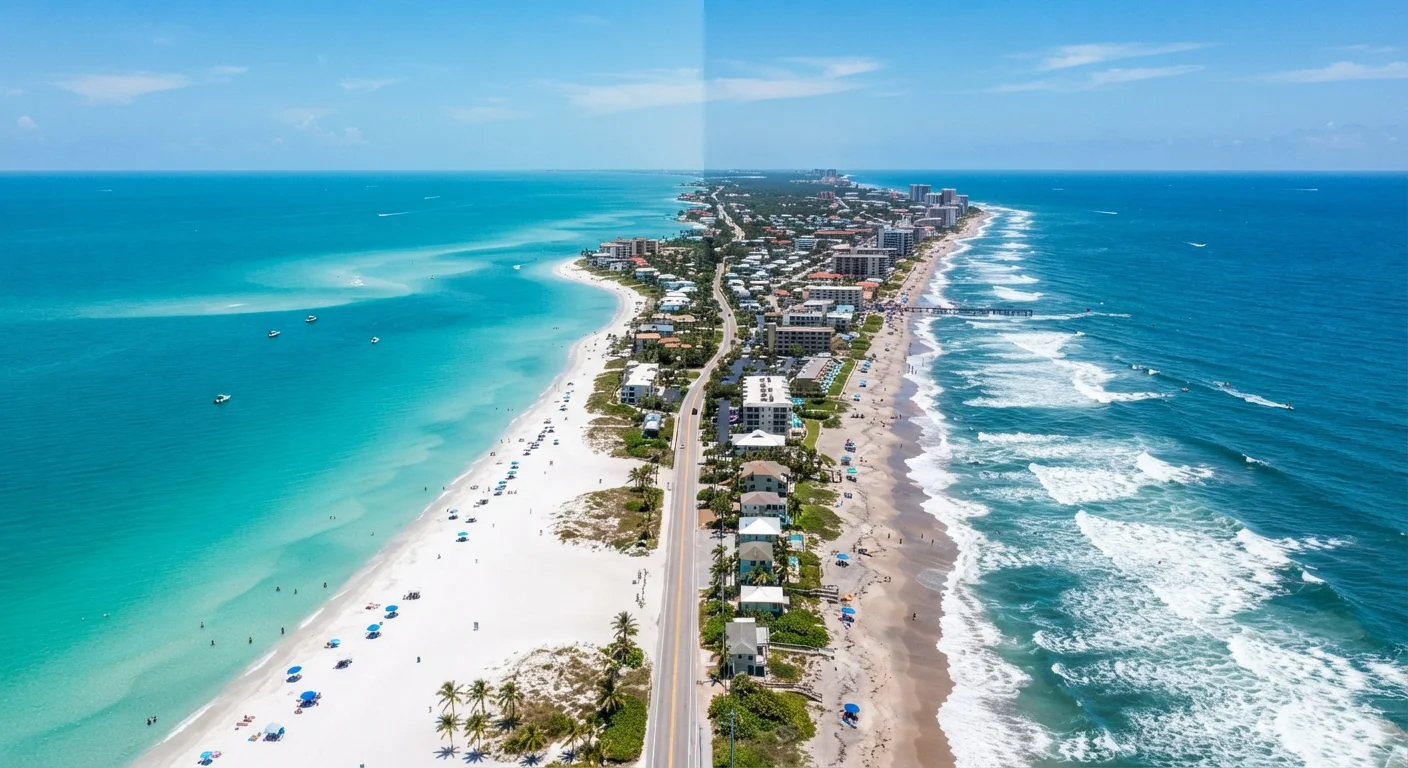
Neither coast is objectively superior - they serve different travel priorities. The Gulf Coast wins on water warmth, sand texture, and peaceful swimming conditions. The Atlantic Coast edges ahead for surf activity, geographic variety, and proximity to major cities along its long stretch of shoreline.
| Best for | Recommended |
|---|---|
| Families with young children seeking calm, warm water | Gulf Coast |
| Surfers and water sports enthusiasts | Atlantic Coast |
| Travelers wanting powdery white sand and laid-back vibes | Gulf Coast |
| Those wanting coastal access near major northeastern or southeastern cities | Atlantic Coast |
Water Temperature and Swimming Conditions
If stepping into the ocean without gasping is your priority, the Gulf Coast has a clear advantage. Gulf waters typically run 5 to 10 degrees warmer than Atlantic waters at comparable latitudes. In summer, Gulf water temperatures around Florida's Panhandle and Texas can reach the low-to-mid 80s °F - closer to a warm bath than a shock. Atlantic waters, even in popular summer destinations like the Outer Banks or Cape Cod, tend to sit in the upper 60s to mid-70s °F, with the northeast staying noticeably cooler.
Wave conditions follow a similar pattern. The Gulf of Mexico is essentially an enclosed body of water, which limits wave fetch and keeps surf gentle - great for wading and snorkeling. The Atlantic, open to the full force of ocean swells and seasonal storm systems, delivers more dynamic surf. That energy attracts bodyboarders and surfers to spots from Virginia Beach down through Cocoa Beach, Florida.
Plan Around Hurricane Season
Both coasts fall within the Atlantic hurricane season, which runs June through November. Gulf Coast destinations - particularly along the Texas and Louisiana shoreline - can experience significant storm activity in late summer and fall. Check NOAA's seasonal outlook and monitor the National Hurricane Center before booking during this window. Travel insurance that covers weather disruptions is worth considering for any coastal trip during these months.
Sand, Scenery, and the Beach Experience
The Gulf Coast's calling card is its sand. Beaches like Siesta Key in Florida and Gulf Shores in Alabama are consistently ranked among the softest in the country - fine quartz grains that stay cool underfoot even in peak summer heat and gleam a brilliant white. The shoreline is often flat and wide, with gentle surf creating a shallow wade zone that stretches far out.
Atlantic beaches offer considerably more variety. From the dark volcanic sands of northern New England to the wide golden strands of the Carolinas, the scenery shifts dramatically as you travel the coast. The Atlantic side also features more dramatic geological character - dunes, cliffs, inlets, and barrier islands create a patchwork of distinct environments that reward explorers willing to move beyond one spot.
| Gulf Coast | Atlantic Coast | |
|---|---|---|
| Average Summer Water Temp | Low-to-mid 80s °F | Upper 60s to mid-70s °F |
| Wave Intensity | Calm, gentle surf | Moderate to strong swells |
| Sand Quality | Fine, white quartz - very soft | Varies: tan, golden, or dark |
| Scenery Variety | Consistent, flat shoreline | Cliffs, dunes, inlets, barrier islands |
| Nearby Major Cities | New Orleans, Tampa, Corpus Christi | Boston, NYC, D.C., Charleston, Miami |
| Best For | Families, snorkeling, casual swimming | Surfing, exploration, city-beach combos |
Culture, Cities, and What's Nearby
The Atlantic Coast is flanked by some of the most densely populated metropolitan areas in the country. Coastal towns from Maine to Miami sit within a few hours of cities including Boston, New York, Washington D.C., and Charleston. That means beach trips can easily incorporate world-class museums, restaurants, and historic sites. The cultural density is hard to match.
Gulf Coast travel tends to center on a smaller cluster of standout destinations. New Orleans, Tampa, and Corpus Christi each offer distinct regional flavor - from Creole cuisine and jazz culture to Gulf fishing traditions. If you're drawn to comparing two culturally rich Southern cities, our look at New Orleans vs. Nashville explores how the Gulf South's most iconic city stacks up against its inland counterpart.
For travelers who love a great coastal road trip, the Gulf's Highway 98 offers a quieter, less-trafficked alternative to the more famous routes. Our guide comparing the Pacific Coast Highway and Blue Ridge Parkway is worth a read if scenic drives factor into your planning.
Seasonal Timing and Practical Considerations
Both coasts have peak and shoulder seasons worth understanding before booking. The Gulf Coast sees its busiest stretch from March through August, with spring break crowds concentrated in the Florida Panhandle. Hurricane season (June through November) affects both coastlines, though Gulf storms can be particularly intense in the western Gulf region around Texas and Louisiana.
The Atlantic Coast's sheer length means seasons vary widely by latitude. A late-September trip to the Outer Banks can feel like summer, while Cape Cod cools quickly after Labor Day. Northeast Atlantic beaches are best visited June through August, while the Southeast Atlantic - particularly coastal Georgia and South Florida - offers a longer warm-weather window.
~2,069 miles
Length of US Atlantic Coastline
The US Atlantic coast spans roughly 2,069 miles from Maine to Florida, according to NOAA estimates.
~1,631 miles
Length of US Gulf Coastline
NOAA estimates the US Gulf Coast at approximately 1,631 miles across five states: Florida, Alabama, Mississippi, Louisiana, and Texas.
Accessibility also differs. The Atlantic's I-95 corridor makes reaching many beaches straightforward from major metro areas. Gulf destinations, while no less rewarding, often require additional driving time from inland hubs or connecting flights into smaller regional airports.
The content on this site is for informational purposes only and is not a substitute for professional advice. Always consult a qualified professional for guidance specific to your situation.