

Our Verdict
For most US car buyers, the fixed-rate auto loan is the standard and the more predictable option. Variable-rate auto loans are rare in the consumer auto market and introduce payment uncertainty that fixed loans avoid. Understanding which structure you have - and why rates differ between borrowers - helps you ask sharper questions before signing.
| Best for | Recommended |
|---|---|
| Buyers who want consistent, predictable monthly payments | Fixed-rate auto loan |
| Borrowers in a declining rate environment seeking potential savings | Variable-rate auto loan (if offered and understood) |
| First-time buyers or those on a tight monthly budget | Fixed-rate auto loan |
How These Two Rate Structures Work
When you borrow money to buy a car, the lender charges interest on that loan - expressed as an annual percentage rate, or APR. The structure of that rate determines whether your payment stays constant or can shift over time.
Fixed-rate loans lock your interest rate at signing. The rate does not change regardless of what happens to broader market interest rates. Your monthly payment is calculated once and remains the same for every month of the loan term.
Variable-rate loans tie the interest rate to a benchmark index - historically LIBOR, and more recently the Secured Overnight Financing Rate (SOFR). The lender adds a margin on top of that index. If the benchmark rises, your rate and payment rise; if it falls, your payment may decrease.
For deeper context on how installment debt like auto loans differs structurally from revolving credit, see our explanation of revolving vs. installment loans.
| Fixed-Rate Auto Loan | Variable-Rate Auto Loan | |
|---|---|---|
| Rate stability | Rate locked at signing, never changes | Rate fluctuates with market benchmark |
| Monthly payment | Same amount every month | Can increase or decrease over time |
| Budgeting ease | Highly predictable | Requires planning for payment swings |
| Initial rate offered | Slightly higher than variable at outset | Often lower introductory rate |
| Market risk to borrower | None - lender absorbs rate risk | Borrower bears upside rate risk |
| Availability | Standard - offered by nearly all lenders | Uncommon in US auto lending |
| Best environment | Any rate environment; especially good when rates are low | Falling or stable rate environments |
Why Variable-Rate Auto Loans Are Rare
Unlike mortgages - where adjustable-rate products have long been a mainstream option (see fixed vs. adjustable-rate mortgages explained) - the consumer auto lending market is dominated by fixed-rate products. Several structural reasons explain this.
Auto loans are relatively short-term, typically 36 to 72 months. Over that shorter window, rate fluctuation risk is lower, making the complexity of a variable structure harder to justify. Lenders also find fixed-rate auto loans easier to securitize and sell to investors, which keeps them the industry norm.
Variable-rate auto loans do exist at some credit unions and smaller lenders, often promoted with a lower initial rate. However, that initial advantage can erode quickly if benchmark rates climb.
A Low Introductory Rate Can Be Misleading
Variable-rate auto loans sometimes advertise attractive starting rates that are below equivalent fixed-rate offers. However, if benchmark interest rates rise during your loan term, your monthly payment rises with them - potentially making the loan more expensive overall than the fixed alternative would have been. Evaluate the full term, not just the opening rate.
What a Fixed Rate Actually Means for Your Budget
A fixed rate converts your car loan into what financial planners call a fixed expense - the payment amount is set and does not vary month to month. This predictability matters for household budgeting. You can account for the payment accurately from day one through the final month.
If you want to understand how fixed expenses like loan payments fit into a broader spending plan, our guide to fixed vs. variable expenses explains how to categorize and manage each type.
For first-time borrowers, understanding how auto financing works before visiting a dealership is especially valuable - it covers APR, loan terms, and what to expect at signing.
Read Your Loan Contract Before Signing
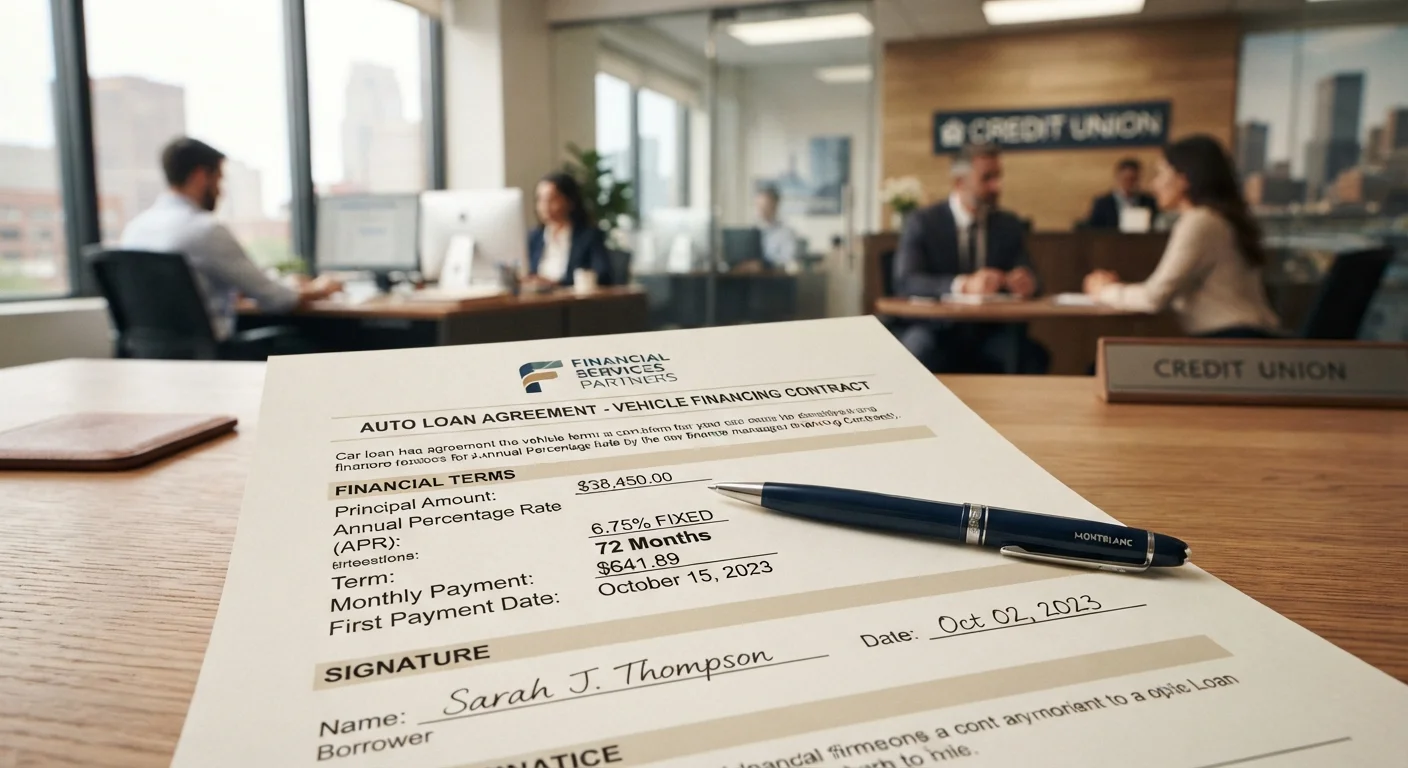
Your loan agreement must disclose the rate type, the exact APR, and the total finance charge. Look for language stating the rate is 'fixed' - if instead you see references to an index like SOFR or a rate adjustment schedule, you likely have a variable product. Never sign until you understand which structure applies to your loan.
How Your Rate Is Set - and Why It Varies Between Borrowers
Whether fixed or variable, the rate a lender quotes you is not random. Lenders assess your credit profile, income, the loan-to-value ratio of the vehicle, and the loan term. Borrowers with stronger credit histories typically qualify for lower rates; those with thinner or impaired credit histories often pay more.
Why your credit score affects your car loan rate explains this relationship in detail, including what lenders are actually evaluating when they pull your credit file.
Auto loans are also secured loans - the vehicle itself serves as collateral. This generally makes auto loan rates lower than unsecured borrowing. How collateral changes loan terms for borrowers covers that dynamic more fully.
This article is for general informational purposes only and does not constitute financial or legal advice. Consult a qualified financial professional before making borrowing decisions based on your individual circumstances.
The content on this site is for informational purposes only and is not a substitute for professional advice. Always consult a qualified professional for guidance specific to your situation.