

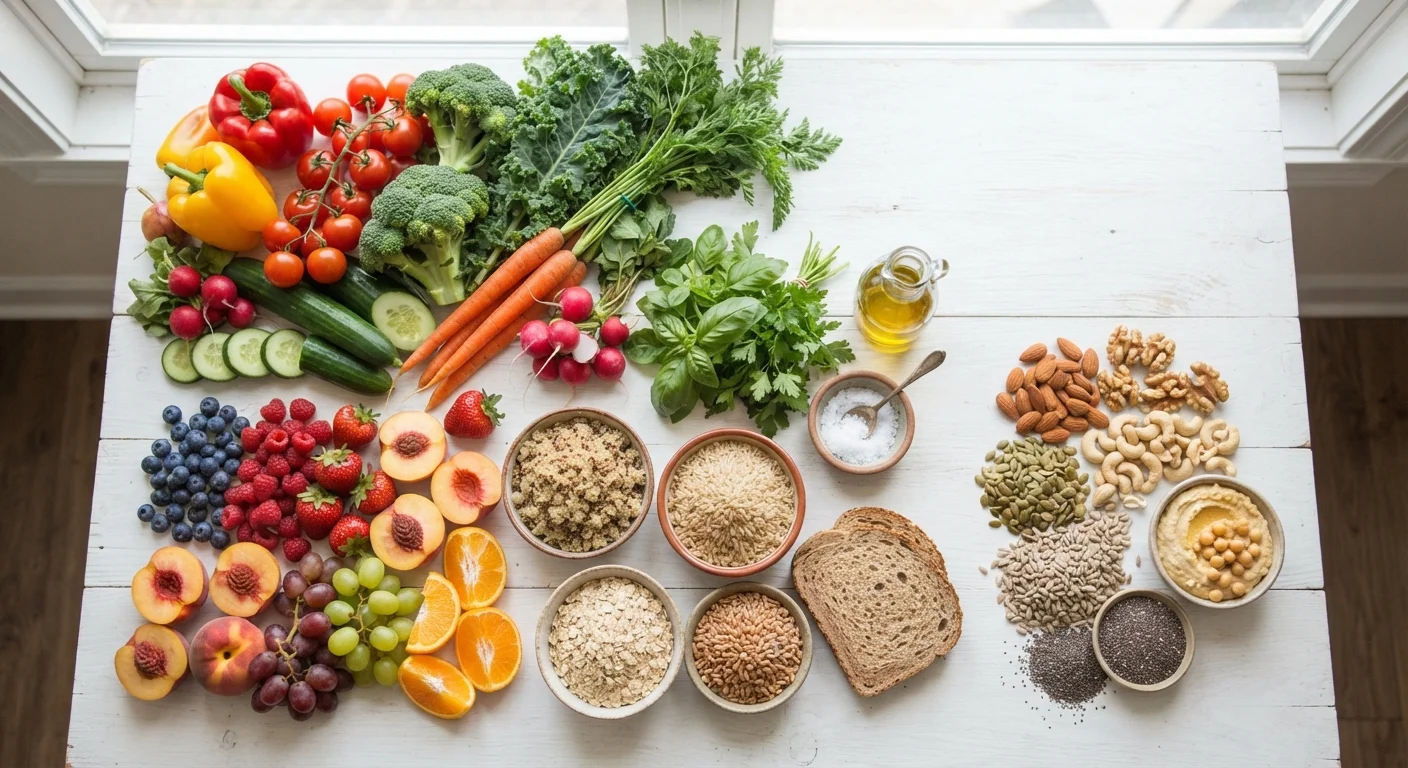
Why Vitamins and Minerals Matter
Vitamins and minerals are essential micronutrients - meaning your body needs them in relatively small amounts but cannot function properly without them. Unlike carbohydrates, proteins, and fats, micronutrients do not supply calories directly; instead, they serve as the structural and regulatory building blocks behind almost every biological process, from energy metabolism to immune defense to bone formation.
Most Americans can meet their needs through a varied, balanced diet. Understanding what each nutrient does and where to find it is a practical first step. For deeper guidance on structuring your daily meals, see Building a Balanced Plate for an evidence-informed overview.
| Total essential vitamins | 13 (4 fat-soluble, 9 water-soluble) (National Institutes of Health, Office of Dietary Supplements) |
| Essential minerals recognized | ~16, including 7 major and ~9 trace minerals (National Institutes of Health) |
| Most common deficiency in the US | Vitamin D, followed by iron (especially in women of childbearing age) (CDC Second National Report on Biochemical Indicators of Diet and Nutrition) |
| Best general source of micronutrients | A varied whole-food diet, per major dietary guidelines (Dietary Guidelines for Americans 2020-2025) |
| Fat-soluble vitamin risk | Excess can accumulate to toxic levels - especially vitamins A and D (NIH Office of Dietary Supplements) |
| Plant-based iron absorption | Non-heme iron (from plants) absorbs less efficiently than heme iron (from meat); pairing with vitamin C improves uptake (Academy of Nutrition and Dietetics) |
This article is general health education, not medical advice. Talk with a qualified healthcare provider before starting any supplement or making significant dietary changes.
The Main Vitamins at a Glance
Vitamins divide into two broad groups based on how the body handles them:
- Fat-soluble vitamins (A, D, E, K) are stored in body fat and the liver. Because they accumulate, excessive supplementation can be harmful.
- Water-soluble vitamins (C and all eight B vitamins) are not stored in significant amounts and are excreted in urine, so regular dietary intake matters more - but very high supplement doses can still cause problems.
Micronutrient
Vitamins and minerals needed by the body in small amounts to support normal function. They do not provide calories but are essential for health.
Fat-soluble vitamin
Vitamins A, D, E, and K, which dissolve in fat and are stored in body tissues. Because they accumulate, both deficiency and excess supplementation can be problematic.
Water-soluble vitamin
Vitamins C and the B-complex group, which dissolve in water and are not stored in large amounts. Regular dietary intake is important to maintain adequate levels.
Trace mineral
A mineral required in very small quantities (micrograms to a few milligrams daily). Examples include iron, zinc, iodine, and selenium.
Dietary Reference Intake (DRI)
A set of nutrient reference values established by the National Academies of Sciences, Engineering, and Medicine to guide adequate dietary intake for different population groups in the US and Canada.
Non-heme iron
The form of iron found in plant foods and fortified products. It is absorbed less efficiently by the body than heme iron from meat, but absorption improves when eaten with vitamin C.
Key food sources for common vitamins include:
| Vitamin | Primary Role | Common Food Sources |
|---|---|---|
| A | Vision, immune function, cell growth | Liver, dairy, eggs; beta-carotene in carrots, sweet potato, spinach |
| C | Antioxidant, collagen synthesis, immune support | Citrus, bell peppers, strawberries, broccoli |
| D | Calcium absorption, bone health, immune regulation | Fatty fish, fortified milk/OJ, egg yolks; also synthesized from sunlight |
| E | Antioxidant, immune function | Nuts, seeds, vegetable oils, leafy greens |
| K | Blood clotting, bone metabolism | Leafy greens (kale, spinach), broccoli, fermented foods |
| B12 | Nerve function, red blood cell production, DNA synthesis | Meat, fish, dairy, eggs; fortified plant-based foods |
| Folate (B9) | DNA synthesis, cell division; critical in pregnancy | Legumes, leafy greens, fortified grains, citrus |
When shopping, reading the Nutrition Facts label can help you spot how much of these nutrients packaged foods provide per serving.
Essential Minerals You Should Know
Minerals are inorganic elements absorbed primarily from food and water. Like vitamins, both deficiency and excess can affect health. The major minerals (needed in larger amounts) include calcium, phosphorus, magnesium, sodium, potassium, chloride, and sulfur. Trace minerals - iron, zinc, selenium, iodine, copper, manganese, and fluoride - are required only in tiny quantities but are no less important.
~35%
US adults with vitamin D insufficiency
Estimates from the CDC and NIH suggest roughly one-third of American adults have blood levels below optimal thresholds for vitamin D.
~10 million
Americans with iron-deficiency anemia
According to CDC data, iron deficiency remains the most common nutritional deficiency worldwide and a leading cause of anemia in the US.
45%
Americans not meeting magnesium needs
Analysis of national dietary surveys suggests nearly half of US adults consume less magnesium than the Estimated Average Requirement.
| Mineral | Primary Role | Common Food Sources |
|---|---|---|
| Calcium | Bone and tooth structure, muscle contraction, nerve signaling | Dairy, fortified plant milks, leafy greens, tofu |
| Iron | Oxygen transport in red blood cells; energy metabolism | Red meat, beans, lentils, fortified cereals, tofu |
| Magnesium | Muscle and nerve function, blood sugar regulation, protein synthesis | Nuts, seeds, whole grains, legumes, dark chocolate |
| Potassium | Fluid balance, muscle contractions, heart rhythm | Bananas, potatoes, beans, yogurt, leafy greens |
| Zinc | Immune function, wound healing, taste and smell | Oysters, red meat, poultry, beans, nuts |
| Iodine | Thyroid hormone production; metabolism regulation | Iodized salt, seafood, dairy, eggs |
| Selenium | Antioxidant defense; thyroid function | Brazil nuts, seafood, meat, whole grains |
If budget is a concern, many mineral-rich foods are also affordable staples. Eating well on a budget offers practical strategies for getting strong nutritional value from everyday grocery dollars.
The content on this site is for informational purposes only and is not a substitute for professional advice. Always consult a qualified professional for guidance specific to your situation.