

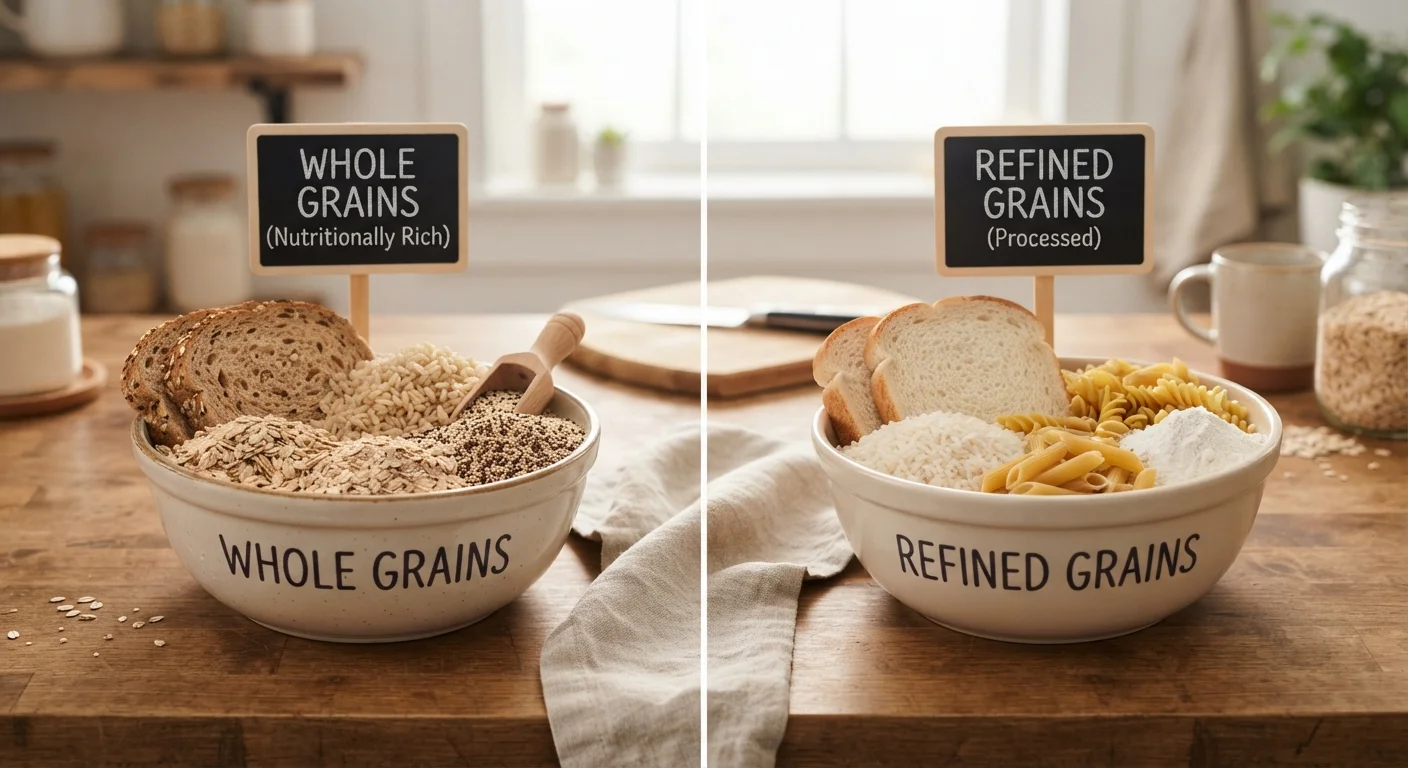
Option A
Whole Grains
The complete, minimally processed choice.
Best for: People seeking sustained energy, improved digestive health, and a fuller nutritional profile from their grain-based foods.
Option B
Refined Grains
The widely available, texture-preferred option.
Best for: Situations where shelf life, texture, or palatability is prioritized, though with notable trade-offs in nutrient density.
What Makes a Grain 'Whole' or 'Refined'?
Every grain kernel is composed of three layers: the bran (the fibrous outer layer), the germ (the nutrient-rich inner seed), and the endosperm (the starchy core). A grain qualifies as whole when all three layers are kept intact after processing - examples include oats, brown rice, whole wheat, bulgur, and quinoa.
Refined grains are milled in a way that removes the bran and germ, leaving only the starchy endosperm. This extends shelf life and creates a finer texture, but it also strips away much of the grain's nutritional value - including fiber, iron, magnesium, and most B vitamins. White flour, white rice, and products made from them fall into this category.
To partially compensate, many refined grains sold in the U.S. are enriched - meaning some B vitamins (thiamin, riboflavin, niacin, and folic acid) and iron are added back. However, fiber is generally not restored, and the full spectrum of naturally occurring plant compounds - including phytochemicals and antioxidants - is not replicated by enrichment alone.
Nutritional Differences Side by Side
The nutritional gap between whole and refined grains becomes clear when you compare like-for-like servings.
| Criterion | Whole Grains | Refined Grains |
|---|---|---|
| Parts of kernel retained | Bran, germ, and endosperm | Endosperm only |
| Dietary fiber (per serving) | Higher - naturally intact | Lower - bran removed |
| B vitamins | Naturally present | Partially added back (enriched) |
| Minerals (iron, magnesium) | Naturally higher | Largely removed; iron may be added |
| Phytochemicals & antioxidants | Present in bran and germ | Significantly reduced |
| Glycemic response | Generally lower (fiber slows absorption) | Generally higher |
| Shelf life and texture | Shorter shelf life; denser texture | Longer shelf life; finer texture |
Keep in mind that specific values vary by product and brand. Labels can also be misleading - terms like "multigrain" or "wheat bread" do not automatically mean the product is made with whole grains. Looking for "whole grain" or "whole wheat" as the first ingredient on the label is a more reliable indicator, as covered in depth in our guide to decoding nutrition labels.
What the Research Suggests About Health Outcomes
A substantial body of evidence links regular whole grain consumption to meaningful health benefits. According to the American Heart Association, diets rich in whole grains are associated with reduced risk of cardiovascular disease. Research published in major nutrition journals also links higher whole grain intake with lower rates of type 2 diabetes and improved glycemic control in people already living with the condition.
~30%
Lower cardiovascular disease risk
Reviews of large cohort studies suggest diets high in whole grains are associated with roughly 20-30% lower risk of heart disease compared to low whole grain intake.
3 servings/day
Whole grains linked to diabetes risk reduction
Observational research suggests consuming about three servings of whole grains daily is associated with a meaningfully reduced risk of developing type 2 diabetes.
~5%
Americans meeting whole grain recommendations
Estimates from national dietary surveys suggest only a small minority of U.S. adults consistently meet the recommendation to make half their grains whole grains.
The fiber in whole grains feeds beneficial gut bacteria, supports regular digestion, and contributes to satiety - the feeling of fullness - which may help with weight management over time. These effects are not a guarantee of any specific outcome, and individual responses to dietary changes vary. Anyone managing a chronic health condition should discuss dietary adjustments with their healthcare provider or a registered dietitian.
Refined grains are not inherently harmful when consumed as part of a varied, balanced diet. The concern arises when they displace whole grain options at most meals, limiting fiber and micronutrient intake. Eliminating entire food groups carries its own risks - balance and variety remain central to sound nutritional guidance.
Practical Steps for Shifting Toward Whole Grains
Transitioning doesn't require an overnight overhaul. Small, consistent swaps tend to be more sustainable:
- Choose brown rice or whole grain pasta instead of white versions.
- Look for bread where "whole wheat" or another whole grain is the first listed ingredient.
- Try oatmeal or whole grain cereals at breakfast instead of refined flour-based options.
- Experiment with grains like farro, barley, or millet as nutritious side dishes.
Reading the Label More Carefully
"Multigrain," "stone-ground," and "made with whole grain" are common phrases that don't guarantee a product is predominantly whole grain. The ingredient list is more informative than front-of-package claims. If a whole grain flour or grain isn't listed first, refined flour likely makes up the majority of the product.
The Dietary Guidelines for Americans recommend that at least half of daily grain servings come from whole grains - a practical benchmark that doesn't require eliminating refined grains entirely. Building awareness of what you're eating, and gradually shifting proportions, is a realistic and effective strategy for most people.
This article is for general informational and educational purposes only and is not a substitute for professional medical or dietary advice. Consult a qualified healthcare provider or registered dietitian before making significant changes to your diet, particularly if you have an existing health condition.
The content on this site is for informational purposes only and is not a substitute for professional advice. Always consult a qualified professional for guidance specific to your situation.