

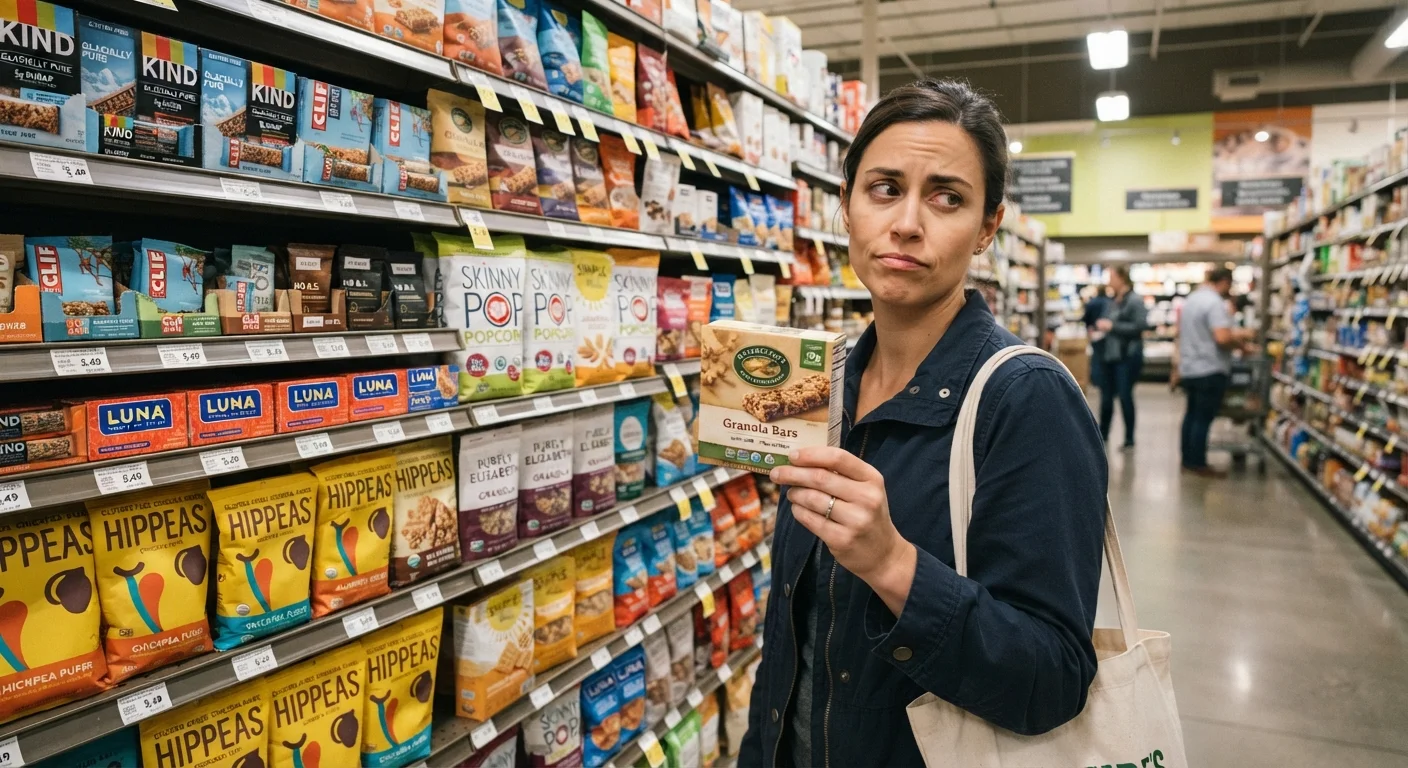
Why Front-of-Package Claims Are Designed to Persuade
Walk down any snack aisle and you'll encounter a wall of persuasive language: natural, wholesome, clean, guilt-free. These phrases feel meaningful, but most exist in a regulatory gray zone. The U.S. Food and Drug Administration (FDA) defines only a handful of front-of-package terms with strict nutrient criteria. Words like "natural" have historically had no binding legal definition for most packaged foods, meaning manufacturers can apply them broadly.
This matters because shoppers reasonably trust that labels reflect objective nutritional quality. Research published in nutrition and marketing journals consistently finds that health claims on packaging increase perceived healthfulness - sometimes to the point that people consume larger portions of those products. Understanding the gap between marketing language and actual nutrition is a foundational consumer skill.
For a deeper look at widespread food misconceptions, see our roundup of nutrition myths dietitians hear most.
Common Mistakes Shoppers Make When Reading Snack Packaging
The following mistakes show up repeatedly - not because shoppers are careless, but because packaging is engineered to guide attention away from the Nutrition Facts panel and toward favorable front-of-pack messaging.
Treating 'multigrain' or 'made with whole grains' as equivalent to '100% whole grain.'
Why it happens: The word 'grain' sounds inherently wholesome, and multi- implies variety. Shoppers reasonably assume more grains means more fiber and nutrients.
Assuming 'natural' or 'clean' signals strict nutritional standards.
Why it happens: These terms carry connotations of purity and minimal processing, which most consumers associate with better health outcomes.
Ignoring the serving size and evaluating nutrient numbers at face value.
Why it happens: The per-serving numbers on a label look reasonable in isolation, and packages are rarely designed to make serving sizes obvious.
Equating a long list of vitamins and minerals on the label with overall nutritional quality.
Why it happens: Many snack foods are fortified - vitamins and minerals are added back after processing. The vitamin panel can look impressive even when the base food is highly processed.
Overlooking sodium content in snacks marketed around other health claims.
Why it happens: Shoppers focused on calories, fat, or sugar often skip past sodium - especially in snacks not obviously salty in flavor, such as protein bars or baked chips.
"Low-Fat" Often Means More Sugar
When fat is removed from a processed snack, manufacturers frequently add sugar, salt, or other ingredients to restore palatability. A low-fat flavored yogurt or granola bar can contain more added sugar per serving than its full-fat counterpart. Removing fat does not automatically make a product healthier - look at the full nutritional profile, not just the fat line.
Once you recognize these patterns, you can use the Nutrition Facts label as your primary decision tool. Our practical guide to reading a Nutrition Facts label walks through every section in plain language.
What to Actually Look for Before the Snack Goes in Your Cart
~70%
Americans check nutrition labels at least sometimes
FDA consumer research has found that a majority of U.S. shoppers report using the Nutrition Facts panel, though front-of-package claims significantly influence initial product selection.
57%
Of U.S. calories come from ultra-processed foods
A study published in BMJ Open estimated that ultra-processed foods account for more than half of total calorie intake among U.S. adults - many of which carry front-of-package health claims.
Shifting your attention from the front of the package to the back takes practice but pays dividends. Start with the serving size - it governs every number on the label. A bag of trail mix labeled "only 130 calories" may contain three servings, putting a realistic portion closer to 390 calories.
Next, scan the ingredient list. Ingredients appear in descending order by weight, so the first three or four ingredients define the character of the food. If a multigrain cracker lists enriched white flour before any whole grain, refined starch is the dominant ingredient regardless of the word "multigrain" on the front. For a full side-by-side on this distinction, see whole grains vs. refined grains.
Also check added sugars, which the current Nutrition Facts panel now lists separately from total sugars - a significant transparency improvement. Added sugars appear under dozens of names in ingredient lists; our guide on added sugars explains how to spot them. Finally, use our nutrition label shopping checklist to keep the most important data points top of mind on your next grocery run.
This article is for general informational and educational purposes only and is not a substitute for professional medical or dietary advice. Consult a registered dietitian or qualified healthcare provider for guidance tailored to your individual health needs.
The content on this site is for informational purposes only and is not a substitute for professional advice. Always consult a qualified professional for guidance specific to your situation.