

What Makes a Sugar "Added"?
When you eat an apple, the fructose you consume comes bundled with fiber, water, and micronutrients. Your body processes it differently than an equivalent amount of high-fructose corn syrup stirred into a fruit drink. That distinction - between sugar that is native to a food and sugar that is introduced - is what the term "added sugars" captures.
Food manufacturers add sugars for many reasons: sweetness, texture, preservation, fermentation, and even to balance acidity. None of those reasons are inherently sinister, but the cumulative effect across a day's worth of processed foods can be substantial without most people realizing it.
Understanding how added sugars work on a label is a practical skill. Our guide to reading a Nutrition Facts label walks through every section you'll encounter on a standard US food package.
17 tsp
Average daily added sugar intake for US adults
According to estimates from the CDC, US adults consume an average of about 17 teaspoons of added sugar per day, well above the recommended limit.
< 10%
Recommended daily calorie limit from added sugars
The Dietary Guidelines for Americans recommend that added sugars make up less than 10% of total daily calorie intake for adults and children over age 2.
60+
Names used for added sugars on ingredient lists
The FDA recognizes more than 60 terms that qualify as added sugars, making label literacy an important consumer skill.
The Many Names for Added Sugar
One reason added sugars can be so easy to miss is the sheer variety of names they travel under. The FDA has identified more than 60 terms that qualify as added sugars on ingredient lists. Common categories include:
- -ose sugars: sucrose, dextrose, fructose, maltose, galactose
- Syrups: high-fructose corn syrup, malt syrup, rice syrup, agave nectar
- "Natural" sweeteners: honey, molasses, maple syrup, coconut sugar, date sugar
- Concentrated juices: evaporated cane juice, fruit juice concentrate
Ingredient lists are ordered by weight, so if any form of sugar appears in the first three or four ingredients, it's a significant contributor. A product can also split sugar across several of these names - spreading them out so no single one ranks high on the list, even though their combined contribution is meaningful. This practice, sometimes called sugar splitting, is worth being aware of.
Use the % Daily Value as a Quick Filter
The Nutrition Facts label on US packaged foods now includes a dedicated "Includes X g Added Sugars" line with a % Daily Value (%DV). A %DV of 5% or less per serving is generally considered low; 20% or more is considered high. This single number can help you quickly compare products without memorizing grams.
Surprising Sources in Everyday Foods
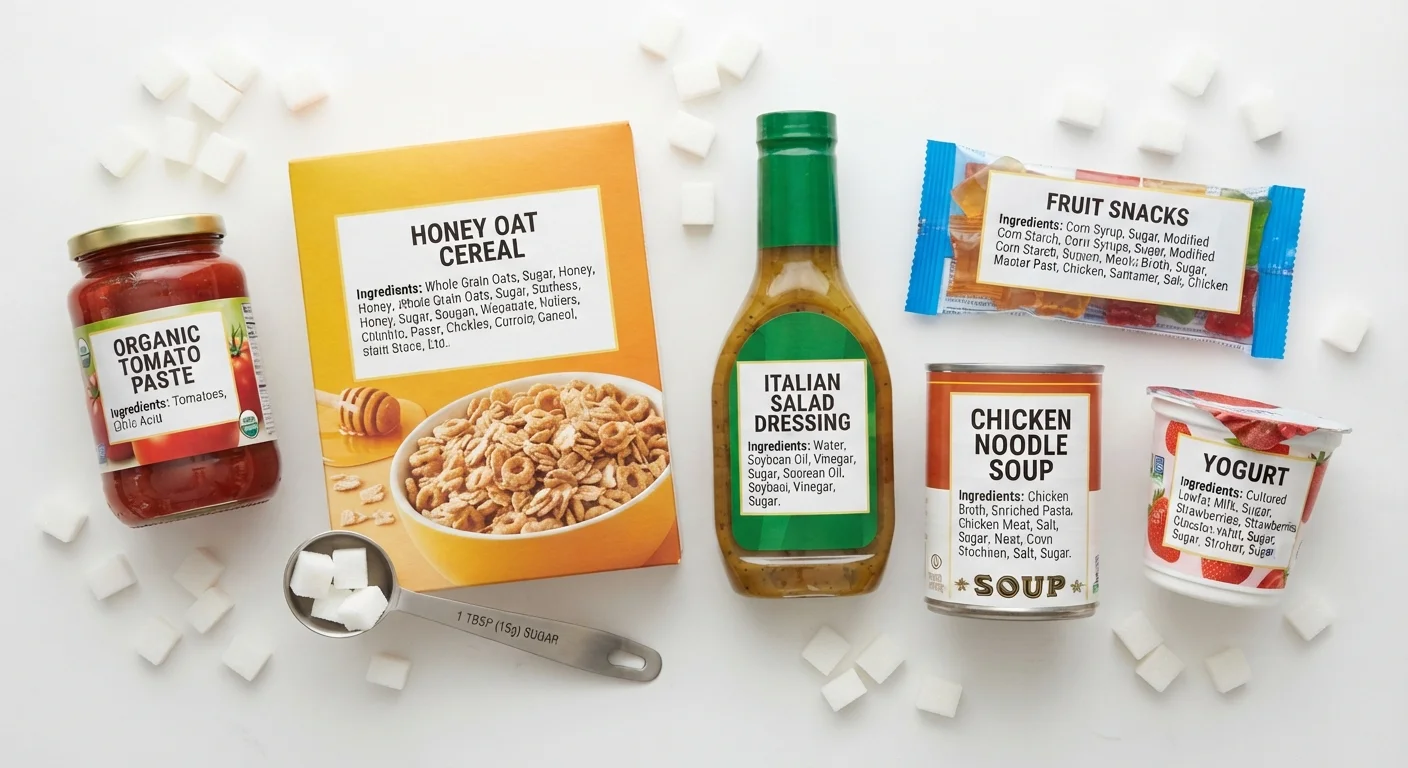
Candy and soda are the obvious examples, but many foods marketed as wholesome carry notable amounts of added sugar. Common surprises include:
- Flavored yogurt - a single-serve container can contain as much added sugar as several cookies
- Granola and granola bars - oats and nuts don't explain all the sweetness
- Pasta sauce - sugar is often added to balance the acidity of tomatoes
- Salad dressings - especially low-fat versions, where sugar compensates for removed fat
- Bread and crackers - even savory varieties frequently contain added sugar
- Sports drinks and flavored waters - often assumed to be hydration tools, not sweet beverages
This is why front-of-package claims like "multigrain," "natural," or "made with real fruit" deserve scrutiny. Our article on packaging claims vs. actual nutrition explores how these terms can create a health halo that doesn't always match what's inside.
Why It Matters for Your Health
Major health organizations - including the American Heart Association and the World Health Organization - have identified consistently high added sugar intake as a concern linked to weight gain, dental cavities, and elevated risk markers for certain chronic conditions. It's important to note that the science continues to evolve, and individual responses to dietary sugar vary. No single food or ingredient causes disease on its own.
What's more actionable is the opportunity cost argument: foods high in added sugars often displace more nutrient-dense choices. A diet heavy in sweetened foods tends to be lower in fiber, vitamins, and minerals that support overall wellbeing. For a parallel example of how one nutrient's absence shapes health outcomes, see our overview of why most Americans don't get enough fiber.
Added sugar literacy is also part of a broader skill set for reading food labels accurately - one that extends to nutrients like sodium as well. Awareness doesn't require perfection; it means making more informed choices more of the time.
This article is for general informational and educational purposes only and does not constitute medical or dietary advice. Consult a qualified healthcare professional or registered dietitian for guidance tailored to your individual health needs.
Frequently Asked Questions
Natural sugars occur inherently in whole foods - for example, fructose in fruit or lactose in milk - and come packaged with nutrients like fiber, vitamins, and minerals. Added sugars are introduced during processing and provide sweetness and calories without those nutritional benefits.
The Dietary Guidelines for Americans advise limiting added sugars to less than 10% of total daily calorie intake. The American Heart Association generally recommends even lower limits. Individual needs vary, so speaking with a registered dietitian or healthcare provider is the best approach for personalized guidance.
Not necessarily. "No added sugar" means no sugars were introduced during processing, but the food may still contain naturally occurring sugars from its ingredients. Checking the full Nutrition Facts label gives you a more complete picture.
Look for any word ending in "-ose" (like sucrose, dextrose, or fructose), along with syrups, nectars, concentrated juice, molasses, and honey. Ingredients are listed by weight, so the earlier sugar appears, the more of it the product contains.
While sources like honey or maple syrup do contain small amounts of antioxidants or minerals, the quantities in typical servings are nutritionally modest. Major health organizations generally treat all added sugars similarly when it comes to their caloric contribution and health considerations.
According to data from the National Cancer Institute, the leading sources for US adults include sweetened beverages, desserts and sweet snacks, coffee and tea (with added sweeteners), candy, and breakfast cereals - not just the obvious treats.
The content on this site is for informational purposes only and is not a substitute for professional advice. Always consult a qualified professional for guidance specific to your situation.