

Why Soil Quality Determines Garden Success
Most gardening problems - stunted growth, yellowing leaves, poor yields - trace back to the soil rather than the plants themselves. Soil is a living system made up of minerals, organic matter, air, water, and billions of microorganisms. When those elements are out of balance, plants struggle no matter how much water or fertilizer you apply.
The good news: soil can be improved deliberately over time. Whether you're working with dense clay, sandy ground that drains too fast, or compacted subsoil from construction, the right amendments make a measurable difference. If you're just getting started, our beginner's garden primer covers the full landscape of first-season soil prep alongside plant selection and planning.
95%
Share of food produced in soil
The Food and Agriculture Organization of the United Nations estimates that about 95% of the world's food is produced directly or indirectly in soil.
1 inch
Natural topsoil formation per 500 years
The USDA Natural Resources Conservation Service notes that natural processes form approximately one inch of topsoil over several centuries, underscoring why soil preservation matters.
Test Before You Amend
Amending soil without testing first is like adjusting a recipe without tasting it. Soil tests - available through university extension programs and many garden centers - reveal your soil's pH, nutrient levels, and sometimes texture. Armed with that data, you can make targeted corrections rather than guessing.
A basic test measures pH (the acidity-to-alkalinity scale), phosphorus, potassium, and sometimes nitrogen. Most vegetables and ornamentals prefer a pH between 6.0 and 7.0. Outside that range, nutrients can become chemically locked up and unavailable to roots even when they're present in the soil.
Soil Test Timing Matters
For the most accurate results, test soil when it is moderately moist - not waterlogged or bone dry - and avoid testing immediately after fertilizing. Fall testing is particularly useful because it gives you the entire winter to source and apply amendments before spring planting. Most extension recommendations suggest retesting every two to three years to track changes over time.
Extension offices affiliated with land-grant universities often offer low-cost soil testing and region-specific amendment recommendations - a resource many home gardeners overlook.
Core Amendment Practices That Consistently Deliver Results
The following practices address the most common soil challenges in home gardens. They build on each other - organic matter improves drainage and nutrient retention, for example - so applying several together compounds the benefit.
Add organic matter every season, not just once.
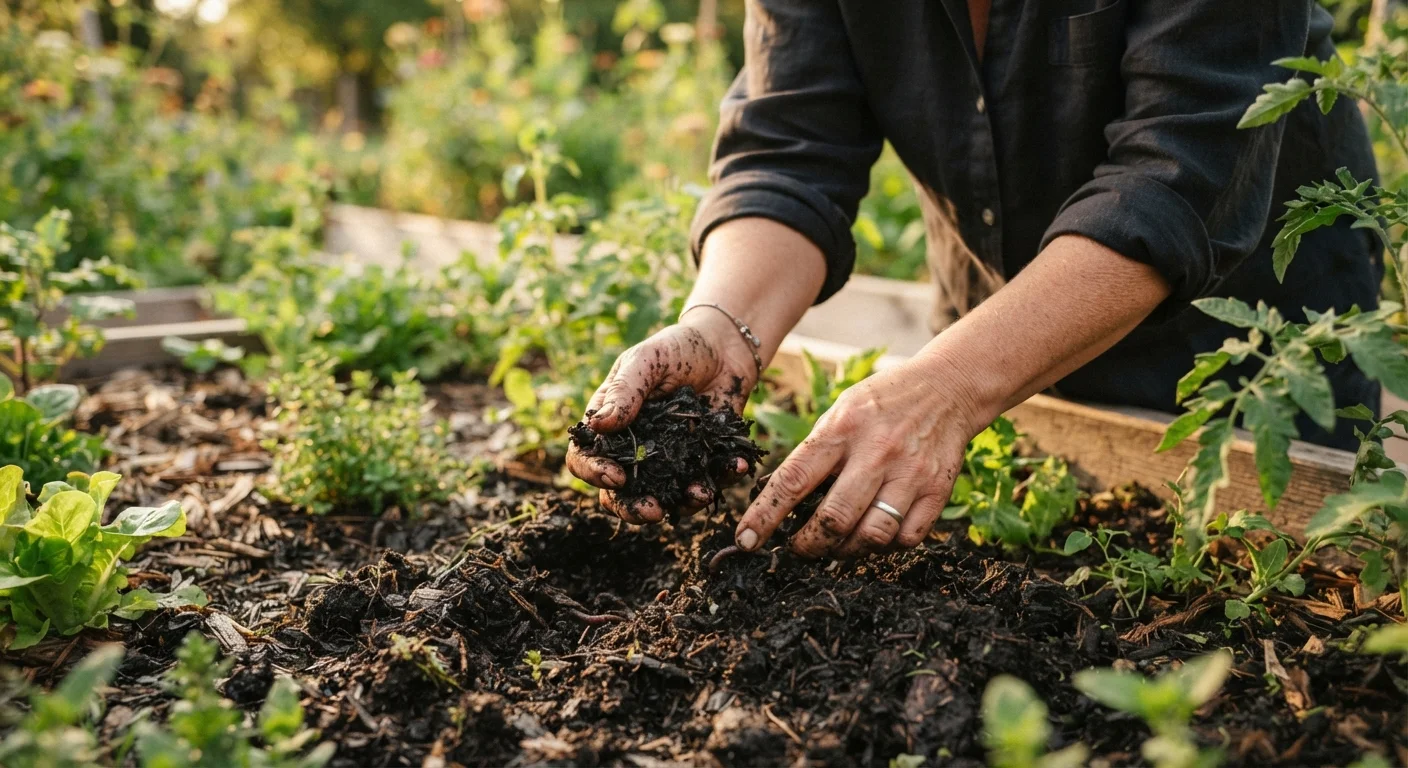
Organic matter - compost, aged manure, leaf mold - improves soil structure, water retention, and microbial activity simultaneously. Because it breaks down continuously, a single addition is quickly consumed; consistent annual topdressing is what builds lasting tilth.
Adjust pH based on your specific soil test results.
pH controls whether nutrients already present in your soil are chemically accessible to plant roots. Adding lime raises pH in overly acidic soils; sulfur lowers it in alkaline conditions. Without this step, other amendments may have limited effect.
Break up compaction before planting each new season.
Compacted soil restricts root growth, reduces oxygen availability, and limits drainage. Even loose topsoil can develop a compaction layer just below spade depth. Addressing it mechanically - with a broadfork or tillage - opens pathways for roots and water movement.
Address drainage problems at the root cause, not just the surface.
Soggy soil deprives roots of oxygen and promotes root rot. Adding sand to clay is a common misconception - in the wrong ratios it creates a concrete-like mixture. Instead, improving drainage means adding organic matter, breaking hardpan, or regrading for persistent pooling.
Use cover crops to improve soil during the off-season.
Cover crops like winter rye, crimson clover, or buckwheat protect bare soil from erosion, suppress weeds, and add organic matter when turned under in spring. Legume varieties also fix atmospheric nitrogen into forms plants can use.
For a deeper look at how fertilizers interact with amended soil, see our comparison of organic vs. synthetic fertilizers.
Getting Started: Quick Wins for This Season
You don't need to overhaul everything at once. Even one or two targeted actions this season can noticeably improve how your garden performs. Start where the need is greatest - usually compaction or low organic matter - and build from there each year.
Turning kitchen scraps into compost is one of the most cost-effective ways to build organic matter consistently. Our guide on composting at home walks through exactly how to set up and maintain a productive pile. For spring planning that incorporates soil prep alongside other outdoor tasks, check our spring garden prep checklist.
“The nation that destroys its soil destroys itself. The health of soil, plant, animal, and human is one and indivisible.”
— Franklin D. Roosevelt, 32nd President of the United States, in a letter to US state governors on uniform soil conservation
The content on this site is for informational purposes only and is not a substitute for professional advice. Always consult a qualified professional for guidance specific to your situation.