

Our Verdict
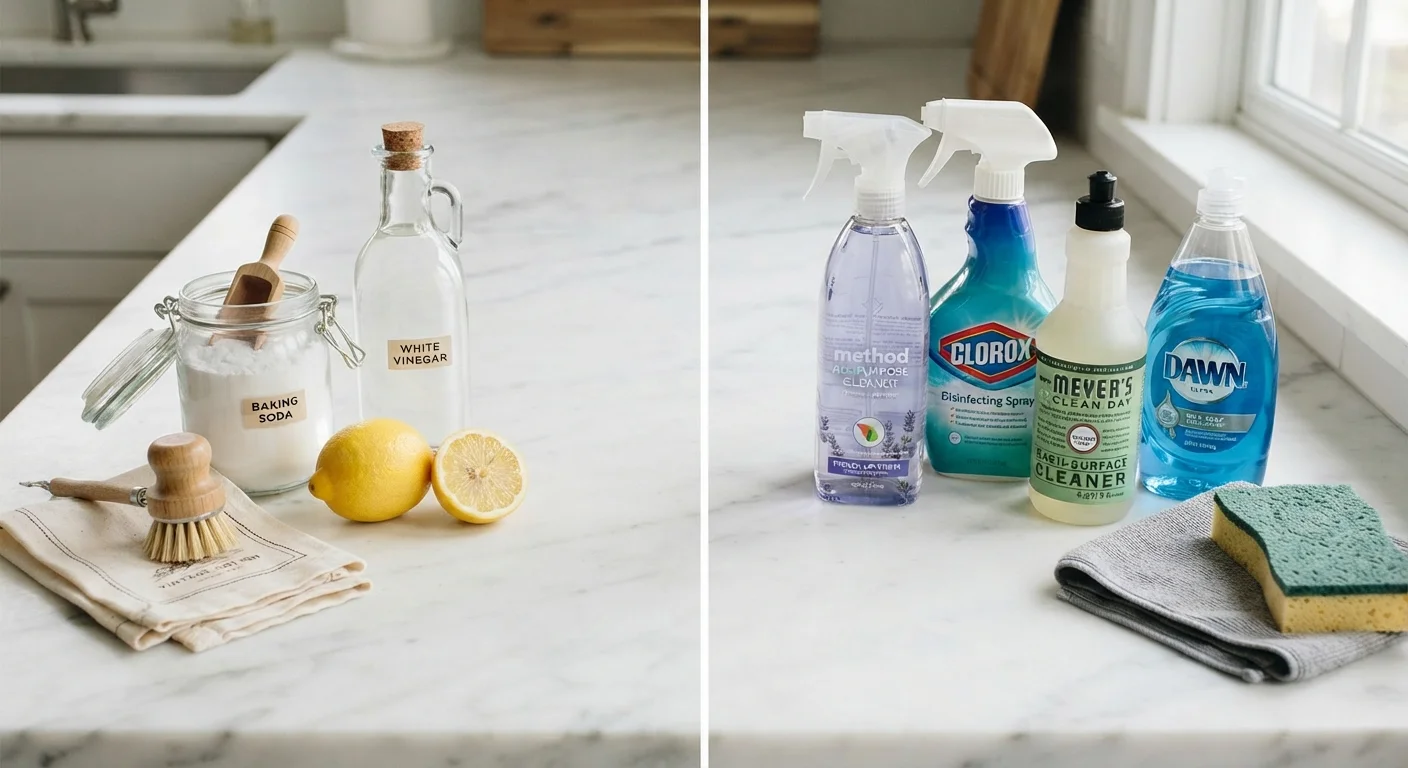
Natural cleaning agents are genuinely useful for everyday upkeep, deodorizing, and light soil - and they're often gentler on surfaces and indoor air quality. Commercial cleaners earn their place for disinfection, heavy grease, mold, and any task that requires EPA-registered efficacy. For most households, the practical answer isn't choosing one over the other - it's knowing which to reach for depending on the job.
| Best for | Recommended |
|---|---|
| Routine maintenance and light surface cleaning | Natural cleaning agents |
| Disinfecting high-touch surfaces and fighting serious grime | Commercial cleaners |
| Households with sensitivities to synthetic fragrances or harsh chemicals | Natural cleaning agents |
| Pet owners dealing with odors, stains, and tracked-in dirt | Commercial cleaners formulated for the task |
What Natural Cleaning Agents Actually Do
Baking soda, white vinegar, castile soap, and lemon juice have earned loyal followings - and for good reason. They're inexpensive, widely available, and genuinely effective for a range of everyday cleaning tasks.
White vinegar is a mild acid (acetic acid, typically around 5% concentration) that cuts through mineral deposits, light soap scum, and grease residue on non-porous surfaces. It's particularly useful for descaling coffee makers and cleaning glass. Baking soda is a mild abrasive and deodorizer - ideal for scrubbing sinks without scratching, freshening carpets, and neutralizing acidic odors. Castile or dish soap is a genuine surfactant that lifts and suspends oils and dirt, making it effective for general wiping and mopping.
What these agents share is a track record for light to moderate soil. They don't contain biocides or registered disinfectants, which means they clean surfaces but don't reliably kill pathogens like Salmonella or Staphylococcus at the concentrations typically used at home.
Use Vinegar Carefully on Porous Surfaces
Vinegar's acidity makes it effective on glass and sealed tile, but it can etch natural stone surfaces like marble and granite over time. Avoid using it on grout regularly, as the acid can gradually degrade the material. When in doubt, plain dish soap and warm water is a safer default for delicate surfaces.
Where Commercial Cleaners Have the Edge
Commercial cleaning products are purpose-built formulas. A bathroom disinfectant spray, for example, is tested and registered with the EPA to reduce specific microorganisms by defined percentages under specific conditions. That level of efficacy simply can't be replicated by pantry staples.
Commercial degreasers contain alkaline compounds or surfactant blends that break down baked-on grease far more aggressively than dish soap. Mold and mildew removers typically use bleach or hydrogen peroxide at concentrations calibrated for that task. Enzyme-based cleaners - common in pet-stain products - use biological agents to digest organic matter, which is why they outperform vinegar on urine odors. For more on that challenge, see keeping a home clean with pets.
The trade-off is that many commercial products contain synthetic fragrances, surfactants, or preservatives that can irritate airways or skin in sensitive individuals. Proper ventilation and following label directions matter significantly.
| Natural Agents | Commercial Cleaners | |
|---|---|---|
| Disinfection | Not reliable; no registered biocides | EPA-registered options available |
| Grease removal | Mild; works on light grease | Strong; handles baked-on grease |
| Surface safety | Generally gentle; vinegar can etch stone | Varies; some formulas can damage finishes |
| Odor neutralizing | Effective with baking soda | Enzyme cleaners excel on organic odors |
| Indoor air quality | Low-VOC; minimal fume risk | Can release fumes; ventilation needed |
| Cost | Low; pantry staples | Moderate; varies by product type |
The Mixing Problem You Need to Know
One of the most persistent cleaning myths is that combining powerful ingredients - like vinegar and baking soda - creates a super-cleaner. In reality, when an acid (vinegar) meets a base (baking soda), they largely neutralize each other, producing water and carbon dioxide. The fizzing looks impressive but delivers little extra cleaning power compared to using either ingredient alone.
More seriously, some combinations are genuinely dangerous. Bleach mixed with vinegar or ammonia-based cleaners produces toxic chlorine gas. Bleach combined with hydrogen peroxide creates a caustic reaction. These aren't unlikely scenarios - they can happen when someone cleans a surface with one product and immediately applies another. The cleaning myths that waste your time and products article covers more of these common missteps in depth.
Never Mix Bleach With Other Cleaners
Combining bleach with vinegar, ammonia, or hydrogen peroxide can produce toxic gases that irritate the respiratory system and eyes. Always rinse a surface thoroughly and allow it to dry before applying a second cleaning product. When using any strong cleaner, ensure the room is well-ventilated by opening windows or running an exhaust fan.
A Practical Framework for Choosing
Rather than declaring one approach superior, match the tool to the task:
- Daily wipe-downs and glass: Diluted white vinegar or a damp cloth with dish soap works well and won't degrade surfaces over time.
- Bathroom disinfection: Use an EPA-registered disinfectant and follow the dwell time listed on the label - most require the surface to stay wet for 30 seconds to several minutes to be effective.
- Odor control: Baking soda is effective for absorbing odors in dry environments. For musty smells embedded in materials, see why your home smells musty even after cleaning.
- Overlooked areas: Whatever cleaner you choose, it only works on surfaces you actually clean. Door frames, baseboards, and vents are commonly missed - hidden spots most people skip on cleaning day is worth a look.
Understanding what each cleaner is designed to do - and what it isn't - is the most effective cleaning knowledge you can have.
The content on this site is for informational purposes only and is not a substitute for professional advice. Always consult a qualified professional for guidance specific to your situation.