

Our Verdict
All three methods can effectively guide household spending, but they suit very different financial personalities. The envelope method excels for those who struggle with overspending in specific categories; zero-based budgeting rewards detail-oriented planners; and the 50/30/20 rule provides a low-friction starting point for most households. Consulting a qualified financial adviser can help you tailor any framework to your specific circumstances.
| Best for | Recommended |
|---|---|
| Overspenders who need firm category limits | Envelope Method |
| Detail-oriented planners with variable income | Zero-Based Budgeting |
| Households wanting a simple, durable structure | 50/30/20 Rule |
| First-time budgeters building foundational habits | 50/30/20 Rule |
Why Your Budgeting Method Matters
A budget is only useful if you use it consistently. That sounds obvious, but it explains why so many people abandon spreadsheets after two weeks - the method didn't fit how they actually live. Choosing a framework that matches your habits, income type, and financial goals dramatically increases the odds you'll stick with it.
Before comparing the three methods below, it helps to understand the basic building blocks of any household budget. See how income, fixed costs, variable spending, and savings fit together - that foundation applies no matter which method you choose.
| Envelope Method | Zero-Based Budgeting | 50/30/20 Rule | |
|---|---|---|---|
| Core concept | Cash divided into spending categories | Every dollar assigned a purpose | Income split into three percentage buckets |
| Effort level | Medium - requires cash withdrawal | High - full monthly rebuild required | Low - broad categories only |
| Best income type | Stable, predictable income | Variable or irregular income | Stable, predictable income |
| Spending control | Very high - hard stop per category | High - every dollar tracked | Moderate - broad guardrails |
| Flexibility | Low - physical cash is limiting | Medium - rebuilt each month | High - percentages adapt easily |
| Best for | Overspenders needing firm limits | Detail-oriented or irregular earners | Beginners or low-maintenance planners |
| Digital adaptability | Possible with workarounds | Works well with apps | Easiest to track digitally |
The Envelope Method: Spending You Can See and Feel
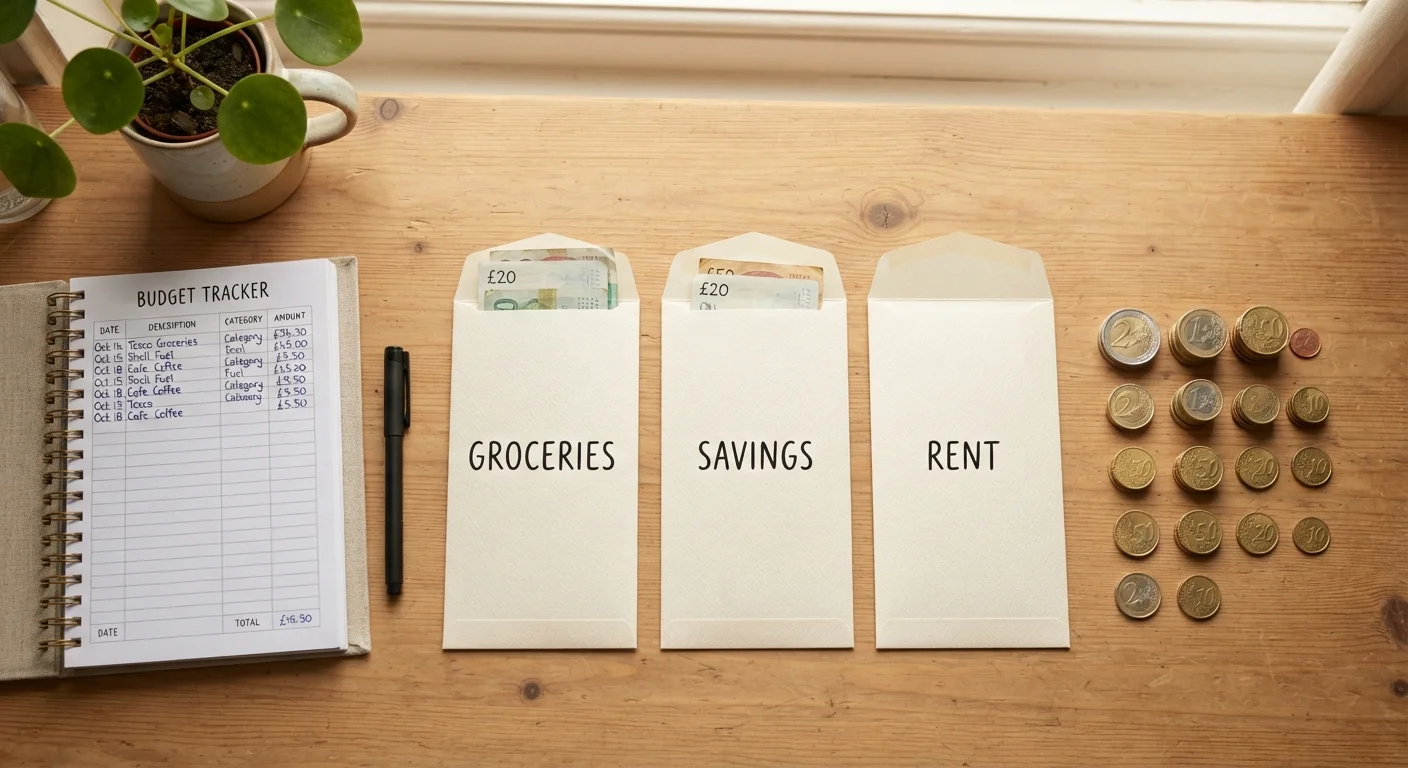
The envelope method is one of the oldest budgeting systems. At its simplest, you withdraw your monthly take-home pay in cash, divide it into labeled envelopes - groceries, gas, dining out, utilities - and spend only what's in each envelope. When an envelope is empty, spending in that category stops until next month.
Its primary strength is immediacy. Handing over physical cash makes spending feel real in a way that tapping a debit card does not. Research in behavioral economics consistently finds that people spend less when using cash compared with cards.
The main drawbacks are practical. Online purchases, automatic bill payments, and digital subscriptions don't fit neatly into a cash-only system. Many people adapt the method using dedicated debit cards or budgeting apps that replicate the envelope logic digitally.
Adapting the Envelope Method Digitally
If carrying cash feels impractical, consider using separate bank accounts or a budgeting app that replicates envelope logic digitally. Assign a spending limit to each virtual envelope the same way you would with physical cash. The psychological effect diminishes slightly without tangible bills, but the category discipline remains intact.
The envelope method pairs well with a focus on discretionary spending - the flexible portion of your budget - which is where overspending most commonly occurs.
Zero-Based Budgeting: Giving Every Dollar a Job
Zero-based budgeting (ZBB) starts from a simple premise: your income minus your planned expenses should equal zero at the end of each month. That doesn't mean you spend everything - savings and debt payments count as assigned expenses. Every dollar has a named destination before the month begins.
ZBB works especially well for households with irregular income, such as freelancers or commission-based workers, because it forces a fresh allocation each pay cycle rather than relying on autopilot assumptions. It also surfaces hidden spending patterns quickly.
The trade-off is time. ZBB requires building a complete spending plan at the start of every month and tracking actual spending against it throughout. For a detailed look at where ZBB shines and where it adds friction, see an honest breakdown of zero-based budgeting's strengths and limits.
The 50/30/20 Rule: Simple Percentages for Most Households
The 50/30/20 rule divides after-tax income into three broad buckets: 50% toward needs (rent, utilities, groceries, minimum debt payments), 30% toward wants (dining, entertainment, travel), and 20% toward savings and extra debt repayment. It's a guideline, not a rigid prescription.
Its appeal is simplicity. There's no detailed category tracking required - just three broad allocations. For households with stable income and moderate spending, it provides structure without becoming a part-time job. A full breakdown of the 50/30/20 rule explains where it works best and when you might need to adjust the percentages.
The method's weakness is precision. Someone carrying significant debt or living in a high cost-of-living area may find that 50% barely covers needs, leaving little room for the other buckets. In those cases, the percentages serve as a target to work toward rather than an immediate reality.
When Fixed Percentages Don't Fit
If housing costs alone consume more than 40% of your take-home pay - a reality for many renters in high-cost cities - the 50/30/20 rule will need adjustment before it's useful. Forcing the percentages without adapting them to your actual expenses can create a false sense of security. Treat the ratios as directional targets and modify them to reflect your real financial picture.
Choosing the Right Method - and Making It Stick
No budgeting method works in isolation. Whichever framework you choose, pairing it with the right tools helps. Compare the practical trade-offs of spreadsheets versus budgeting apps to find a format that matches how you think.
Equally important is reviewing your budget regularly. A monthly budget reset process keeps your numbers honest and helps you adapt as income and expenses change. Any of the three methods can be adjusted over time - the goal is progress, not perfection.
This article is for general informational and educational purposes only and does not constitute personalised financial advice. Consider consulting a licensed financial adviser for guidance specific to your situation.
The content on this site is for informational purposes only and is not a substitute for professional advice. Always consult a qualified professional for guidance specific to your situation.